60-page practitioner-level technical guide
Landfill Gas Extraction Well Design Techniques & Methods
Design more effective landfill gas extraction wells, reduce avoidable failure risks and make better-informed decisions about spacing, depth, sealing, condensate, settlement and wellfield optimisation.
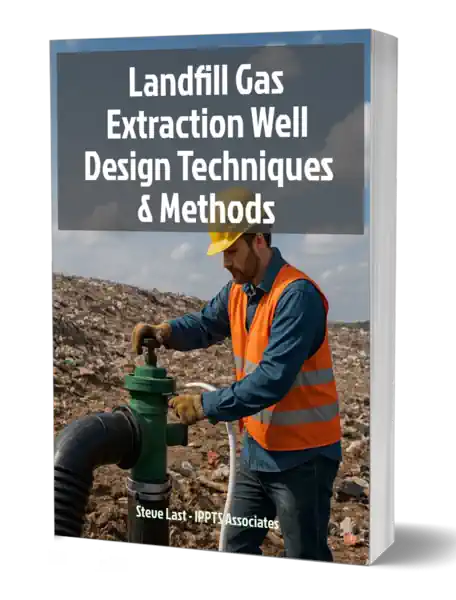
Instant 60-page PDF download – $27
Get the Landfill Gas Well Design Guide
Secure payment and immediate digital delivery through Gumroad.
Poor landfill gas extraction well design can create problems that remain embedded in a gas field for years.
Inadequate spacing, unsuitable perforated zones, air ingress, settlement damage, liquid accumulation and poor condensate management can reduce gas recovery, increase odour and migration risks, contribute to subsurface heating and undermine gas-to-energy performance.
This guide explains the design thinking needed to reduce those risks before wells are drilled and completed.
Landfill gas extraction wells are among the most important components of an active gas-control system.
They must draw methane from a variable and continually changing waste mass while avoiding excessive air ingress, accommodating settlement and remaining serviceable despite liquids, biofouling and changing gas production rates.
Landfill Gas Extraction Well Design Techniques & Methods brings together practical engineering considerations for vertical wells, horizontal collectors and hybrid extraction systems.
It is written for professionals who need more than a general introduction but do not want to work through an academic textbook or equipment supplier brochure.
This practical guide will help you:
- understand the principal design functions of landfill gas extraction wells;
- assess well spacing and likely radius of influence;
- compare vertical, horizontal and hybrid extraction systems;
- select appropriate bore depths, diameters and perforated intervals;
- consider pipe materials, gravel packing and sealing details;
- reduce the risk of oxygen intrusion and subsurface fires;
- allow for differential settlement and long-term movement;
- manage condensate and high liquid levels;
- understand common causes of blocked, flooded or underperforming wells;
- plan installation quality-control procedures;
- monitor and balance an operating wellfield;
- and relate extraction design to flaring, gas utilisation and biomethane projects.
Why Landfill Gas Extraction Well Design Matters
A gas extraction well is not simply a perforated pipe installed in a borehole.
Its performance depends on the relationship between:
- waste depth and composition;
- moisture and leachate levels;
- waste permeability;
- landfill geometry;
- cover construction;
- gas-generation rate;
- applied suction;
- nearby wells;
- settlement;
- and the design of the connecting pipework.
A well may initially appear to perform adequately but deteriorate as waste settles, liquids rise, seals crack or perforations become blocked.
Good design therefore considers not only commissioning performance but also how the well will behave throughout the operating and aftercare periods.
Questions the Guide Helps You Answer
How close should extraction wells be spaced?
Well spacing should reflect waste permeability, depth, gas-generation conditions, cover construction, site geometry and evidence from monitoring or radius-of-influence testing. A standard spacing cannot safely be applied to every site.
When should vertical wells be used?
Vertical wells remain the conventional choice for many completed or substantially filled landfill areas. The guide considers depth, bore diameter, perforation, sealing, completion and long-term settlement.
When are horizontal collectors preferable?
Horizontal systems can be useful during active filling, in shallow waste, beneath temporary cover and where early gas collection is needed before final levels are reached.
How can air ingress be controlled?
Excessive suction, damaged seals, permeable cover and poorly located perimeter wells can draw oxygen into the waste. The guide explains why this can dilute gas and increase heating or fire risks.
How should settlement be accommodated?
Landfill settlement can distort wells, pipework and wellheads. Flexible connections, suitable detailing and allowance for differential movement can reduce premature failures.
What causes flooded or blocked wells?
High leachate levels, condensate, biofouling, solids ingress and unsuitable completion details can restrict gas flow. The guide discusses design and operational responses.
Download the complete 60-page guide for $27
Keep the guide as a reference for future designs, reviews and wellfield audits.
What Is Covered in the Guide?
1. Why Extraction Well Design Matters
The relationship between gas control, methane emissions, odour, migration, regulatory compliance and energy recovery.
2. Essential Components of a Wellfield
Extraction wells, laterals, headers, condensate management, blowers, flares and gas-utilisation equipment.
3. Vertical Extraction Wells
Bore dimensions, perforated zones, risers, materials, well spacing, gravel packing, sealing and wellhead details.
4. Horizontal Collectors
Installation during filling, gradients, condensate drainage, side-slope penetrations and use beneath temporary cover.
5. Hybrid and Integrated Systems
Combining vertical and horizontal extraction, herringbone layouts and integration with leachate-management infrastructure.
6. Site Assessment and Radius of Influence
Waste characteristics, gas testing, topography, monitoring probes and the use of site evidence to inform spacing.
7. Avoiding Common Failure Modes
Air intrusion, hot spots, subsurface fires, settlement damage, flooded wells, clogging and reduced gas flow.
8. Difficult and Unusual Sites
Low-permeability waste, deep landfills, high liquid levels, declining gas production and site-specific adaptations.
9. Installation and Quality Control
Drilling methods, borehole records, materials, placement, seals, documentation and safe installation practices.
10. Monitoring, Tuning and Optimisation
Flow, pressure, methane, carbon dioxide, oxygen, temperature and the practical balancing of an operating gas field.
11. Regulation, Compliance and Energy Recovery
How extraction-well design supports environmental control, flaring, engines, electricity generation and renewable-gas projects.
Who Is This Guide For?
The guide is intended for:
- landfill managers and operations supervisors;
- landfill gas engineers and technicians;
- civil and environmental engineers;
- waste-management consultants;
- landfill restoration and closure designers;
- gas-system contractors;
- regulators and permitting officers;
- landfill gas-to-energy developers;
- biomethane and renewable-natural-gas project teams;
- and students or junior professionals seeking practical design knowledge.
It is particularly useful where the reader must specify, review, audit or operate a gas extraction system and needs to understand why one design detail may perform better than another.
Why This Guide Is Different
This is not a generic summary of landfill gas formation.
It focuses specifically on the practical design and long-term performance of extraction wells and associated wellfields.
The guide addresses issues that are sometimes overlooked in simplified design specifications, including:
- the limitations of standard well-spacing rules;
- the difference between short-term and lifetime collection performance;
- the interaction between suction and air intrusion;
- the effect of landfill settlement;
- high leachate and condensate levels;
- waste heterogeneity;
- wellfield balancing;
- maintenance access;
- and integration with gas utilisation.
Frequently Asked Questions
What format will I receive?
The guide is supplied as an immediately downloadable PDF through Gumroad.
How long is the guide?
The ebook contains approximately 60 pages of focused landfill gas extraction well design and operational guidance.
Is the guide relevant outside the UK?
Yes. The engineering principles concerning gas movement, well spacing, liquids, settlement, sealing and air ingress are internationally relevant. Readers must apply their own national and local regulations.
Does it cover both vertical and horizontal wells?
Yes. It compares vertical wells, horizontal collectors and hybrid systems and explains where each may be suitable.
Does it provide one standard well spacing?
No. Well spacing must reflect site conditions, waste characteristics, landfill geometry, gas production and available monitoring evidence. The guide explains the factors that should inform that decision.
Does it discuss leachate and condensate?
Yes. The guide considers high liquids, flooded wells, condensate drainage and the interaction between gas and leachate-management systems.
Is this useful if I already work with a gas contractor?
Yes. It can help operators, clients and consultants ask better questions, review proposals and understand the reasoning behind design recommendations.
Will it design my landfill gas system for me?
No. The ebook provides methods, considerations and practical guidance, but it does not replace a site-specific design, risk assessment or regulatory review by suitably qualified professionals.
Does it cover gas-to-energy projects?
Yes. It explains how reliable gas collection and wellfield control affect flares, engines, electricity generation and renewable-gas projects.
30-Day Money-Back Guarantee

We take great care in preparing our ebooks. If you experience a problem or are not completely satisfied, contact steve.last@ippts.com within 30 days and describe the issue.
We will refund your purchase in full. Contacting us directly is the quickest way to resolve any problem.
Design Landfill Gas Extraction Wells With Greater Confidence
Use practical engineering guidance to improve well spacing, completion, sealing, condensate management, long-term reliability and gas-field performance.
Instant 60-page PDF download – $27
Important: This guide is provided for educational and general technical information. Landfill gas systems involve methane, carbon dioxide, hydrogen sulphide, oxygen-deficient atmospheres, fire, explosion, drilling, confined-space and ground-instability hazards. Designs, drilling works, operational changes and safety decisions must be assessed by suitably qualified professionals and implemented in accordance with applicable permits, regulations, risk assessments and safe working procedures.
© 2026 IPPTS Associates. Published through Landfill-Gas.com. All rights reserved.
