Health & Environmental Impact
Methane Migration and Landfill Gas Migration: Risks, Pathways, Detection and Control
Methane migration is the movement of methane through soil, rock, made ground and other subsurface pathways away from the place where the gas was generated. At landfill sites, methane forms as a major component of landfill gas and, unless adequately contained and controlled, can migrate laterally beyond the deposited waste. The most serious consequences occur […]
Landfills and Methane Gas – Solutions and Environmental Impact
Methane from landfills is 80 times stronger than CO2 over 20 years, posing a critical climate challenge. The EPA’s 3.7 million metric tons estimate contrasts with satellite data suggesting 6 million tons, underscoring the need for effective methane reduction and landfill management strategies…
Understanding Landfill Gas Risks Before Buying Property Near a Landfill
Landfill sites can produce methane, and that can continue for many years. It has been a known issue for years. Site operators used to see small landfill gas fires as minor problems when they first started to happen in the 1970s in the UK and the US, as the amount of rotting waste (such as […]
Landfill Methane Emissions: Why Capturing This Gas Is the Most Cost-Effective Climate Action Available
Landfills are a major source of anthropogenic methane (CH4) emissions, a potent greenhouse gas ~80 times more warming than carbon dioxide (CO2) over 20 years. With global waste heading towards 3.8 billion tonnes by 2050, the methane silently escaping from the world’s landfills has become one of the most critical — and most neglected — […]
Landfill Gas PFAS: The Overlooked Air Emissions Risk at Modern Landfills
Landfill Gas PFAS are an emerging concern at least as serious as PFAS in leachate. U.S. landfills release approximately 836 kilograms of per- and polyfluoroalkyl substances (PFAS) into the atmosphere every year through landfill gas emissions alone. 2 This figure, drawn from research sampling 30 municipal solid waste landfills across 17 states, directly matches the […]
UK Landfill Gas Health & Safety Considerations
Landfill gas (LFG) operations in the UK demand strict safety protocols to mitigate explosion, asphyxiation, and toxicity risks. Compliance with DSEAR and other regulations ensures protection against hazardous gas emissions, safeguarding worker health and surrounding communities from chronic respiratory conditions linked to volatile organic compounds…
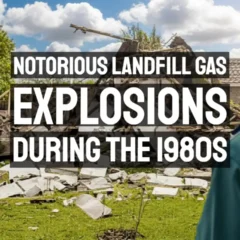
Notorious Landfill Gas Explosions During the 1980s in the UK and the US
Landfill gas explosions taught the UK waste management industry the very real dangers of methane gas through hard experience. The industry learned from a series of accidents, some of which are described below, plus a disaster in the water industry. That disaster was the Abbeystead Disaster, which was caused by a methane explosion in a […]
Landfill Site Permit Applications – The Role of Risk Assessments in Emissions Control
Landfill site emissions risk assessments are a mandatory requirement for environmental permit applications (previously known as Landfill Site PPC Applications). They identify possible hazards to the environment and public health from landfill gas and leachate. The procedure calls for a thorough examination of landfill emissions, including assessments of the effects on the air, groundwater, and surface […]
Fugitive Emissions of Methane and Landfill Gas Explained
It is well known that fugitive emissions of methane and landfill gas occur when methane escapes from production facilities, wells, pipes, compressors and other equipment associated with coal mining or natural gas extraction, landfills, and biogas plants. It is obviously very important to reduce fugitive emissions to an absolute minimum. Why are Fugitive Escapes of […]
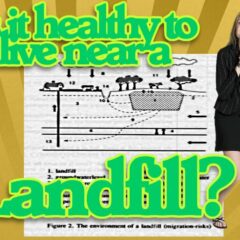
Landfill Gas Emissions and Health Effect of Landfill
Health Effects of Landfill and Landfill Gas The context for the “Emissions and Health Impacts Associated with Waste Management” report, is a UK Government Strategy Unit Report commissioned to assess health effect of landfill (if any was found to exist) from Enviros Consulting. This report was prepared at the request of the Strategy Unit at the UK Cabinet […]
