Landfill gas flare monitoring sounds simple enough: measure what goes into the flare, check what comes out of the stack, and confirm that the methane has been properly destroyed.
In practice, it is considerably more complicated.
A landfill gas flare operates as part of a regulated gas-management system. Its performance may need to be demonstrated through a combination of operating records, combustion-temperature measurements, landfill-gas flow and composition data, periodic emissions testing, equipment maintenance records and other evidence required by the environmental regulator.
Exactly what must be measured, how often it must be measured and which standards apply depends heavily on where the landfill is located.
That last point matters.
A flare-monitoring programme suitable for a landfill in England cannot simply be copied unchanged for a site in the United States, Australia or another European jurisdiction. National regulations, permit conditions, test methods, occupational-safety requirements and reporting procedures differ.
This article therefore explains the principles of landfill gas flare monitoring and emissions testing. It is not intended to reproduce every national regulatory requirement.
For engineers and landfill operators who need the detailed requirements and practical compliance checklists, see the Landfill Gas Flare Handbook, including its jurisdiction-specific regulatory guidance.
What Is Landfill Gas Flare Monitoring?
Landfill gas flare monitoring is the process of checking whether a flare is operating safely, consistently and within the conditions under which it is expected or required to destroy methane and other combustible constituents of landfill gas.
It should not be confused with general landfill gas monitoring.
Monitoring methane in perimeter boreholes, extraction wells, buildings, surface emissions and other locations around a landfill serves a different purpose. For that subject, see our separate guide to landfill gas monitoring procedures.
Flare monitoring concentrates on the combustion plant itself.
Depending on the installation and regulatory regime, this may involve consideration of:
- landfill gas flow to the flare;
- methane concentration and gas quality;
- combustion temperature;
- combustion-air control;
- flame presence and stability;
- flare operating time;
- shutdowns and alarm conditions;
- stack emissions;
- maintenance and calibration records; and
- whether the flare continues to operate within its approved or validated operating envelope.
The exact monitoring specification should never be assumed from a generic online article. It needs to be checked against the applicable permit, regulator guidance and national or local requirements.
Why Enclosed Landfill Gas Flares Are Easier to Monitor
One of the fundamental difficulties in flare emissions monitoring is obtaining a representative sample of the products of combustion.
With an open or candlestick flare, the flame and resulting combustion plume are exposed directly to wind and atmospheric turbulence. The products of combustion can disperse rapidly, making conventional stack sampling difficult and potentially unrepresentative.
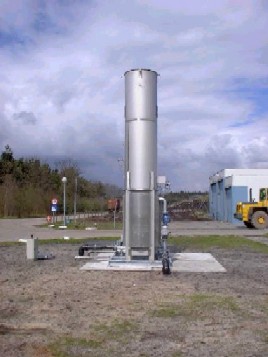
An enclosed flare provides a much more controlled combustion environment.
The flame is contained within the flare structure, allowing combustion conditions to be better controlled and providing a defined exhaust location at which emissions sampling can be undertaken.
This is one reason why enclosed flares feature prominently in regulatory approaches where demonstrable combustion performance is required.
It does not mean, however, that installing an enclosed flare automatically demonstrates compliance.
The flare still has to be operated correctly, maintained properly and monitored in accordance with the requirements that apply to the site.
Flare Monitoring Is More Than Stack Testing
It is tempting to think of flare monitoring primarily as taking samples from the stack.
That is only one part of the picture.
A stack emissions test shows what was happening during the period when the samples were collected. A landfill flare, however, may operate for thousands of hours between formal testing events.
Landfill gas quality and quantity also change over time.
Gas flow can rise and fall. Methane concentration varies. Air can enter the collection system. Condensate or plant faults can affect gas delivery. A flare may spend part of its working life well below its original design duty as a landfill ages.
For that reason, regulators commonly place importance on both periodic emissions measurements and evidence of continuing operation within acceptable parameters.
The important question is not simply:
“Did this flare pass an emissions test?”
It is also:
“Has it continued to operate under conditions consistent with satisfactory combustion since that test?”
Operational Parameters That May Need Monitoring
Although requirements vary, several operating parameters regularly feature in landfill gas flare monitoring programmes.
Combustion Temperature
Combustion temperature provides an important indication of what is happening inside an enclosed flare.
A temperature below the intended operating range may indicate poor combustion, inadequate methane concentration, excessive combustion air, inappropriate gas flow or another operational problem.
However, there is an important warning here.
A single temperature figure found in an old guidance document, equipment brochure or website article should not automatically be treated as the legal requirement for every flare.
Applicable temperature requirements can depend on the regulator, permit, flare design, operating conditions and jurisdiction.
For example, Environment Agency guidance for landfills in England currently refers to flare design and operating considerations and provides an indicative retention-time and temperature standard, while individual permit requirements remain important.
Operators elsewhere may be working under entirely different legislation or permit structures.
Landfill Gas Flow
A flare is designed to operate over a particular flow range.
Too much gas may take the equipment outside its intended capacity.
Too little gas can be equally problematic if the burner and control system cannot maintain stable combustion at the lower duty.
This becomes particularly important as a landfill ages.
A flare selected when gas production was high may eventually spend much of its life operating near the lower end of its turndown range.
Flow data therefore helps demonstrate not simply how much methane is being destroyed, but whether the flare remains appropriately matched to the gas source.
Landfill Gas Composition
Methane concentration directly affects the energy available for combustion.
Carbon dioxide, oxygen, nitrogen and trace constituents can also be important when assessing flare performance and the condition of the wider extraction system.
Some trace constituents entering a flare can influence the nature of emissions produced during combustion.
This is one reason why an emissions-monitoring programme cannot always be designed by looking only at the stack.
The incoming gas matters as well.
Flame Detection and Automatic Shutdown Systems
A properly controlled flare should be able to confirm flame presence and respond safely to flame failure or other specified fault conditions.
Flame detectors, temperature sensors, automatic valves, ignition systems, alarms and shutdown interlocks are therefore part of the evidence that a flare remains capable of safe operation.
Monitoring these systems is different from measuring atmospheric emissions, but both are part of competent flare operation.
What Is Measured During Landfill Gas Flare Emissions Testing?
Stack testing may be used to determine whether a flare is achieving the required emissions performance.
Depending on the applicable regulatory regime and permit, testing may involve combustion products and pollutants such as:
- carbon monoxide;
- oxides of nitrogen;
- unburned hydrocarbons or specified volatile organic compounds;
- methane;
- oxygen;
- carbon dioxide; and
- other compounds identified by regulation, permit conditions or site-specific risk assessment.
That does not mean that every landfill should automatically test for every substance in this list.
Nor does it mean that this list is complete.
The required suite of determinants, reference methods, test frequency, sampling location, reporting basis and accreditation requirements can all vary.
This is precisely where international flare compliance becomes difficult.
The Inlet Gas Can Be as Important as the Stack
Landfill gas is not pure methane.
Its composition varies according to the waste deposited, landfill age, moisture conditions, extraction-system operation and many other factors.
Trace components containing sulphur, chlorine, fluorine, silicon and numerous volatile organic compounds may occur.
Combustion can destroy or transform many organic constituents, but it cannot make the elements entering a flare disappear.
Understanding the incoming landfill gas can therefore be important when assessing potential combustion products, equipment corrosion and emissions risks.
For some sites, the appropriate response to an undesirable constituent may involve upstream gas treatment or changes to operation rather than simply adding another stack test.
Why a Passing Stack Test Is Only a Snapshot
A well-conducted emissions test provides valuable information, but it represents the flare during a particular operating period.
Consider what may happen afterwards.
- Gas production declines.
- Methane concentration changes.
- An extraction field is rebalanced.
- Air ingress increases.
- A temperature sensor drifts out of calibration.
- Burners become partially obstructed.
- Air-control equipment deteriorates.
- The flare begins cycling rather than operating steadily.
The fact that a flare performed satisfactorily during commissioning does not prove that it will remain satisfactory indefinitely.
This is why good flare management combines periodic verification with ongoing operational monitoring and maintenance.
Monitoring Records Matter
Environmental compliance is often as dependent on the quality of the records as it is on the hardware.
A landfill operator may therefore need to retain records covering matters such as:
- flare operating hours;
- combustion temperature trends;
- landfill gas flow;
- gas composition;
- alarm events;
- automatic shutdowns;
- instrument calibration;
- maintenance;
- repairs and component replacement;
- emissions-test reports; and
- corrective action following abnormal operation.
Again, the required format and retention period should be established from the applicable regulatory and permit requirements rather than assumed.
Commissioning Is an Important Monitoring Point
Commissioning provides the first major opportunity to demonstrate that a new or refurbished flare performs as intended.
This can involve much more than simply proving that the burner lights.
The commissioning process may need to establish the relationship between:
- gas flow;
- gas composition;
- combustion temperature;
- air supply;
- burner operation;
- control settings;
- emissions performance; and
- the flare’s usable operating range.
Proper commissioning data can subsequently provide a useful benchmark against which routine operation is compared.
Where formal performance testing or certification is required, its scope should be agreed in accordance with the applicable regulatory framework.
Standby Flares Need Attention Too
Many landfill gas flares do not operate continuously.
They serve as standby equipment while landfill gas is being used in engines, turbines, boilers or other energy-recovery plant.
That does not make them unimportant.
If the utilisation plant shuts down, the flare may suddenly be required to accept a large proportion—or all—of the collected landfill gas.
The operator therefore needs confidence that the standby flare will start when required, accommodate the available gas flow and continue operating safely.
Regulatory monitoring requirements for intermittently operated standby flares may differ from requirements for equipment used as the site’s principal means of gas destruction.
This is another example of why one universal flare-monitoring checklist does not work worldwide.
Older Flares Can Present Particular Monitoring Problems
Older landfill gas flares were not necessarily designed with modern monitoring requirements in mind.
Possible problems include:
- poor access for representative stack sampling;
- inadequately positioned sampling ports;
- limited instrumentation;
- obsolete control systems;
- poor historical records;
- limited turndown capability; and
- difficulty demonstrating the conditions within the combustion zone.
Retrofitting instrumentation or sampling facilities may sometimes be possible.
In other cases, replacement of ageing equipment can become more economical than repeatedly modifying a flare that is fundamentally unsuitable for present-day requirements.
Anyone making that decision should consider monitoring and compliance requirements during the flare-selection process, not after the equipment has been installed.
See our separate guide to landfill gas flare selection, installation and maintenance for the wider equipment-selection issues.
Landfill Gas Flare Regulations Are Not the Same Worldwide
This is where apparently simple online advice about landfill gas flare monitoring becomes risky.
There is no single worldwide landfill gas flare regulation.
Different jurisdictions regulate landfill gas through different combinations of:
- landfill legislation;
- air-pollution legislation;
- environmental permits or operating licences;
- technical guidance;
- emissions standards;
- explosive-atmosphere requirements;
- gas-installation safety requirements;
- occupational health and safety law;
- approved test methods; and
- local or state requirements.
Even within one country, the precise requirements applicable to two landfill sites may differ because their permits, plant capacities, locations and risk assessments differ.
For example, landfill gas flare monitoring in England is considered within Environment Agency landfill guidance and the site’s environmental permit.
In the United States, federal requirements can interact with state air-quality regulation and permit conditions.
Australia adds another layer of federal, state environmental and state technical-safety regulation.
European operators have EU-derived requirements together with national implementation and national regulatory guidance.
Trying to reproduce all of those requirements accurately in a single web article would either result in an enormous document or, worse, provide readers with an oversimplified checklist that could be wrong for their site.
Do Not Design a Compliance Programme from One Generic Checklist
A useful flare-monitoring checklist must answer more than:
“What should I measure?”
It needs to establish:
- which regulations apply;
- which regulator has jurisdiction;
- what the environmental permit requires;
- whether the flare is primary or standby plant;
- whether the flare is open or enclosed;
- which pollutants require testing;
- which test methods are accepted;
- what monitoring frequency applies;
- what operating data must be recorded;
- what safety legislation applies;
- what constitutes an exceedance or abnormal operation; and
- what records must be retained.
That is the point at which a short internet article stops being enough.
Need the Regulatory Detail? Use the Landfill Gas Flare Handbook
If you are specifying, operating, auditing or maintaining landfill gas flare equipment, understanding the principles is only the first stage.
The harder task is establishing what applies to your particular landfill and jurisdiction.
That is why we produced the Landfill Gas Flare Handbook.
It is intended for landfill managers, engineers, consultants, regulators and gas-management professionals who need something more practical than a general introduction to flaring.
The Handbook brings together guidance on flare selection, operation, emissions, safety and regulatory compliance, together with jurisdiction-specific material and practical checklists designed to help professionals identify the requirements they need to investigate for their own projects.
Rather than pretending that one generic international standard exists, the Handbook recognises that flare regulation differs between countries and regulatory authorities.
If you are preparing a flare specification, reviewing an existing installation, planning emissions testing or checking your compliance documentation, the Handbook is the logical next step.
View the Landfill Gas Flare Handbook and check the current price here.
Frequently Asked Questions About Landfill Gas Flare Monitoring
What is landfill gas flare monitoring?
Landfill gas flare monitoring is the measurement and recording of operational and, where required, emissions parameters used to assess whether a landfill gas flare is operating safely and providing the required level of gas destruction.
Is flare monitoring the same as landfill gas monitoring?
No. General landfill gas monitoring includes activities such as monitoring extraction wells, perimeter boreholes, landfill surfaces and buildings. Flare monitoring concerns the combustion equipment used to destroy collected landfill gas.
Can emissions from an open landfill gas flare be stack tested?
Conventional emissions sampling is much more straightforward on an enclosed flare because its combustion products leave through a defined exhaust area. Open-flare combustion products are exposed to atmospheric turbulence, making representative sampling substantially more difficult.
What parameters should be monitored on an enclosed flare?
Typical considerations include gas flow, gas composition, combustion temperature, flame status, equipment alarms, operating hours and emissions-test results. The actual parameters required must be determined from the site’s permit, regulator requirements and applicable legislation.
How often should landfill gas flare emissions be tested?
There is no universally applicable international testing interval. Frequency can depend on the regulatory jurisdiction, environmental permit, flare duty, risk assessment, commissioning requirements and previous monitoring results.
What is the correct operating temperature for a landfill gas flare?
Enclosed flares are designed to maintain combustion conditions capable of achieving the required destruction performance, but professionals should not take a single temperature figure from an internet article and assume that it represents their legal requirement. Check the applicable regulator guidance, permit conditions and flare specification.
Does a standby flare still need monitoring?
Potentially, yes. A standby flare must remain capable of safely treating landfill gas when utilisation equipment is unavailable. However, specific monitoring and emissions-testing requirements may differ from those applying to a continuously operated primary flare.
Why are flare maintenance records important?
Good records help demonstrate that sensors, burners, valves, safety systems and control equipment have been maintained and that faults or abnormal operating conditions have been investigated and corrected.
Where can I find landfill gas flare regulations for my country?
Requirements should ultimately be confirmed from the relevant regulator and site permit. For professionals who want a structured starting point, regulatory guidance and practical checklists for different jurisdictions are included with the Landfill Gas Flare Handbook.
Further Reading
Conclusion
Effective landfill gas flare monitoring is not achieved by taking an occasional stack sample and assuming the job is complete.
A competent monitoring programme considers the relationship between landfill gas quality, flow, flare operating conditions, combustion performance, emissions testing, maintenance and record keeping.
Most importantly, it must reflect the regulations and permit requirements that actually apply to the landfill concerned.
The principles are international.
The compliance details are not.
That distinction is essential for anyone responsible for specifying, operating or auditing landfill gas flare systems.
For the more detailed regulatory guidance and professional checklists needed to apply these principles in practice, see the Landfill Gas Flare Handbook.
Technical note: Regulatory requirements change. Always verify current requirements with the competent environmental and safety authorities and with the conditions of the individual site’s permit or licence.
Footnote: Candle Flares
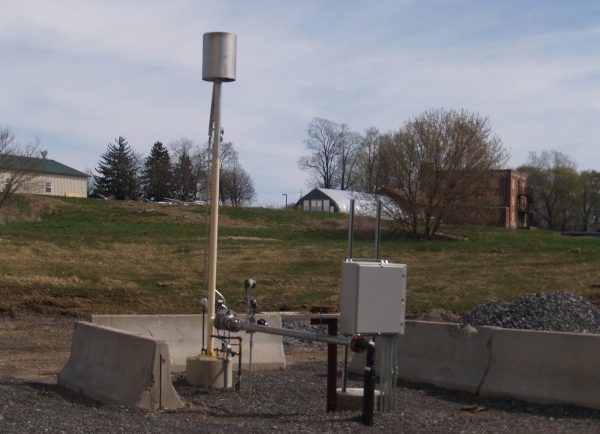
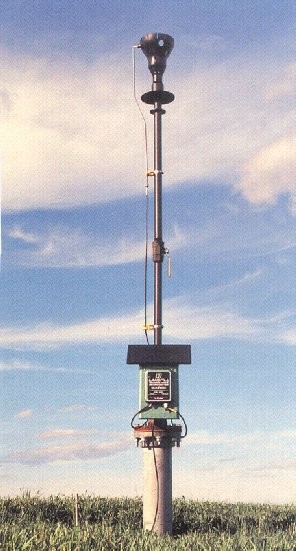 The first flares which were used on landfill sites were known as candle flares, and this type of flare is still common among other industries where flaring is normally used as a short-term expedient during the start-up of chemical processes when the gas may be of marginal quality or not meet calorific minimum values needed to run a generator or provide a feed for another process stage.
Landfill gas flares, which are installed for the long term burning-off of landfill gas to reduce the global warming impact of the emission or for other reasons, are required by the UK regulators (and also in many other EU countries) to be enclosed-type flares. Candle flares have mostly been phased out and replaced by enclosed flare stacks in EU countries.
Candle flares are simpler and cheaper flare designs than their modern “enclosed combustion” counterpart.
[Article published November 2012.]

Offers on turn-key landfill gas flare rental. The unit provided is a skid mounted unit, and includes two centrifugal blowers, gas scrubber, analyzer, and flare ignition and control system capable of 100-500 scfm.
Can a gas flare produce an odor, even through the flame while it is burning? We think we have this problem.
What to do about vegetation? Mow area first. What to do?