
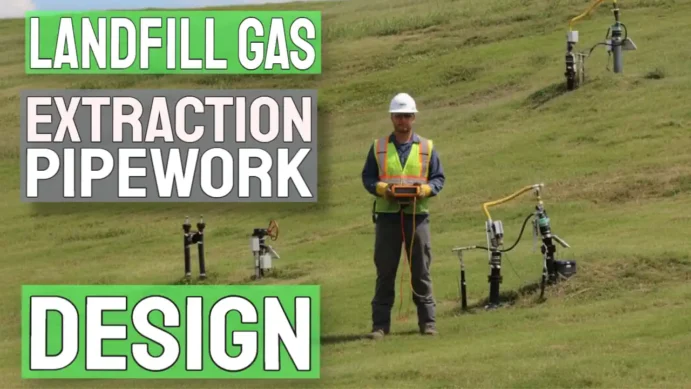
Modern UK landfill sites capture over 80% of the early methane when properly designed, but achieving that performance depends on your pipework strategy. 2
Your gas extraction infrastructure must balance steady methane flow with condensate drainage.
Miss this balance, and water build-up blocks your system, forcing expensive repairs and releasing greenhouse gas emissions straight into the atmosphere. A well-designed landfill gas extraction pipework system turns that challenge into a reliable carbon footprint reduction.
Here’s what makes the difference: sleeve valve selection at wellheads, precise pipe gradients that prevent low points, and layouts designed to last through decades of waste settlement. 1
This guide delivers the practical engineering principles you need to design systems that protect your site, meet UK regulatory standards, and convert landfill gas (LFG) into a renewable energy source that offsets fossil fuel use for years to come. 3
Key Takeaways on the Topic of the Design of Landfill Gas Extraction Pipework
- Landfills produce 14% to 18% of global methane emissions, making effective gas extraction pipework vital for cutting greenhouse gases and supporting Methane 2030 Pledge goals.
- Engineers select pipe diameters and extract well flow balancing valves based on site-specific flow modelling to ensure steady methane recovery and proper condensate management.
- Dual parallel extraction LFG delivery pipelines between the wellheads and the flare/LFG EfW compound with sloped gradients improve drainage, reduce blockages from water build-up, and boost long-term landfill gas energy reliability.
- Best practices require system segmentation for operational flexibility, regular monitoring with flow meters, and UK compliance with DSEAR and ATEX safety standards.
- Qualified designers assess settlement rates, select correct gradients over the site’s lifecycle, and uphold best practice and waste regulations compliance in UK waste projects (citations 1, 2, 3, 5).
The Importance of Landfill Gas Extraction Pipework
Landfill gas extraction pipework directly reduces the environmental impact of waste sites.
Proper design captures methane for landfill gas energy, converting harmful emissions into power for UK homes and businesses. In 2024, landfill sites accounted for 55% of total UK waste sector greenhouse gas emissions, making extraction systems essential infrastructure for national carbon footprint reduction targets.
How can gas extraction be maximised while managing condensate?
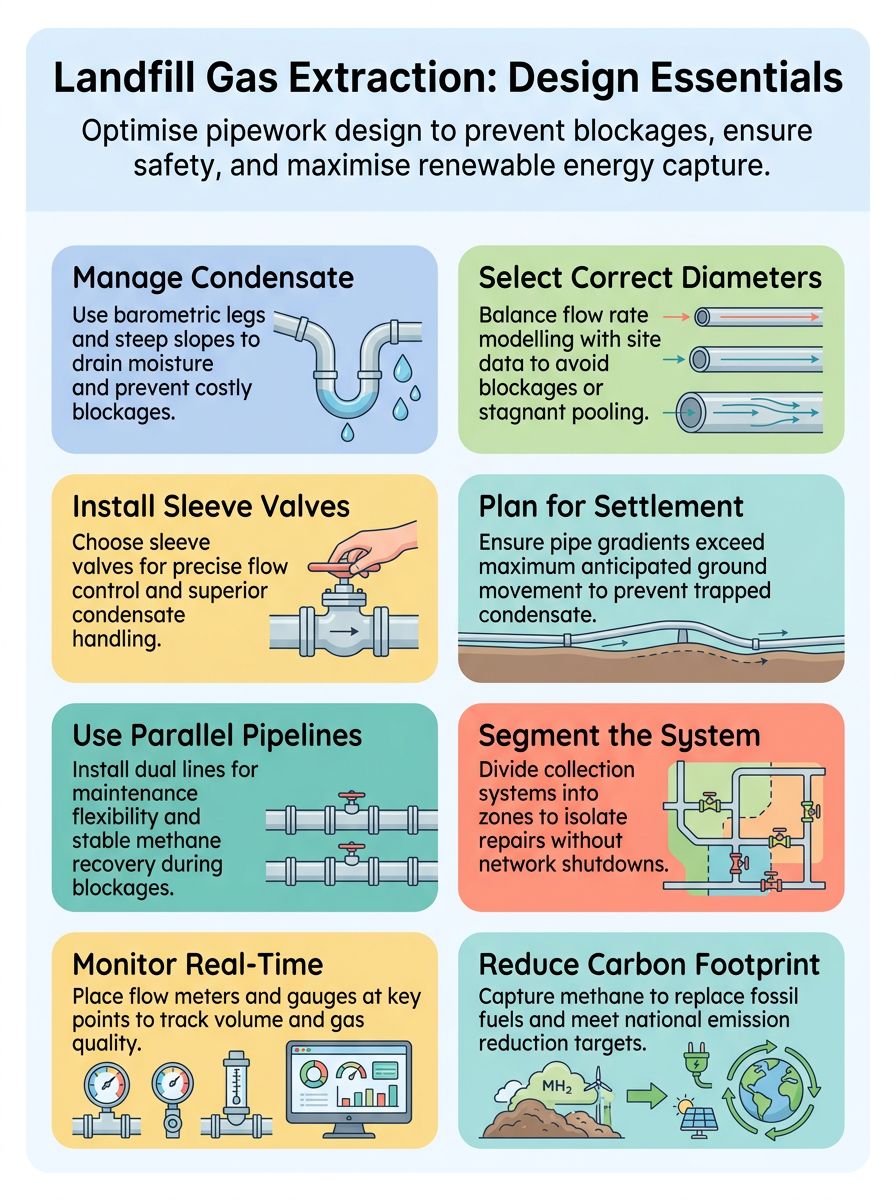
Engineers maximise gas extraction by selecting pipe diameters that balance flow velocity with condensate drainage. 1
Too narrow and you create back-pressure that limits methane capture.
Too wide and condensate pools inside, eventually blocking gas flow. Sleeve valves installed at well heads allow fine adjustment of gas volumes, giving you precise control over suction rates while preventing water accumulation.
Barometric legs connected to well heads drain excess liquid safely without losing system pressure. 1 This setup maintains controlled landfill gas energy production for the power grid while protecting pipework from corrosive damage. Sites using this approach report collection efficiencies between 52% and 99%, according to a February 2026 Government study on UK landfill methane measurement methods.
Dual parallel pipe runs outperform single large pipes by supporting higher transport rates and simplifying maintenance when handling moisture-rich gas streams.
Sloped pipelines with calculated gradients create natural falls between wells.
This moves both methane and condensate toward collection points efficiently, reducing the risk of blockages. Experienced designers plan these systems to optimise greenhouse gas emissions reduction and support carbon footprint reduction through safer landfill management practices that align with UK Environment Agency guidance. 2
What methods are used to control condensate production?
Proper control of condensate production relies on integrated drainage design throughout your extraction network.
Operators use well heads fitted with barometric legs to encourage efficient drainage of moisture from pipework. 1 This approach prevents blockages, increases the reliability of landfill gas energy capture, and protects equipment from water damage that shortens system lifespan.
Pipe runs must be laid with sufficient gradients.
All collected moisture then flows to designated collection points rather than pooling within pipes. Sleeve valves enable precise regulation of gas flow while allowing condensate to pass freely along the system, maintaining steady methane recovery even during high-moisture periods.
Choosing the correct pipe diameters and maintaining proper gradients are crucial design decisions. They minimise retention issues linked with poor drainage or undersized infrastructure.
In many UK sites, duplicate parallel pipelines increase operational flexibility. If one line clogs due to excess liquid, switching to the backup keeps methane recovery stable and supports your site’s environmental impact targets without interrupting power generation.
Engaging engineers experienced in the design of landfill gas extraction pipework is crucial for reducing emissions. Learn how to specify systems for energy from waste (LFGTE).esigners ensures each installation aligns with lifecycle demands and uses recycled materials where possible, reducing both upfront costs and long-term maintenance needs.
Installation of pipelines with adequate falls enables effective removal of condensate, states waste systems expert Dr Andrew Coles, keeping both efficiency and environmental protection at the forefront. 1
How is landfill gas flow monitored and regulated?
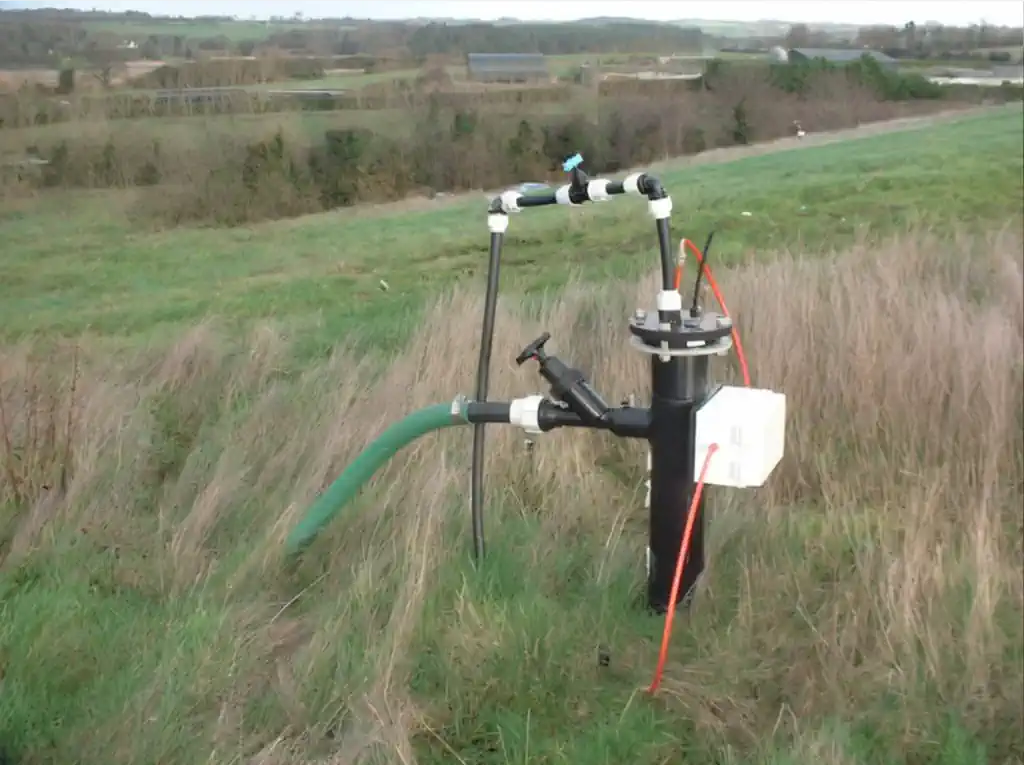
Field teams use gas flow meters and pressure gauges installed at strategic points throughout the extraction pipework. 3
Devices are typically positioned close to wellheads or along main headers, providing real-time visibility of gas volume and quality. UK operators commonly deploy portable instruments like the GFM 436 from Gas Data, an ATEX-accredited analyser designed specifically for landfill gas control and regulatory compliance monitoring.
Routine data collection allows site operators to track methane concentration, oxygen levels (which must remain below 5% v/v according to UK Environment Agency permits), and pressure readings across the network.
This ensures carbon footprint reduction targets are met while detecting potential system failures early. Control valves help regulate the rate of landfill gas flow toward energy recovery facilities, preventing over-extraction that could draw excessive air into the waste mass.
Automated systems frequently alert technicians if readings exceed permitted levels set by regulatory authorities such as DSEAR and ATEX. 2 The designers of landfill gas extraction pipework must be trained in compliance with landfill gas safety and carry out HAZOPS and Explosion Risk Assessments whenever applicable.
Regular maintenance checks ensure compliance with health and safety standards while keeping greenhouse gases out of the atmosphere for better environmental impact management.
Modern monitoring systems can transmit one-minute data updates via web interfaces, enabling operators to respond quickly to changing gas production rates and maintain optimal extraction efficiency throughout the site’s operational life.
Design Considerations for Landfill Gas Extraction Pipework
Engineers use gas flow control valves and precise pipe sizing to handle landfill gas efficiently.
Pipework layout and gradient planning help manage condensate, aiding carbon footprint reduction while supporting landfill gas energy projects that can generate up to 3.2 TWh annually across UK sites.
What devices regulate gas flow in extraction systems?
Sleeve valve types control gas flow in most modern landfill extraction systems.
These valves allow precise adjustments, especially at low flows, making them superior to butterfly valves for managing the unique demands of landfill gas management. Unlike butterfly valves, sleeve types prevent condensate from restricting movement through the system, maintaining steady operation even when moisture content varies throughout the day.
Many UK sites use proprietary well heads that combine barometric legs and monitoring ports.
Operators can fine-tune gas recovery from each well while draining off excess liquid. This setup supports careful balance between maximum methane extraction and safe pipeline operation, with operational sleeve valves essential for sustained carbon footprint reduction and safe landfill gas energy usage.
The preferred device for regulating landfill gas is a finely adjustable sleeve-type valve as it offers greater precision under varying flow conditions.
Equipment suppliers like MGS UK have delivered telescopic pipe systems with integrated valve assemblies across UK landfill sites since 1988.
Their systems include well heads, gas manifolds, knock-out pots and chambers designed specifically to handle the corrosive nature of landfill gas while maintaining long-term reliability in compliance with ATEX safety certification requirements for explosive atmospheres.
How do you select the right pipe diameter?
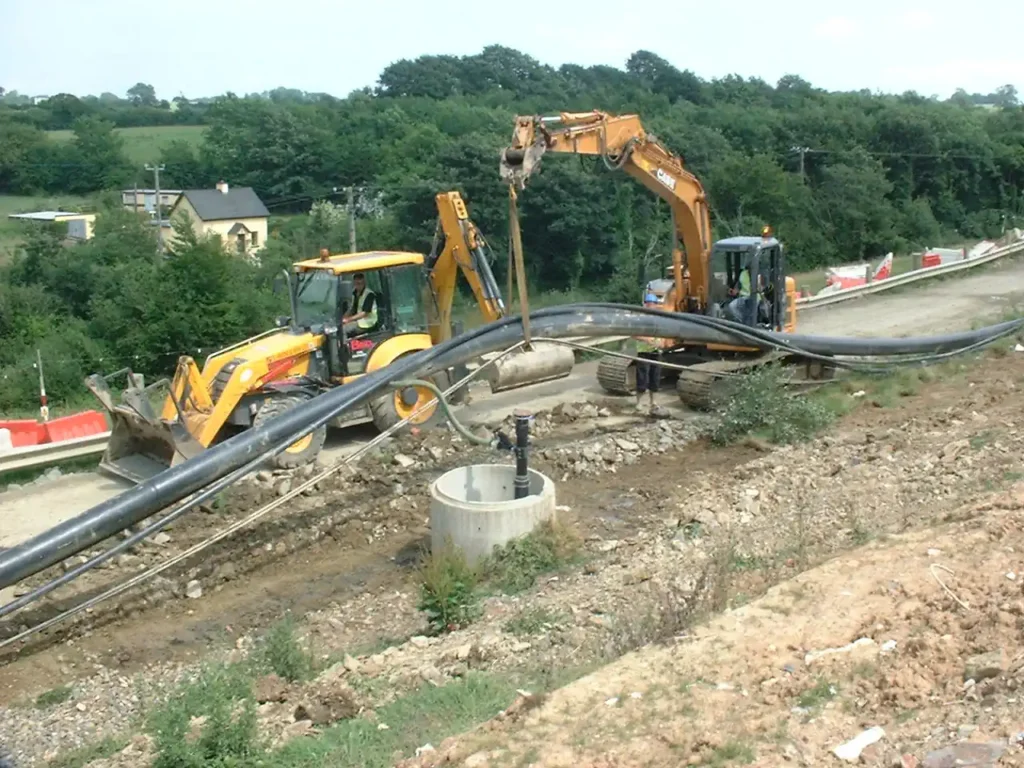
Experienced designers select the pipe diameter by combining flow rate modelling with outcomes from past projects. 1
They assess landfill gas volume, predicted methane generation, and condensation rates before choosing a size. In the UK, extraction pipes typically range from 32mm for lateral connections up to 400mm for main collection headers, according to specifications from leading waste infrastructure manufacturers.
Too small a diameter leads to blockages and excessive back-pressure that limits gas capture rates.
Too large allows condensate to pool and stagnate inside the pipeline system, creating low points where water accumulates and eventually blocks airflow. Proper fall between wells supports consistent drainage, but only if the selected pipe size matches both expected gas extraction volumes and site layout constraints.
Consulting seasoned professionals at each design stage reduces risk of system failure due to poor sizing or insufficient slope.
Landfill gas flow data drives these decisions as well as environmental targets like carbon footprint reduction. 2 By balancing operational needs against safety concerns, operators enhance efficiency while supporting fossil fuel offsets through better landfill gas energy capture. Reliable selection is crucial for long-term function across all recyclable waste management sites using complex extraction systems approved since 2020 under updated UK Environment Agency technical guidance.

What factors influence pipe layout and fall?
Pipe layout and fall have a direct impact on the success of landfill gas extraction.
Proper planning ensures efficient landfill gas energy recovery, limits environmental impact, and reduces carbon footprint while maintaining system reliability over decades.
- Waste mass affects settlement, so designers must allow for significant future ground movement when setting pipe gradients to prevent low points that could trap condensate. 4
- The choice and installation of lining systems such as HDPE geomembranes influence both the support and stability of pipes across the site’s lifecycle.
- Sub-grade conditions dictate pipe bedding requirements; strong, even layers minimise risk to pipe alignment from localised subsidence or shifting soils.
- Stability assessments must consider both immediate placement needs and long-term movements over decades as waste degrades under anaerobic bacteria action.
- Interface shear strength between layered materials like clay liners or synthetic membranes must be calculated to avoid slippage that compromises pipework reliability.
- Minimum fall should always exceed anticipated maximum settlement over the design life so that water naturally drains through the system, limiting unwanted condensate accumulation.
- Consulting qualified geotechnical engineers is essential throughout planning since accurate data on settlement rates protect extraction infrastructure from early failure. 5
- Site-specific factors such as leachate production, precipitation patterns, or waste composition can change flow characteristics and force adjustments in layout designs after initial installation.
Best Practices for Landfill Gas Extraction Pipework Design
Good design uses careful planning, right pipe size, and proper valves to manage landfill gas collection safely and boost energy recovery.
These practices help lower your carbon footprint while maintaining compliance with UK regulations that require methane collection efficiency targets of 85% by 2030.
Why segment the gas collection system?
Segmenting the gas collection system allows for operational flexibility and reduces downtime during maintenance or repairs.
This approach lets operators isolate damaged sections, so they can fix issues without shutting down the entire network. Modern UK landfill sites typically divide collection infrastructure into manageable zones of approximately 5-10 hectares each, enabling targeted intervention while maintaining overall gas capture performance.
By dividing the collection system into zones, teams maintain landfill gas extraction even as site filling progresses.
Segmentation also supports maximum methane capture by accommodating peak generation rates throughout a landfill’s lifespan. 6 Sites designed with this principle can adjust suction pressures and flow rates independently in each zone, optimising collection efficiency as waste composition and degradation stages vary across different areas.
Separating pipework minimises the risk of total system failure due to localised leaks or blockages.
This means more consistent carbon footprint reduction over time. Waste management professionals benefit from being able to address specific areas within the targeted disposal zone while keeping other sections active, ensuring continuous methane recovery and uninterrupted power generation even during routine maintenance or emergency repairs.
Best practice guidelines highlight this method as vital for safe and effective landfill gas energy recovery systems with strong environmental impact outcomes.
Conclusion
A well-planned landfill gas extraction pipework system protects the environment and supports carbon footprint reduction.
Proper design ensures safe methane capture, helps reduce global warming, and allows for reliable landfill gas energy recovery that can power thousands of UK homes. Qualified professionals use tools like sleeve valves, pipeline gradient calculations, and barometric legs to boost efficiency while managing condensate risks throughout the system’s lifecycle.
Every detail in site planning can make a real difference for both operators and the planet, from achieving 90% methane collection efficiency at modern UK sites to maintaining compliance with DSEAR and ATEX safety standards that protect workers and surrounding communities.
FAQs About the Design of Landfill Gas Extraction Pipework
1. How does landfill gas extraction pipework help reduce carbon footprint?
Properly designed extraction systems reduce your carbon footprint by capturing methane, a greenhouse gas with 80 times the climate-warming effect of carbon dioxide, before it escapes into the atmosphere. This capture process is a major reason the UK has successfully reduced its total methane emissions by over 62 per cent since 1990. Converting this captured gas into energy provides a cleaner alternative to fossil fuels and directly supports national Net Zero targets.
2. What environmental impact does effective pipework design have on landfill sites?
Effective pipework design dramatically reduces the environmental impact of a site by controlling gas migration and preventing harmful ground gases from polluting local groundwater and soil ecosystems. Following the UK Environment Agency LFTGN 03 design guidance ensures operators effectively manage trace components and minimise surface emissions. This proactive management significantly lowers local environmental risks while maintaining strict regulatory compliance.
3. Why is cookie consent mentioned in relation to landfill gas extraction information?
Websites providing technical engineering data must collect cookie consent to comply with UK Information Commissioner’s Office regulations, as ignoring these rules can now trigger fines of up to 4 per cent of a company’s global turnover under the 2025 Data Use and Access Act.
4. Can landfill gas extraction contribute to carbon footprint reduction goals?
Yes, it plays a vital role in meeting carbon footprint reduction goals by converting waste gases into usable landfill gas energy. For example, UK landfill gas sites currently possess an installed capacity of roughly 400 megawatts, which generates approximately 3.2 terawatt-hours of electricity annually. Maximising extraction efficiency reduces our reliance on traditional power grids while keeping highly potent methane out of the atmosphere.
References
- ^ https://landfill-gas.com/landfill-gas-extraction-pipework
- ^ https://esauk.org/wp-content/uploads/2024/02/44_ICoP_Management_Landfill_Gas.pdf
- ^ https://www.researchgate.net/publication/232430520_Monitoring_of_Landfill_Gas
- ^ https://assets.publishing.service.gov.uk/media/5a7c837540f0b62aff6c2339/sp1-385-tr1-e-e.pdf
- ^ https://www.sciencedirect.com/science/article/pii/S2667143324000258
- ^ https://www.researchgate.net/publication/271842178_A_novel_landfill_design_and_system_for_landfill_gas_utilization
- ^ https://pmc.ncbi.nlm.nih.gov/articles/PMC11531075/
- ^ https://www.sciencedirect.com/science/article/abs/pii/S0301479723004966
Note: Any link with a strikethrough usually indicates that a Captcha-style human verification is required.