Landfills are a major source of anthropogenic methane (CH4) emissions, a potent greenhouse gas ~80 times more warming than carbon dioxide (CO2) over 20 years.
With global waste heading towards 3.8 billion tonnes by 2050, the methane silently escaping from the world’s landfills has become one of the most critical — and most neglected — frontiers in the fight against climate change. The science is unambiguous. The solution is proven. The cost is remarkably low. So why are we still getting this so wrong?
There is a peculiar cruelty in the fact that one of the most powerful tools humanity has for slowing global warming sits buried under mountains of decomposing rubbish — and that we are, almost as a matter of deliberate policy, choosing not to use it.
The Solution is Shovel Ready!
Landfill methane emissions are not some distant, exotic, or technically daunting problem. The gas is there. The pipes to collect it exist. The technology to convert it into usable energy has been commercially viable for decades. Yet only around 8% of the world’s waste ends up in sanitary landfills with functioning gas collection systems. The rest bleeds silently into the atmosphere, warming the planet far more urgently than most people realise.
To understand why this matters so much, you first have to understand what methane actually does. Carbon dioxide rightly dominates the climate conversation — it is the great long-term villain, accumulating in the atmosphere over centuries.
The Methane Threat is in Part – Reversible!
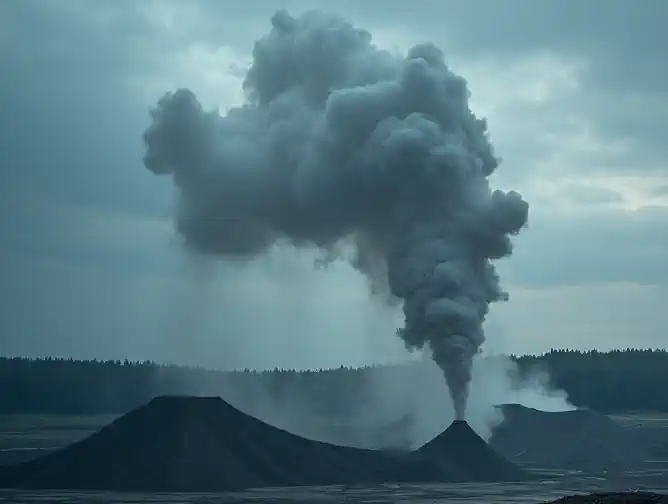
But methane is a different kind of threat: short-lived and ferociously potent. Over a 20-year timeframe, methane traps heat at more than 80 times the rate of CO₂. It is, in the bluntest terms, a climate accelerant — one that acts fast and hits hard. Cutting methane now does not just slow warming in some abstract future scenario. It slows it within years and decades, buying humanity the breathing room needed to tackle the harder, slower decarbonisation of energy systems. That is precisely why scientists so consistently identify reducing methane emissions as the fastest, cheapest route to meaningful near-term climate relief.
The Key Numbers
| Statistic | Figure | Source |
|---|---|---|
| Share of global human-caused methane from landfills | ~20% | UNEP / IEA |
| Methane’s warming power vs CO₂ over 20 years | 80× more potent | IPCC |
| Share of waste in landfills with gas collection | Only 8% | World Bank |
| Projected global waste by 2050 | 3.8 billion tonnes | UNEP 2024 |
| US landfill emissions above self-reported levels | 77% higher (on median) | Harvard Study 2024 |
| Potential annual methane reduction from full action | 760 Mt CO₂-equivalent | Nature Climate Change 2025 |
The Economics Are Almost Embarrassingly Favourable
Here is the part that should make policymakers sit up straight: landfill gas collection is extraordinarily affordable. Analysis cited by Scientific American indicates that emissions controls for landfills may cost as little as a few dollars per tonne of methane captured — far below what it costs other sectors to achieve equivalent reductions. Offshore wind and carbon capture projects routinely cost hundreds of dollars per tonne of CO₂-equivalent avoided. The comparison is not even close.
And that is before accounting for the revenue. Captured landfill gas — a roughly equal mixture of methane and CO₂ — is a marketable energy commodity. It can be burned to generate electricity, refined into renewable natural gas, or converted into vehicle fuel. The US EPA estimates that a well-designed landfill gas energy project can recover between 60 and 90 per cent of a site’s methane, transforming a liability into a revenue stream.
In Hancock County, Ohio, a landfill gas project has been generating around 22,000 megawatt-hours of electricity annually since 2010 — enough to power more than 2,000 homes — while achieving nearly 1.5 million verified tonnes of emission reductions. This is not an experiment. It is a scalable, proven model.
“This is one of the most cost-effective solution areas in climate action — and some companies say they can easily incorporate the costs into their tipping fees without dramatically changing landfill economics.”
— Scientific American, citing landfill emissions specialists
A Problem That Is Bigger Than We Think
The official numbers on landfill methane emissions are already alarming. In the United States alone, municipal solid waste landfills account for approximately 14.4% of all human-related methane emissions — the equivalent of the greenhouse gas output of more than 24 million petrol-powered cars driven for a full year. Globally, landfills contribute an estimated 20% of all human-caused methane.
But here is the disturbing twist: the real figures may be considerably worse than the official ones suggest. A landmark study from Harvard University, published in 2024 using atmospheric satellite data, found that actual methane emissions from US landfills were, on median, 77% higher than what facilities had self-reported to regulators. For landfills with gas collection systems already in place — the ones that were supposed to be managing their methane — actual emissions were more than 200% above reported levels.
Collection efficiency in practice was closer to 50%, not the 75% assumed by regulators.
In other words, even our best efforts are leaking far more methane than we thought. And the landfills without any collection systems at all? They are essentially open taps.
What Full Action Could Achieve
A 2025 study published in Nature Climate Change assessed what would happen if the world’s landfill management was transformed comprehensively. The findings were striking. Converting open dumpsites to sanitary landfills with gas capture, combined with diverting organic waste to composters and biodigesters, could:
- Cut landfill methane emissions by 80%
- Deliver an annual mitigation potential of 760 million tonnes of CO₂-equivalent
- Contribute significantly to keeping warming below 1.5°C
Meeting the Global Methane Pledge — which commits 159 countries to a 30% cut in methane by 2030 — would additionally:
- Reduce global warming by at least 0.2°C by 2050
- Prevent 255,000 premature deaths annually from methane-linked air pollution
- Avoid 26 million tonnes of annual crop losses from ozone exposure
- Prevent 73 billion hours of lost labour due to extreme heat
The Coming Waste Surge Makes This Urgent
UNEP’s Global Waste Management Outlook 2024 projects that municipal solid waste generation will rise from 2.1 billion tonnes in 2023 to 3.8 billion tonnes by 2050, driven by population growth and rising consumption in middle-income nations. Much of that increase will occur in countries that currently have the least waste infrastructure — where open dumping is still the norm, and where sanitary landfill gas capture can feel like a luxury reserved for wealthier nations.
This is the window closing in real time. Every year that a new landfill opens without gas collection infrastructure is another decade of uncontrolled methane emissions baked in — because once waste is buried and decomposing, retrofitting a collection system becomes far more technically complex and expensive than installing one from the outset. Decisions made in the next ten years about how developing-world waste infrastructure is built will shape the methane trajectory of the 2040s and 2050s. That is not a distant problem. It is an urgent design decision that needs to be made right now.
What Is Actually Working
Some nations are showing what genuine commitment looks like:
- Canada — published draft regulations in 2024 designed to halve landfill methane emissions from 2019 levels by 2030, including mandatory monitoring, gas collection, and leak repair requirements
- European Union — binding requirements for separate biodegradable waste collection since 2024; maximum 10% landfilling target by 2035; already achieved 44% methane reductions from landfills since 1990
- United Kingdom — committed to eliminating biodegradable waste from landfill entirely by 2028
- UAE — landfill waste diversion target of 80% by 2031, backed by new national recycling regulations
These are encouraging bright spots. But they remain the exception among 159 signatories to the Global Methane Pledge.
The Path Forward Is Not Complicated
None of what is required is glamorous. It lacks the headline appeal of a new solar gigafactory or a hydrogen breakthrough. But in the stubborn arithmetic of the climate crisis — where every tenth of a degree matters and near-term action is desperately needed — the unsexy business of capturing gas from buried rubbish may be the most consequential climate investment available.
The technology is ready. The economics work. The science is settled. What remains is the political and institutional will to stop letting an atmosphere-warming resource leak away into the sky, and to hold nations accountable for the landfill gas collection commitments they have already made.
Key Facts — At a Glance
- Landfills produce around 20% of all human-caused methane globally
- Methane is 80× more potent than CO₂ as a warming agent over 20 years
- Only 8% of waste globally goes to sanitary landfills with gas collection
- Real US landfill emissions are 77% above self-reported figures (Harvard, 2024)
- Full global action could deliver 760 Mt CO₂-equivalent savings annually
- Landfill gas control costs as little as a few dollars per tonne — among the cheapest climate interventions available
- Meeting the Global Methane Pledge would prevent 255,000 premature deaths per year