Achieving a high level of landfill gas health & safety is no easy task. Landfill gas (LFG) operations require strict safety protocols, written on-site and specific to every hazardous task, due to the risks of explosion (methane), asphyxiation (oxygen displacement), and toxicity (hydrogen sulfide/VOCs) unique to sanitary landfill sites. Key considerations include passive measures, backed up by, but not reliant upon, monitoring. Proper infrastructure is essential with maintenance (wells, pipes, flares), and compliance with the explosive atmosphere regulations (EU and UK). Essential safety measures include staff training and rigorous compliance with safety protocols.
Summary of this UK Landfill Gas Health & Safety Article
- Landfill gas is a byproduct of decomposing waste and contains methane, carbon dioxide, hydrogen sulphide, and numerous other trace toxic compounds that, if inhaled, are dangerous to the health of workers and nearby residents.
- Methane becomes explosive at concentrations between 5% and 15% in air, making uncontrolled gas migration one of the most dangerous and sometimes overlooked hazards of UK landfill sites.
- UK landfill operators are legally required to comply with DSEAR (and the national counterpart implementations of the EU ATEX Directives), COSHH, and several other regulations. Failure to comply with these regulations and HSE Guidance carries significant legal consequences and puts lives at risk.
- Chronic respiratory conditions have been linked to long-term exposure to landfill gas emissions, even at concentrations below immediately dangerous thresholds.
- There is one practical safety measure that many site operators overlook — and it could be the difference between a near-miss and a fatality. Keep reading to find out what it is.
Landfill gas doesn’t make its presence known — it seeps silently through soil, accumulates in confined spaces, and can ignite without warning.
Understanding the health and safety risks associated with landfill gas is crucial for anyone living or working near a UK landfill site. The UK’s Health and Safety Executive (HSE) has thoroughly documented these hazards, and organisations like those specialising in environmental safety compliance are instrumental in helping site operators and communities stay safe. Whether you manage a landfill, work on one, or simply live nearby, here’s what you need to know.
Landfill Gas Poses Greater Risks Than Most Workers Are Aware Of
Many people link landfill sites with foul odours and environmental issues. However, not many understand that the gases produced under the surface are a real, continuous risk to human health, building stability, and site safety. The mix of flammable, asphyxiant, and toxic gases makes landfill one of the most complicated hazardous environments in the UK waste management industry.
Understanding Landfill Gas and How Achieving Landfill Gas Health & Safety Needs Constant Vigilance
Landfill gas is a byproduct of organic waste such as food waste, paper, and garden waste decomposing underground without oxygen. This process, known as anaerobic decomposition, creates a gas that constantly moves upward through the waste and the soil around it. The type and amount of gas produced varies greatly depending on the type of waste, the age of the landfill, the level of moisture, and the temperature conditions.
Main Components: Methane and Carbon Dioxide
Methane (CH₄) and carbon dioxide (CO₂) are the two major gases found in landfill gas. Together, they usually make up about 90% of the total volume of landfill gas. Methane typically comprises about 40-60% of this mix, while carbon dioxide makes up most of the rest. Both are produced in roughly equal amounts during the methanogenic phase of decomposition, which can last for decades after a site has been sealed and closed.
Methane is a gas that is colourless, odourless, and highly combustible. Carbon dioxide, on the other hand, is not combustible, but it is an asphyxiant. This means that it can displace oxygen in enclosed spaces or spaces that are low-lying.
The ramifications for landfill gas health & safety are that high concentrations of carbon dioxide can cause unconsciousness and even death. Neither of these gases can be detected by smell alone, which makes them especially dangerous in environments that are confined or poorly ventilated.
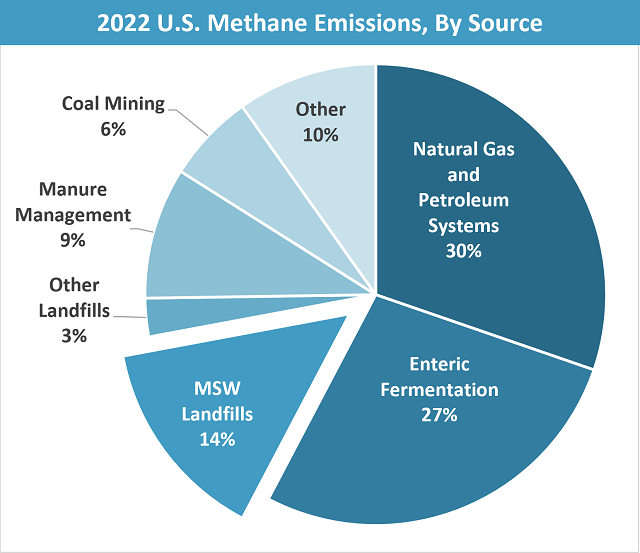
“Basic Information about Landfill gas health & safety …” from www.epa.gov and used with no modifications.
Other Health Risk-Posing Trace Gases
Landfill gas contains more than just methane and CO₂. It also contains a mix of trace compounds. Hydrogen sulphide (H₂S) is one of the most hazardous. Even at very low concentrations, it can cause irritation to the eyes, nose, and throat. At higher concentrations, it can cause sudden collapse and death. Ammonia, volatile organic compounds (VOCs), and halogenated compounds are also often detected. Each has its own toxicological profile. The HSE’s research has shown that the trace gas composition of landfill gas can vary greatly between sites and over time. This makes risk assessment more difficult.
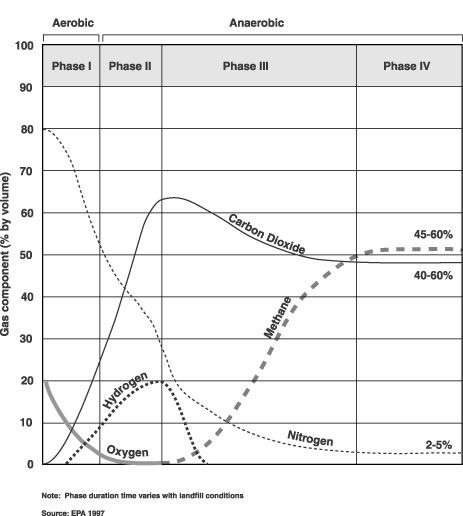
“ATSDR – Landfill Gas Primer – Chapter 2 …” from www.atsdr.cdc.gov and used with no modifications.
The Role of Decomposition in Ongoing Gas Production
Even after a landfill site is closed, the gas production doesn’t cease. The active decomposition process can last for 20 to 30 years or longer after the site stops accepting waste. This means that old landfill sites across the UK still pose a real risk for gas hazards today.
The rate of gas production reaches its peak a few years after the waste is deposited, then it slowly decreases — but it doesn’t completely stop until all the biodegradable material has decomposed.
This long-term production cycle is a major reason why it’s important to keep post-closure monitoring and gas management infrastructure in operation long after the site’s active life has ended. Maintaining landfill gas health & safety over long time periods is not easy, especially when funding is stretched, and the landfill no longer produces any income to draw on.
The True Health Dangers of Exposure to Landfill Gas
The health consequences of being exposed to landfill gas can vary from minor irritation to serious, life-threatening situations. These effects depend on the type of gas, how concentrated it is, and how long the exposure lasts. Workers are the most at risk, but there are also documented health issues for residents who live near poorly managed sites.
Suffocation Due to Lack of Oxygen
Both methane and carbon dioxide can push out oxygen in enclosed or poorly ventilated spaces, creating an environment that is immediately life-threatening. Oxygen levels below 19.5% are considered deficient in oxygen according to UK safety standards — cognitive impairment starts at 16%. Below 6%, death can happen within minutes.
The main issue is that both pure methane and CO₂ are undetectable by smell at concentrations that are already lethal. A worker who enters a confined space like a gas extraction chamber, inspection pit, or underground utility corridor near a landfill may pass out before they notice any warning signs. This is why the HSE’s guidance identifies oxygen displacement as one of the main causes of death at landfill sites.
Landfill sites have a history of confined space incidents involving multiple casualties. This is often due to colleagues attempting to rescue an unconscious worker without the proper equipment and subsequently becoming victims themselves.
This “second victim” pattern is one of the most heartbreaking and avoidable outcomes in waste management safety. But those involved in landfill gas health & safety see this type of accident occur time and time again.

“Six Men Died in a Manure Pit This …” from www.thebullvine.com and used with no modifications.
The Dangers of Hydrogen Sulphide and Ammonia
Hydrogen sulphide is a particularly dangerous gas. It’s the source of the notorious rotten egg smell you might associate with landfill sites, but it’s far from harmless. At low concentrations, around 0.5 ppm, it’s merely unpleasant. But when the concentration rises above 100 ppm, it can cause olfactory paralysis. This means you stop being able to smell it at all, which can give a false sense of safety just when the gas is becoming deadly. At concentrations of 500-700 ppm, hydrogen sulphide can cause rapid unconsciousness and death. For workers who rely on their sense of smell to warn them of danger, this is a serious risk.
Ammonia, though not as immediately deadly as H₂S, can cause serious respiratory irritation and can make existing conditions like asthma worse. Long-term low-level exposure to ammonia and VOCs has been linked to chronic symptoms such as headaches, nausea, and fatigue in both workers and people living nearby.
Long-Term Breathing Risks for Site Workers
Continual exposure to landfill gas emissions — even at levels that are less than acute — raises documented concerns about long-term breathing health. Studies that HSE research reports have referenced have found connections between how close someone is to landfill sites and an increased occurrence of breathing symptoms, though it is still an ongoing challenge to establish direct causation in community studies.
For site workers who are exposed daily for a long time, the risk profile is a lot higher than for the general public, emphasising the importance of strong occupational health monitoring programs for all landfill gas health & safety strategies.
The Explosive Nature of Methane: Fire and Explosion
Landfill gas is not only a health nuisance, but it can also be a potential mass casualty hazard due to the flammability of methane.
An explosion with devastating consequences can be triggered by a single ignition source in the wrong place at the wrong time. Furthermore, the ignition point can be far removed from the gas source due to methane migration underground.
Why Methane is So Prone to Ignition at Landfill Sites
Methane has a Lower Explosive Limit (LEL) of 5% and an Upper Explosive Limit (UEL) of 15% in air. This means that any mixture of methane and air within this range can be ignited by a spark, a hot surface, or static discharge. Landfill sites are environments where it is difficult to completely eliminate sources of ignition — vehicles, electrical equipment, smoking, and even machinery used for compaction can all potentially trigger ignition.
The HSE specifically identifies the uncontrolled ignition of landfill gas as one of the main risks of fire and explosion at waste management sites and a central topic for all involved in ensuring a high level of landfill gas health & safety. For more information on how to manage methane at landfills, check out this article on methane gas solutions and environmental impact.

“Boiling liquid expanding vapour…” from en.wikipedia.org and used with no modifications.
The Hidden Dangers of Uncontrolled Gas Migration
Methane gas that migrates underground is especially hazardous because it follows the path of least resistance, seeping through soil, layers of gravel, service trenches, and drainage channels. It can travel far beyond the boundaries of the landfill, invisibly accumulating in buildings, basements, drainage systems, and utility ducts. There is no visible sign of its presence on the surface. In the UK, there have been documented instances where methane from old landfill sites has migrated into nearby homes, creating an unseen risk of explosion for the people living there.
Not only is methane lighter than air, but it also naturally collects in roof spaces, loft areas, and upper sections of enclosed structures. This makes it a significant risk. Without active monitoring at the site boundary and in surrounding infrastructure, migration events can go undetected until concentrations reach explosive levels. This is why area classification — mapping the zones around gas extraction points where explosive atmospheres may exist — is a regulatory requirement, not a recommendation.
UK Landfill Site Safety Regulations
UK landfill operators are required to adhere to a strict set of laws that are in place to manage the specific risks associated with landfill gas.
These laws are enforceable and not optional. If an operator’s landfill gas health & safety procedures fail to comply, they can face improvement notices, prohibition orders, and even prosecution.
Here are the main pieces of legislation that relate directly to landfill gas health & safety management.
1. The Dangerous Substances and Explosive Atmospheres Regulations (DSEAR)
The DSEAR is the main legislation that controls the risk of landfill gas in the UK. It requires employers to assess and remove or reduce risks from dangerous substances, including methane, that could lead to fires or explosions. Under the DSEAR, operators have to identify areas where explosive atmospheres may occur, make sure that equipment used in those areas is rated appropriately, and put measures in place to prevent ignition. The regulations apply wherever landfill gas is taken out, used, or burned, and directly control the design and operation of gas management infrastructure, including pipes, flares, and generation engines.
2. Control of Substances Hazardous to Health Regulations (COSHH)
Under COSHH, employers are responsible for evaluating the health hazards of dangerous substances in the workplace. Landfill gas, with its poisonous trace components such as hydrogen sulphide and ammonia, is a prime example of such a substance. Operators must determine which gases employees may come into contact with, the concentrations of these gases, and the duration of exposure. They must then put in place measures to ensure that exposure remains below Workplace Exposure Limits (WELs).
At landfill sites, practical COSHH controls include engineering measures like enclosed gas management systems and forced ventilation in work areas. They also include health surveillance programs for workers who are regularly exposed. If passive engineering controls can’t eliminate risk, appropriate respiratory protective equipment (RPE) must be provided within the ATEX-rated explosion hazard zones within all landfill sites. Its use must be enforced through documented procedures, and any personnel who use RPE must be trained and qualified in its use.
3. Regulations on Confined Spaces
Several of the most hazardous places on a landfill site, such as gas extraction chambers, leachate sumps, inspection pits, and underground pipework sufficiently large for man-entry, fall under the legal definition of a confined space. The Confined Spaces Regulations 1997 stipulate that employers must first avoid entry to confined spaces wherever feasible. If entry is unavoidable, a formal safe system of work must be established before anyone enters.
The safety procedures must include atmospheric testing before and during entry, standby personnel trained in rescue procedures, rescue equipment immediately available, and a written permit-to-work. The statistics on confined space fatalities in the UK consistently show that a significant proportion of deaths involve would-be rescuers, making a properly resourced rescue plan as important as the entry procedure itself. For more information on how to enhance safety measures, consider exploring techniques for optimizing biogas collection in modern landfills.
4. Pressure Systems Safety Regulations
Key Pressure Systems Requirements for Landfill Gas Infrastructure:
Requirement Detail Written Scheme of Examination A competent person must prepare it before the system is operated Periodic Inspection At defined intervals qualified staff must inspect all pressure vessels and pipework Safe Operating Limits They must be established and clearly marked on equipment Records Full inspection and maintenance records must be retained and available for audit
Landfill gas extraction and utilisation systems involve pressurised pipework, vessels, and compression equipment that fall under the Pressure Systems Safety Regulations 2000. These landfill gas health & safety regulations require that all pressure systems are designed, installed, maintained, and operated safely, with a written scheme of examination prepared by a competent person.
Gas utilisation plants such as engines that generate electricity from landfill gas require regular inspections by a qualified engineer, documented safe operating limits, and a clear procedure for responding to pressure anomalies. The failure of pressurised components in a methane-rich environment can have catastrophic consequences, making these requirements particularly critical in gas-to-energy installations.
5. Electricity at Work Regulations
Electrical equipment that could potentially be in an explosive atmosphere must be chosen, installed, and maintained in such a way that it does not pose a risk of ignition. The Electricity at Work Regulations 1989 require operators to ensure that all electrical systems are suitable for their environment and are maintained properly. This directly applies to landfill sites, where it intersects with the DSEAR zone classification. Any equipment installed in a classified zone must have the appropriate equipment protection level (EPL).
Everything from gas monitoring sensors and junction boxes to extraction pump motors and control panels is subject to this. One of the most frequent causes of landfill gas ignition incidents is the use of non-classified electrical equipment in a methane explosion-rated zone.
A thorough DSEAR evaluation of risks must be carried out for all gassing landfills to identify all electrical equipment in classified zones and highlight any that does not meet the necessary standard. The DSEAR risk assessment will also provide the extents and ratings of all explosive zones on the site, and must be regularly reviewed and updated as filling progresses and new infrastructure is commissioned.
Landfill Gas Industry Codes of Practice by the ESA
In addition to statutory regulations, the Environmental Services Association (ESA) has created a range of Industry Codes of Practice (ICoPs) that offer comprehensive operational advice for landfill operators in the UK. These codes are created in collaboration with the industry and regulators, and they represent the best practice standards that competent operators are supposed to adhere to.
| ESA ICoP | Title | Relevance to Landfill Gas Health & Safety |
|---|---|---|
| ICoP 1 | DSEAR for the Waste Management Industry | Provides a comprehensive risk assessment framework for explosive atmospheres |
| ICoP 2 | Area Classification for Landfill Gas Extraction, Utilisation and Combustion | Provides zoning for gas infrastructure |
| ICoP 3 | Area Classification for Leachate Extraction, Treatment and Disposal | Addresses gas risks in leachate management |
| ICoP 5 | Landfill Site Operations | Provides safety guidelines for daily operations at active and closed sites |
Although the ICoPs do not have legally binding power on their own, they are taken seriously by regulators such as the HSE and Environment Agency. Compliance with the relevant ICoPs is a strong indication of due diligence, while deviation from them without justification is likely to be seen unfavourably in the event of an incident or inspection.
If you’re an operator looking for the ESA ICoPs, you should go to the ESA’s website directly. They update these documents from time to time to keep up with changes in the law and new best practices.
ICoP 1: DSEAR for Waste Management
ICoP 1 offers a specific interpretation of DSEAR for waste management operators, turning the wide-ranging requirements of the regulations into practical guidance for landfill sites. It details how to carry out a comprehensive risk assessment for dangerous substances, how to record results, and how to put in place a range of protective measures from elimination to substitution, to engineering controls and ultimately personal protection.
ICoP 1 is essentially the foundation for all safety work involving explosive atmospheres for landfill operators. It sets the stage for the area classification guidance provided by ICoP 2, and offers the comprehensive evidence needed to show that a site meets all DSEAR requirements.
ICoP 2: Classifying Areas for Gas Extraction and Combustion
ICoP 2 is the most specific part of DSEAR compliance for managing landfill gas. It offers advice on how to classify zones around gas extraction wellheads, collection pipework, flare stations, and gas utilisation engines. It defines the extent of Zone 0, Zone 1, and Zone 2 areas where explosive atmospheres are continuously present, likely to occur, or occasionally possible, respectively. The right area classification directly determines what equipment can be safely installed and operated in each location.
Industry Code of Practice 5: Landfill Site Operations
The Industry Code of Practice 5 (ICoP 5) is a comprehensive guide to the safe operation of active landfill sites, including routine gas management tasks. It details the safe use of gas extraction and flaring systems, the need for regular inspections, and how to manage gas-related risks when tipping waste. For site managers, ICoP 5 is a handy operational guide that supplements the technical advice in Industry Code of Practices 1 and 2.
Essential Safety Steps Every Site Operator Should Take to Manage Landfill Gas Health & Safety
Understanding the rules is one thing, but putting them into practice on a busy landfill site is another matter. The practical steps outlined below form the basis of effective landfill gas safety. The area that most sites overlook is discussed in the section on procedures for confined spaces.
Gas Monitoring Systems and Alarm Thresholds
Passive control measures must always be the first line of defence against landfill gas hazard risk. Reliance on continuous monitoring must only be considered as an extra layer of protection. Continuous gas monitoring is the most important protective measure against undetected methane build-up and toxic gas exposure at landfill sites, when passive measures fail. An effective monitoring system gives immediate data on gas levels across the site, sets off alarms before levels reach unsafe thresholds, and creates the records needed to show regulatory compliance. Without it, site operators would be ignoring a tool for risk minimisation. However, continuous monitoring systems do fail, and they can fail in ways that don’t provide a failure alarm
Here are the general guidelines for monitoring the following gases:
- Methane (CH₄): Early warning alarms are usually set to go off at 10% LEL (Lower Explosive Limit), and evacuation alarms are set to go off at 20% LEL. This is well below the 5% by volume (100% LEL) at which methane can ignite.
- Carbon dioxide (CO₂): Monitoring systems should be set to flag any concentrations above 0.5% in areas where people are present. Alarms for higher levels should be set to go off at 1.5% and above.
- Hydrogen sulphide (H₂S): The UK Workplace Exposure Limit is 5 ppm (8-hour TWA) and 10 ppm (15-minute STEL). Alarms should be set to go off well below these levels.
- Oxygen (O₂): Alarms for oxygen deficiency should be set to go off at or below 19.5% oxygen by volume. Alarms for evacuation should be set to go off at 18% or below.
- Carbon monoxide (CO): This is relevant at gas engine and flare locations. Alarm thresholds should be in line with WEL values.
Fixed monitoring systems should be set up at gas extraction wellheads, flare stations, engine rooms, boundary monitoring points, and any structures within the gas migration zone.
Workers entering confined spaces, conducting maintenance, or working in areas not covered by fixed systems should have portable gas detectors. All detectors, whether fixed or portable, must be calibrated regularly against certified reference gases and have a documented maintenance record.
It is essential that alarm response procedures are not only written, but are also trained and rehearsed before they are needed. An alarm that triggers a confused or delayed response provides little protection. Every worker on site should know exactly what action to take at each alarm level — whether that means investigating with a portable detector, stopping ignition-source activities, or initiating full site evacuation.
Tip: Holding regular team talks about landfill gas health & safety and applying site safety procedures in the site office really helps.
Managing Ignition Sources Throughout the Landfill
It’s not optional to remove ignition sources in and around classified zones, it’s a requirement of DSEAR. This includes strict smoking controls, ensuring all vehicles and plant operating in gas-risk areas are fitted with appropriate spark arrestors, using only intrinsically safe or explosion-protected electrical equipment within classified zones, controlling hot work through a formal permit-to-work system, and managing static electricity risks on gas pipework. The permit-to-work system for hot work — welding, grinding, cutting — is particularly important, as these activities generate ignition energies that are orders of magnitude above methane’s minimum ignition energy. No hot work should begin near classified zones without atmospheric testing immediately before commencement and continuous monitoring throughout.
Confined Spaces: Safe Working Practices
- If the task can be performed from outside, avoid entering the confined space altogether
- Before entering, conduct a written risk assessment and issue a permit for confined space entry
- Before entering and throughout the work, test the atmosphere for oxygen, flammable gases, and toxic gases
- Ensure a trained standby person is outside the space for the duration of the entry
- At the entry point, have rescue equipment such as harnesses, lifelines, and a self-contained breathing apparatus (SCBA) set readily available
- Establish a communication protocol between the entrant and standby person at specified intervals
- If someone has collapsed, never send an unprepared person into a confined space to rescue them. Instead, call emergency services and initiate non-entry rescue if possible
The importance of this last point cannot be overstated. The “second victim” scenario, where a colleague rushes in to assist and is overcome by the same atmosphere that incapacitated the first person, is responsible for a disproportionate number of confined space deaths in the UK. The desire to help is completely natural, but acting on it without the proper equipment is almost always deadly. Everyone who works near confined spaces must internalise this principle through regular training, not just a one-time induction briefing.
Every confined space requires a unique rescue plan, not a one-size-fits-all approach. For example, the rescue plan for a deep extraction chamber that you enter via a vertical ladder is completely different from the one for a shallow inspection pit. Before anyone signs off on the entry permit, the pre-entry planning should include a physical walkthrough of the actual rescue process, and you should confirm that all the necessary equipment is there and working properly.
As much as possible, the number of times people enter confined spaces should be limited. If technology permits — such as remote monitoring, robotic inspection, and extended-reach tooling — these options should be chosen over regular manned entry. The number of entries is directly proportional to the likelihood of a confined space incident, regardless of how excellent the entry procedures are.
Necessities for Personal Protective Equipment
The PPE required for landfill sites that handle gas hazards should be specific to the risks identified in the COSHH and DSEAR assessments and not chosen generically. For routine outdoor work in low-risk areas, standard site PPE — such as a hard hat, high-visibility vest, safety boots, and gloves — may be enough. However, for work near gas extraction infrastructure, confined space entry, or maintenance of gas utilisation equipment, the requirements become much more stringent. The selection of respiratory protective equipment (RPE) must be based on the gases present and their concentrations. A filtering facepiece is completely inadequate in an oxygen-deficient atmosphere, where only a self-contained breathing apparatus provides safe protection. All RPE must be face-fit tested for each individual wearer, inspected before every use, and stored in clean, dry conditions away from contamination sources.
Effective Landfill Gas Management Ensures Safety and Legal Compliance
Landfill gas hazards can be completely controlled, provided they are treated with the gravity they deserve, evaluated meticulously, and managed through consistent operational discipline. The UK’s regulatory framework is all-encompassing, the industry guidance offered by the ESA ICoPs is comprehensive, and the technology used for gas monitoring and control is well-established and trustworthy.
What differentiates sites with commendable safety records from those that experience accidents is the consistent application of safety measures: gas monitoring systems that are well-maintained and responded to, confined space procedures that are adhered to every time without fail, ignition control measures that are maintained even under operational stress, and a workforce that is aware of the hazards they are working with.
For residents living near landfill sites, the knowledge that these standards exist, and that operators are legally required to uphold them, provides a basis for informed dialogue with site operators and regulators when concerns are raised.
Common Questions About UK Landfill Gas Health & Safety
People who work at landfill sites and the people who live near them often have the same questions about the safety of landfill gas. The answers below are based on UK regulations and industry standards, so you can trust that they’re accurate and up to date.
If you’re worried about a particular site in your area, you should get in touch with the Environment Agency and local authority environmental health teams. They’re the ones to report problems to and ask for information about site monitoring data.
What types of gases are generated at UK landfill sites?
A complex combination of gases is produced at UK landfill sites as organic waste breaks down underground. The primary gases are methane (usually 40–60% by volume) and carbon dioxide (usually 30–40%), with the remainder being nitrogen, oxygen, hydrogen sulphide, ammonia, hydrogen, and a variety of volatile organic compounds (VOCs) such as benzene, toluene, and chlorinated hydrocarbons. The precise composition varies from site to site and changes over the course of a landfill’s lifespan, which is why ongoing monitoring rather than a one-time assessment is necessary.
What happens when you’re exposed to landfill gas?
It really depends on the type and amount of gas. Hydrogen sulphide in small amounts can cause eye and throat irritation, headaches, and nausea. Carbon dioxide can cause headaches, dizziness, and shortness of breath, and if there’s a lot of it, it can make you pass out. Methane isn’t harmful, but it can take the place of oxygen, which can make you feel out of breath, confused, and even make you pass out.
The most alarming aspect of landfill gas exposure is that symptoms can escalate extremely rapidly once concentrations exceed critical thresholds. A worker who notices mild dizziness may have only seconds before losing consciousness — there is often no gradual warning. This is precisely why relying on physical symptoms as a monitoring tool is inadequate, and why calibrated gas detection equipment is non-negotiable.
Which UK regulations apply specifically to landfill gas hazards?
Regulation Primary Landfill Gas Relevance Enforcing Authority Dangerous Substances and Explosive Atmospheres Regulations (DSEAR) 2002 Risk of fire and explosion from methane; area classification; ignition control HSE Control of Substances Hazardous to Health Regulations (COSHH) 2002 Health risk from toxic gas components; exposure monitoring; RPE selection HSE Confined Spaces Regulations 1997 Safe entry to gas extraction chambers, sumps, and underground infrastructure HSE Pressure Systems Safety Regulations 2000 Safe operation of gas extraction and utilisation pipework and vessels HSE Electricity at Work Regulations 1989 Safety of electrical equipment in classified explosive atmosphere zones HSE
The Health and Safety Executive (HSE) enforces all of the above regulations. They have the power to inspect landfill sites, issue improvement and prohibition notices, and prosecute operators and individual managers for serious breaches. The Environment Agency operates alongside them, regulating environmental emissions from landfill gas under the site’s environmental permit.
These regulations should be seen as the minimum standard by operators. The ESA Industry Codes of Practice provide additional detail that is specific to each sector and represent the level of care that regulators expect competent operators to meet.
What methods do landfill operators use to monitor and control gas emissions?
Effective management of landfill gas involves a combination of active extraction, ongoing monitoring, and controlled destruction or use of the collected gas. Active gas extraction systems make use of a network of vertical wells and horizontal collectors that are drilled into the waste mass. These are connected to a central collection header, which draws gas under vacuum to a flare station or gas utilisation engine. Monitoring includes both the gas extraction system itself — including flow rates, pressures, and composition at each wellhead — and the wider site environment, including boundary monitoring points that detect any gas migrating beyond the site perimeter. Where the volume of gas is sufficient, many UK sites use landfill gas to generate electricity. The gas passes through reciprocating engines connected to generators that are tied to the grid. This approach manages the gas hazard, generates revenue, and reduces greenhouse gas emissions by converting methane to CO₂ through combustion.
What is the recommended course of action for workers who believe they have detected a landfill gas leak?
Immediate Steps to Take in Response to a Suspected Landfill Gas Leak
Step Action Who Is Responsible 1 Do not approach the suspected leak area without a calibrated portable gas detector All site workers 2 Eliminate all ignition sources in the vicinity immediately — stop vehicles, prohibit smoking, isolate non-ATEX electrical equipment Site supervisor 3 Evacuate any personnel from enclosed or low-lying spaces in the affected area Site supervisor 4 Report to the site manager and initiate the site’s emergency response procedure Discovering worker 5 Do not re-enter the area until atmospheric testing confirms safe conditions All site workers 6 Document the incident, including time, location, gas readings, and actions taken Site manager
When a worker encounters an unexpected gas smell or a gas detector alarm, their first instinct should be to move away from the area and alert the site supervisor. They should never try to investigate further without the proper equipment and backup. The smell of hydrogen sulphide (rotten eggs) near infrastructure that does not normally produce it, unexplained vegetation die-back, or frost-free ground patches in winter can all indicate subsurface gas migration and should be reported immediately.
Employees must also understand that an alarm from a gas detector doesn’t necessarily imply that the reading is steady — levels can increase swiftly in confined or semi-confined spaces as gas continues to build up. Treating every alarm as if it were the worst-case scenario until it is shown otherwise is the appropriate initial reaction, not an overreaction.
Landfill sites that are close to residential areas have an extra duty to inform the local council and the Environment Agency if a major gas migration event is detected at the site’s border. If residents notice persistent, unusual odours, dying vegetation that appears to follow underground services, or visible gas bubbles in waterlogged ground near a landfill site, they should contact their local council’s environmental health department immediately, rather than waiting to see if the problem goes away.
When it comes to unexpected gas readings, equipment failures on gas extraction systems, or confined space incidents, these near misses must be documented and investigated under the site’s incident management procedure. Near miss reporting is not just paperwork — it is the process by which the most dangerous precursors to serious incidents are identified and removed before a death occurs.
Organizations that treat near miss data as a legitimate learning tool consistently show better safety results than those that only investigate after harm has happened.