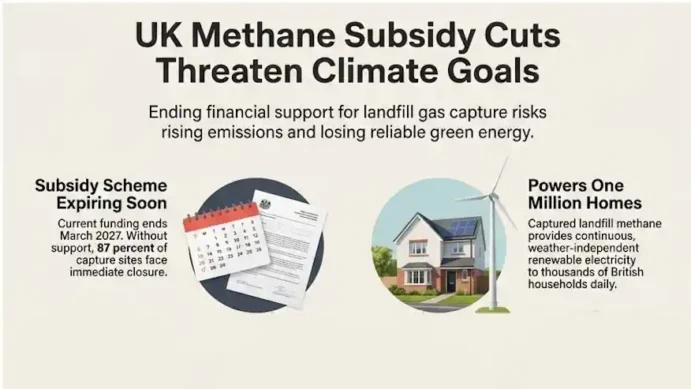
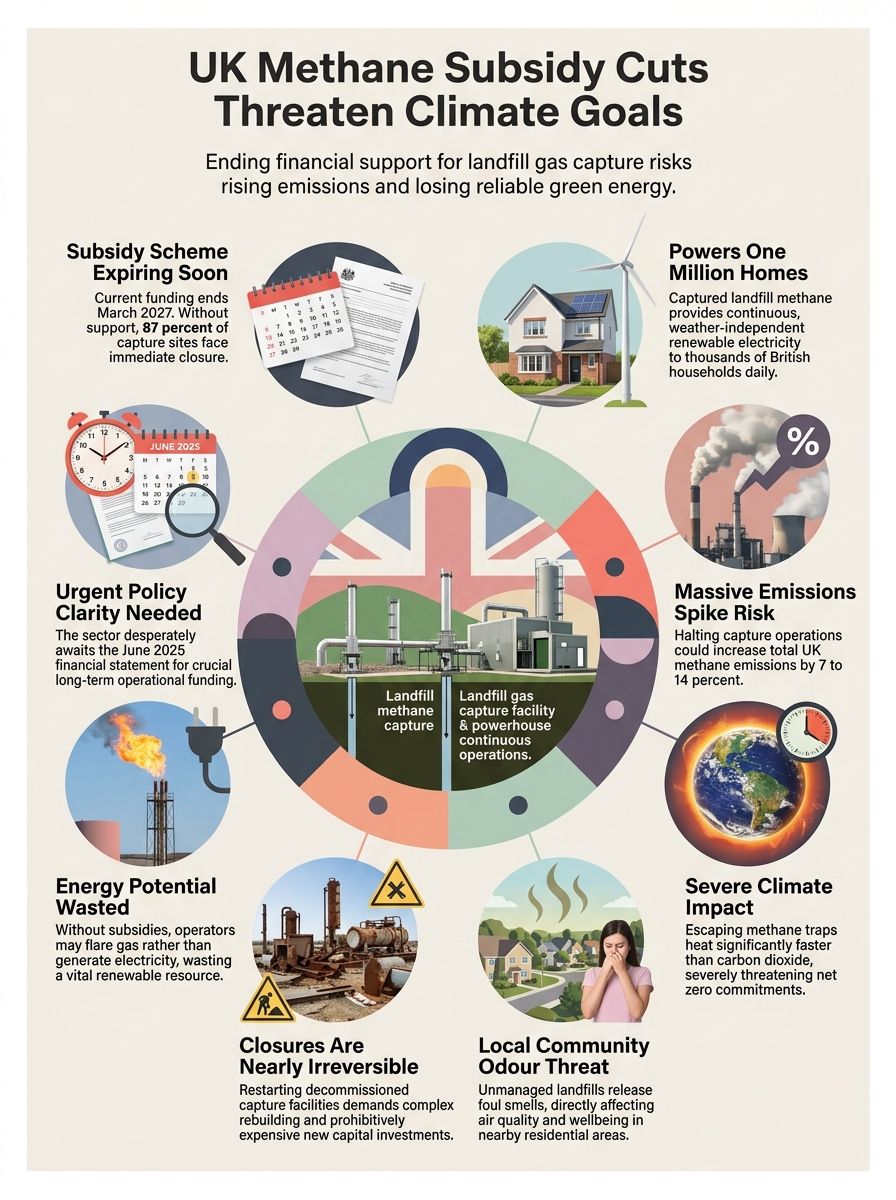
Right now, landfill methane gas capture sites quietly power approximately 1 million homes with clean and reliable electricity. The Renewables Obligation scheme funds these operations, but it expires in March 2027. Without fresh government support, 87 per cent of landfill methane capture sites would shut down immediately.
This closure would eliminate a renewable energy source that works around the clock. Ending subsidies for landfill gas would increase UK methane emissions by 7 to 14 per cent. Methane traps heat far more effectively than carbon dioxide, which threatens our climate goals and Paris Agreement commitments.
Global turmoil shows that the only hope of keeping your energy bills low depends on maintaining stable domestic power sources and dismantling an energy pricing based on international natural gas prices.
This guide explains exactly what methane gas capture does and why the UK Department for Energy Security and Net Zero must act now. You will discover how landfill sites near Rugby generate enough power for 10,000 homes yearly. We will show you the exact consequences if these subsidies disappear, helping you understand the impact on your energy future.
Key Takeaways
- Landfill methane capture sites power approximately 1 million UK homes with reliable 24/7 renewable electricity, generating roughly 2.5 TWh annually. The Renewables Obligation scheme expires in April 2027. Without replacement government support, 87 per cent of these facilities would shut down immediately, causing UK methane emissions to increase by 7 to 14 per cent. Methane traps heat far more effectively than carbon dioxide. This makes subsidy cuts a serious threat to the UK’s net zero commitments and Paris Agreement obligations. The Department for Energy Security and Net Zero has acknowledged the sector’s importance but has not yet confirmed firm financial support for the future, leaving operators unable to plan investments.
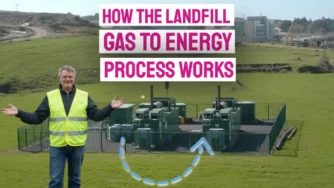
- Methane capture transforms a potent greenhouse gas into clean energy through specialised extraction systems. These systems collect biogas from decomposing waste, process it through pipelines, and convert it into electricity via on-site engines.
- Subsidy withdrawal would force many landfill sites across the UK to cease operations. This eliminates environmental benefits like odour reduction and emissions control that protect local communities. Walley’s Quarry in Staffordshire exemplifies this issue, as residents previously suffered persistent hydrogen sulphide and methane odours when capture systems operated poorly. Environmental charities and industry groups have united in calling for subsidy continuation. They argue that methane capture represents a critical tool for meeting the Global Methane Pledge. The government’s upcoming financial updates represent the first real opportunity for ministers to clarify their position on post-2027 support.
What is methane gas capture and why is it important?
Methane gas capture is the process of collecting harmful emissions from decomposing waste and converting them into usable electricity. This transforms a major pollution source into clean energy for thousands of UK homes. It cuts greenhouse gas emissions while generating renewable power that helps the nation meet its net zero strategy targets.
How is methane gas used as a source of green energy?
Operators use methane gas as a green energy source by drawing it from underground waste and channelling it through specialised combustion engines to generate electricity. Landfill sites across the UK capture methane gas and feed it directly into the national grid.
In a March 2026 Parliamentary debate, government officials confirmed that this process supplies approximately 2.5 TWh of electricity annually. This remarkable figure equates to nearly 1 per cent of the total UK electricity demand. The process transforms a potent greenhouse gas into a valuable energy resource, which reduces reliance on foreign gas imports.
- Constant Production: Decomposing waste produces methane steadily, allowing engines to run 24 hours a day.
- Technology Upgrades: Companies like Loci Controls now use automated real-time data systems to increase gas capture efficiency by up to 20 per cent.
- Financial Support: The Renewables Obligation Certificate scheme historically rewarded operators for producing this green electricity.
- Proven Reliability: Sites like the Cotesbach landfill gas project show how operators can extract methane efficiently year after year.
This renewable energy supply outperforms intermittent sources like wind or solar installations. Site managers and landfill workers understand that this energy source delivers absolute reliability regardless of seasonal changes.
What impact do methane emissions from landfills have on the environment?
Methane escaping from UK landfills poses a serious threat to our climate and local air quality. These emissions can increase UK greenhouse gas emissions by 7 to 14 per cent if capture systems fail to function.
Methane remains short-lived in the atmosphere, yet it drives climate change aggressively. The gas traps heat 28 times more effectively than carbon dioxide over a 100-year timeframe. Escaping methane directly counteracts the UK’s commitments to the Global Methane Pledge, which requires a 30 per cent reduction in national methane emissions by 2030.
“Tackling methane emissions offers one of the fastest ways to slow global warming right now, acting as an emergency brake on climate change.”
These leaks also create foul odours that affect local communities living near landfill sites. Residents experience unpleasant smells and severe air quality problems from uncaptured gas. The Intergovernmental Panel on Climate Change confirms that methane emissions threaten net zero goals across all nations.
Liam Hardy, head of research at the Green Alliance, reported that without active landfill gas capture, the UK risks sliding backwards on its environmental progress. Failing to capture landfill methane means missing crucial opportunities to generate green electricity while protecting the atmosphere.

How does methane gas capture work, and what are its benefits?
Methane gas capture works through a network of extraction pipes that draw biogas from waste and process it through specialised engines to create power. Landfill sites compress and treat the collected gas to remove impurities before converting it into electricity or renewable heat.
This process transforms a potent greenhouse gas into clean energy that powers thousands of UK homes while simultaneously reducing harmful emissions.
How is captured methane actively collected and utilised?
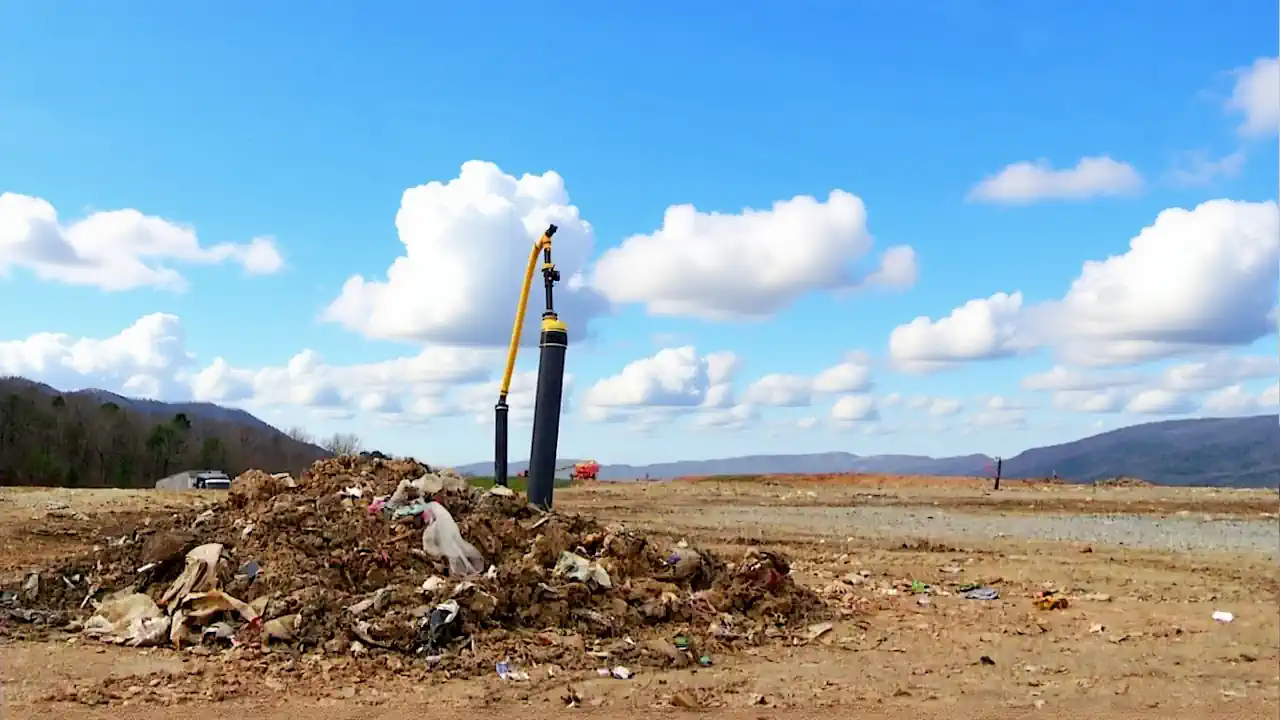
Dedicated extraction systems actively collect methane by pumping it directly from deep within landfill sites into surface-level collection pipelines.
- Extraction teams install specialised pumping equipment deep within the waste layers where decomposition occurs most actively.
- Piping networks transport the collected gas to on-site facilities where operators remove impurities to achieve engine-quality standards.
- Technology providers provide automated wellheads and real-time data to increase the efficiency of this collection by 10 to 20 per cent.
- Quality control measures verify that the processed gas contains sufficient energy content for efficient combustion.
- On-site engines receive the treated methane and convert it into mechanical energy through controlled combustion reactions.
- Generators drive turbines connected to power distribution networks, supplying renewable electricity to homes across the United Kingdom.
These extraction systems operate continuously to capture emissions before they escape. Even closed sites maintain active collection operations to prevent uncontrolled leaks.
Why does methane capture provide a stable and reliable renewable energy supply?
Methane capture provides a reliable energy supply because decomposing waste generates gas 24 hours a day. Landfill methane energy operates around the clock, unlike solar panels or wind turbines that depend entirely on weather and daylight.
This 24/7 availability makes captured methane a powerhouse for grid stability. The energy supply remains consistent regardless of cloud cover or wind speed. Electricity flows to roughly 1 million UK homes without interruption.
| Energy Source | Generation Condition | Grid Stability Impact |
|---|---|---|
| Landfill Methane | Continuous (24/7) | High stability, provides consistent baseload power. |
| Solar Power | Daylight and clear skies required | Variable, drops to near zero at night without battery storage. |
| Wind Power | Requires sufficient wind speeds | Variable, fluctuates based on changing weather fronts. |
The technology delivers what other renewables cannot. It provides dependable power that balances the national electricity grid and reduces reliance on volatile foreign gas imports.

How is electricity produced from landfill methane in practice?
Operators produce electricity from landfill methane by burning the processed biogas in specialised engines that drive power generators. Methane gas extraction at landfill sites captures biogas that would otherwise escape directly into the atmosphere.
- Specialised engines designed specifically for methane combustion receive the captured gas through underground pipelines.
- These engines burn the biogas in controlled conditions to generate intense heat and mechanical energy inside the combustion chamber.
- The chemical energy stored within the methane transforms into electrical power as the engines spin their internal turbines.
- Operators feed the generated electricity directly into the local or national grid to supply nearby homes and businesses.
- The Rugby landfill site demonstrates this process perfectly, producing continuous electricity for roughly 10,000 homes each year.
Generation continues until methane emissions subside to negligible levels. This ensures the site extracts maximum energy value from the waste while preventing severe climate change impacts.
What are the risks of subsidy withdrawal for landfill methane capture?
Withdrawing subsidies risks the immediate closure of methane capture facilities. This would devastate the UK’s renewable energy supply and trigger massive emission increases. The UK government plans to remove the financial support that makes these sites viable.
Subsidy cuts would force many facilities to close their doors, stripping away the renewable energy benefits that power thousands of British homes.
What are the government’s plans regarding subsidy removal?
The government plans to let the Renewables Obligation scheme expire in April 2027. This scheme currently provides the essential financial support for landfill methane capture across the UK. Officials have not yet confirmed a replacement subsidy system.
In a March 2026 parliamentary debate, officials from the Department for Energy Security and Net Zero acknowledged the impending deadline. They stated they are exploring the implementation of long-term methane capture schemes with suitable transitional arrangements.
“We recognise the importance of providing commercial clarity to the sector and will provide an update regarding transitional support for landfill gas operators.”
Current discussions focus on whether existing landfill electricity plants will receive protection through alternative funding routes. The Green Gas Support Scheme does not directly target landfill methane operations. This means site operators cannot rely on this specific programme for financial support.
Without a firm government commitment, many facilities face immediate closure. This hesitation creates real, actionable risks for operators managing major sites across the country.

How could subsidy cuts lead to landfill methane capture site closures?
Subsidy cuts would lead to site closures by making operations unprofitable, forcing companies to abandon their extraction equipment. Site operators depend entirely on these subsidies to cover their running costs and generate profits from energy production.
- Loss of Crucial Revenue: Renewable Obligation Certificates historically provided a revenue bonus of up to 50 per cent on top of wholesale electricity prices.
- Mass Shutdowns: Without this financial backing, industry groups estimate that over 87 per cent of landfill gas sites could cease operations entirely.
- Skill Drain: Skilled workers would lose their jobs, and the technical expertise built up over the years would vanish from the sector.
- Costly Restarts: Extraction equipment deteriorates quickly when left unused, making restarting operations nearly impossible for a struggling business.
Operators face a stark choice between running unprofitable facilities or shutting them down completely. Most would choose closure because they cannot sustain the high costs of maintenance on electricity sales alone.
What impact would subsidy withdrawal have on renewable energy benefits?
Subsidy withdrawal would eliminate 2.5 TWh of continuous renewable electricity from the national grid, forcing the UK to rely heavily on fossil fuels. Approximately 1 million UK homes currently receive their electricity directly from landfill gas generation.
Losing this supply would create a massive gap in the nation’s green energy portfolio. The stability and reliability of 24/7 renewable electricity would disappear.
| Metric | Current State (With Subsidies) | Projected State (Without Subsidies) |
|---|---|---|
| Energy Generated | 2.5 TWh annually | Near zero from landfill sources |
| Homes Powered | Approximately 1 million | Significant grid deficit |
| Grid Reliability | Stable, continuous baseload | Increased reliance on imported gas |
Renewable energy targets and net zero commitments would become considerably harder to achieve. Environmental benefits, including emission control and odour reduction, would vanish alongside the economic advantages these operations provide to local communities.
What environmental impacts could result from subsidy cuts?
Subsidy cuts would result in millions of tonnes of uncaptured methane escaping into the atmosphere, directly undermining international climate targets. Removing financial support would allow dangerous greenhouse gases to pollute the air.
This failure to capture biogas would accelerate the warming of our planet. Environmental groups warn that this decision poses a critical threat to the UK’s long-term climate commitments.
How might methane emissions increase if subsidies end?
Methane emissions will increase drastically because operators will simply vent the gas into the atmosphere instead of paying to capture and process it. Over 87 per cent of sites would release methane untreated into the air if capture operations cease.
- Emissions Spike: Research predicts a 7 to 14 per cent increase in UK methane emissions if capture operations stop.
- Wasted Potential: Some operators might resort to flaring, which burns methane but completely wastes the 2.5 TWh of potential renewable energy generation.
- Worsening Leaks: Methane leaks naturally intensify around closed or unmanaged landfill sites when regular engineering oversight lapses.
- Target Failures: A massive increase in emissions would fundamentally undermine the Glasgow Climate Pact commitments.
Uncaptured methane escapes freely from sites that lack active collection systems. Operators face an impossible choice between maintaining expensive infrastructure at a massive financial loss or abandoning capture entirely.
How do methane emissions contribute to climate change?
Methane emissions contribute heavily to climate change by absorbing infrared radiation and trapping heat in the atmosphere at an alarming rate. This potent greenhouse gas warms the planet approximately 28 times more effectively than carbon dioxide over a century.
Landfills release substantial quantities of methane as organic waste decomposes underground over several decades. Escaping landfill methane represents a massive contributor to the United Kingdom’s greenhouse gas profile. Scientists and organisations like the UN Environment Programme recognise methane abatement as an emergency brake on rising global temperatures.
Tackling methane emissions remains a high priority for climate policy because the gas released today causes immediate climate impacts over the next decade. The United Kingdom’s net zero ambitions depend entirely on the stringent, continuous control of these emissions.
Without active intervention at landfills, methane continues escaping unchecked. Stopping methane capture operations would reverse years of progress and allow harmful gases to accumulate rapidly in the atmosphere.
Why is it important to address methane emissions from landfills?
Addressing methane emissions from landfills is vital because it protects local communities from toxic odours while helping the nation meet strict environmental targets. Landfills produce methane gas continuously for many years after they stop accepting waste.
Uncontrolled emissions threaten both local air quality and national climate goals. The Environment Agency has actively monitored sites like Walley’s Quarry in Staffordshire, where residents suffered severely from hydrogen sulphide and methane odours when capture systems underperformed.
“Effective methane control is not just about climate change; it is essential for protecting the day-to-day health and wellbeing of communities living near disposal sites.”
The agriculture sector and dairy industry benefit from similar biomethane initiatives. Slurry infrastructure grants and comparable funding schemes prove that proactive government investment in methane management delivers real, measurable results.
Sustainable landfill operations depend directly on reliable subsidies. These funds keep capture systems running and prevent the release of dangerous greenhouse gases into our local neighbourhoods.
What is the current policy and government response to landfill gas subsidies?
The current government policy acknowledges the value of landfill gas generators but fails to provide a concrete funding plan to replace the expiring subsidies. The Department for Energy Security and Net Zero recognises that these facilities play a vital role in the UK’s renewable energy mix.
Treasury officials and energy strategists continue to explore different pathways to sustain the sector. However, the exact details regarding subsidy continuation remain absent before the upcoming financial statement.
FAQs
1. What is the United Kingdom Methane Memorandum, and how does it relate to landfill gas subsidy cuts?
The United Kingdom Methane Memorandum outlines national targets to reduce methane emissions from landfills through gas capture infrastructure. When subsidies for landfill gas capture are reduced, as seen in recent UK policy adjustments, operators may lack the financial support needed to maintain effective capture systems. This creates a risk of rising emissions that could undermine the country’s climate commitments.
2. How do government departments like the Department for Energy Security & Net Zero and BEIS influence methane capture policies?
The Department for Energy Security & Net Zero, which replaced BEIS in February 2023, sets regulations and allocates funding for methane capture projects across Britain. Their policy decisions directly determine which landfill sites receive financial backing for emissions reduction infrastructure.
3. Why are figures such as Paul Cleary or David Rice mentioned in discussions about UK landfill gas subsidies?
Paul Cleary and David Rice have contributed expert analysis on energy policy and waste sector economics, helping to inform debates about the impact of subsidy cuts on methane management. Their research highlights potential risks when financial incentives for gas capture are reduced.
4. Could international perspectives, like those from Michael Lerner or Doug Burgum in the Interior Department abroad, impact UK approaches to methane reduction?
International examples, such as US methane policies, provide comparative frameworks that UK policymakers can study when designing emission reduction strategies. While not directly binding on Britain, these international approaches offer useful benchmarks for evaluating different regulatory models.