Landfill Gas to Energy (LFGTE) systems that capture methane—a potent greenhouse gas—produced by decomposing waste in landfills and convert it into renewable energy, are on the increase. By installing wells to extract this gas, landfills reduce emissions while generating electricity, heat, or Renewable Natural Gas (RNG) for homes, industry, and vehicles.
This can really help in the fight against climate change.
Expert Insights: Future Trends in Landfill Gas-to-Energy Conversion
- US Landfill gas conversion could grow to be a $1.9 billion industry every year, given that a quarter of the largest US landfills don’t collect any gas.
- Three specific improvements — new gas collection systems, earlier installation at working faces, and real-time automated monitoring — could reduce total U.S. landfill methane emissions by nearly half.
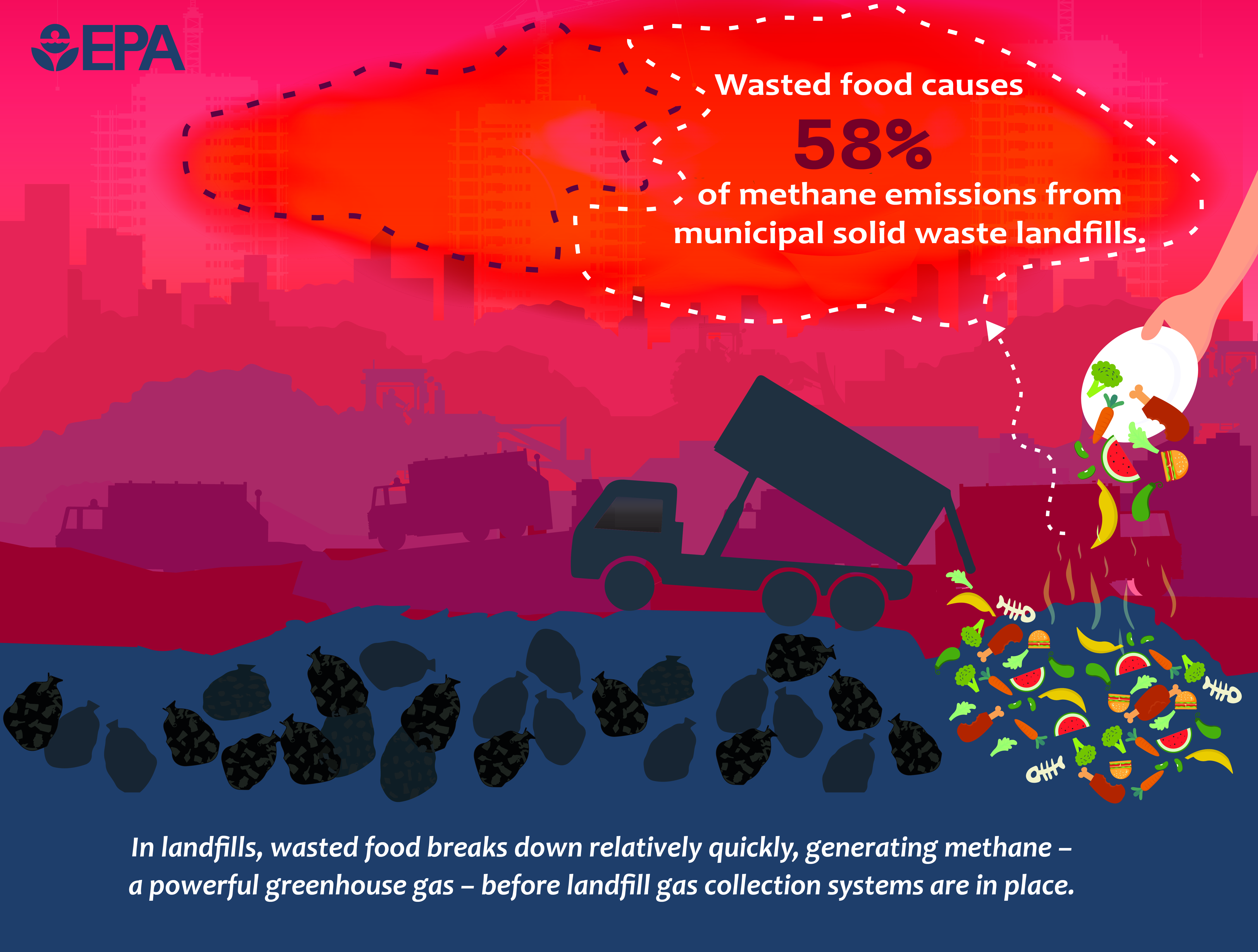
- Food waste is just 20% of landfill tonnage but is responsible for 58% of fugitive methane emissions, making it the biggest single target for future gas capture improvements.
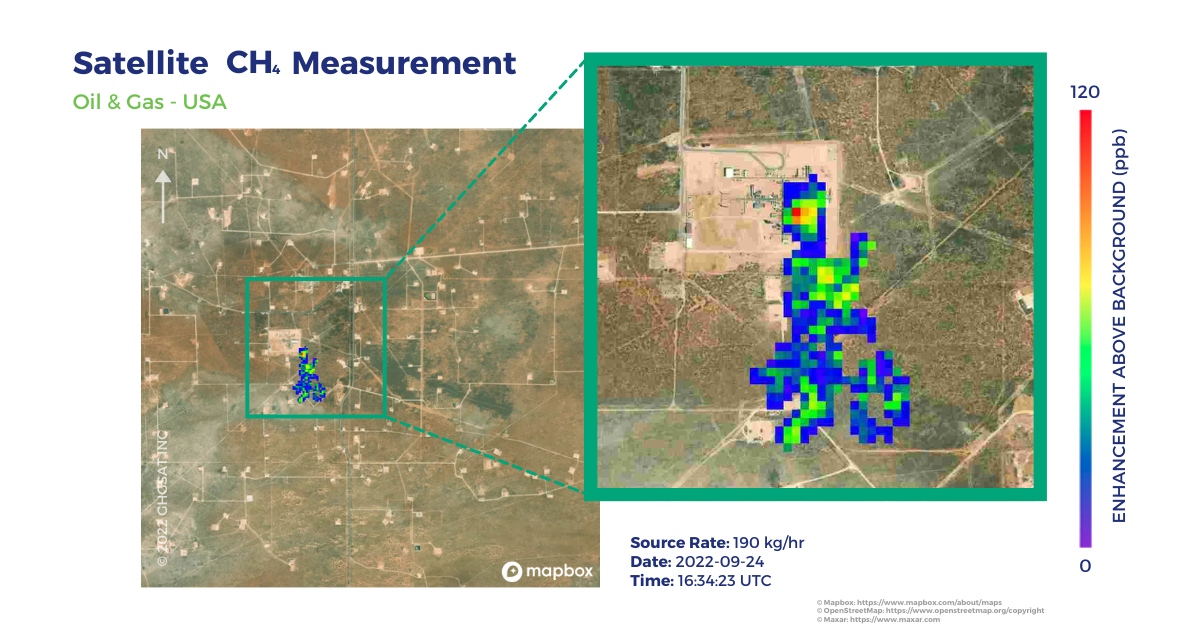
- Satellite technology from companies like GHGSat is changing the way operators detect and respond to methane leaks — and it’s changing the economics of gas capture projects.
- Despite federal regulatory pullbacks, landfill operators are moving forward with gas-to-energy projects — and the financial case for doing so has never been stronger.
Underneath every landfill is a quiet, continuous chemical reaction that generates one of the most potent greenhouse gases on the planet — and increasingly, one of the most valuable energy resources in the renewable sector. It’s known as anaerobic digestion.
As we move towards a future of cleaner fuels and lower carbon emissions, landfill gas (LFG) conversion is emerging as a key solution. It addresses both climate change targets and economic realities.
Energy Vision, a nonprofit organisation focused on transitioning to clean energy, has documented the extent of this opportunity in detail. The figures are compelling. For those working in renewable energy or interested in this area, landfill gas is something to watch.
Landfills Are Untapped Goldmines of Energy
Landfill gas, a mixture of roughly equal parts methane and carbon dioxide, is produced when organic waste decomposes in a landfill without access to oxygen. This methane is chemically identical to the natural gas used in homes and industry, which means it can be captured, processed, and used as a direct fuel substitute or converted into electricity on-site.
Landfills across the United States generate an incredible amount of methane, one of the most potent greenhouse gases. Despite this, the systems in place to collect and convert that gas are often lacking, outdated, or completely non-existent.
This discrepancy between the amount of gas being produced and the amount being captured is where the future of landfill gas conversion is being defined.
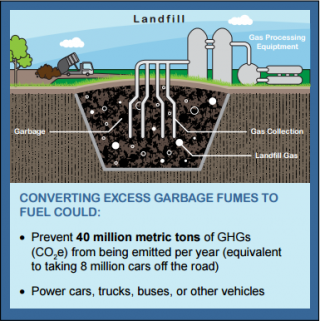
“Garbage Fumes Powered More of Our Cars …” from www.epa.gov and used with no modifications.
The Problem with Methane Leakage from Landfills
Methane doesn’t hang around waiting for us to collect it. As soon as organic material starts to decompose, the gas starts to move through the waste and escape out into the open — a process known as fugitive emissions. Without a well-designed, well-maintained gas collection system, that methane just goes straight up into the atmosphere, where it traps heat about 80 times more effectively than CO2 over a 20-year period. The environmental impact is huge, but there’s also a big financial cost — every cubic foot of methane that isn’t controlled is potential revenue just disappearing into thin air.
How Operators Could Rake in $1.9 Billion Annually
Energy Vision has crunched the numbers and found that operators of MSW landfills in the United States could be pulling in nearly $1.9 billion annually by capturing and converting landfill gas. This figure is based on improvements that could be made with an initial investment of around $1.3 billion in 2023. So, for any operator who is willing to do the math, the return on investment is clear.
Methane captured from landfills can be sold as renewable natural gas (RNG), used on-site to generate electricity, or converted into compressed or liquefied fuel for fleet vehicles. Each of these uses creates a product that can be sold, turning what would otherwise be an uncontrolled pollutant into a revenue source. This is not a theoretical model — landfill gas-to-energy projects are already in operation across the country, and the infrastructure for these projects is well established.
Why 25% of High-Emitting Landfills Don’t Collect Gas
Even though there are clear financial benefits, Energy Vision estimates that about 25% of MSW landfills that currently report emissions to the EPA’s Greenhouse Gas Reporting Program have no gas collection system.
This is not only a missed chance to make money, but it’s also a regulatory and environmental risk that is becoming more difficult to ignore as state-level pressure and voluntary carbon markets grow. For those interested in exploring solutions, there are various landfill gas management solutions available to address these challenges.
Three Key Technologies for the Future of Landfill Gas Collection
Reducing U.S. landfill methane emissions by almost half doesn’t require a scientific miracle. It just requires taking what we already have and using it more effectively, more rapidly, and more intelligently. Energy Vision’s research indicates that three key improvements can account for the majority of the methane reductions that can be achieved. Each of these represents a separate frontier in the future of landfill gas conversion.
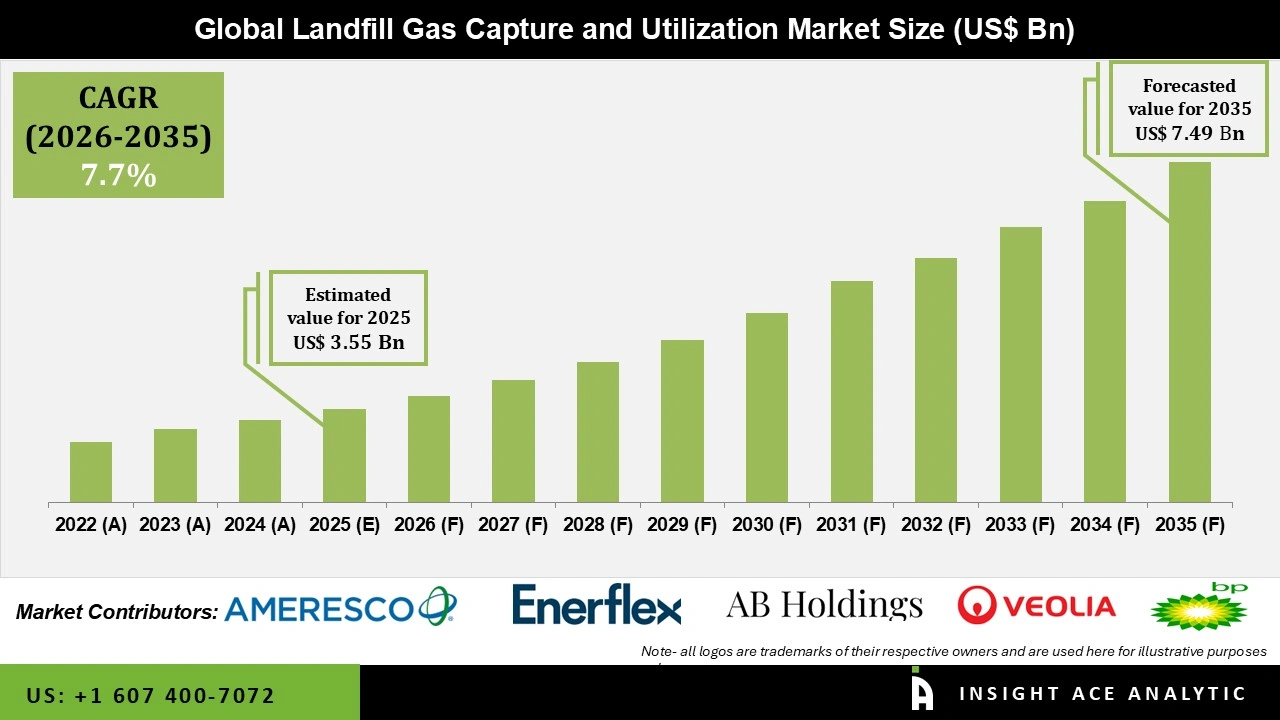
“Landfill Gas Capture and Utilisation…” from www.insightaceanalytic.com and used with no modifications.
1. Gas Collection Systems for High-Emission Landfills Lacking Infrastructure
The most pressing opportunity is with high-emission landfills that currently have no gas collection and control systems. The installation of systems at these sites — especially those with high gas flow rates — could stop around 6.2 million metric tons of CO2 equivalent from being released into the atmosphere each year. If systems were expanded to all high-emission landfills regardless of gas flow rate, that number would increase to about 16 million metric tons of CO2 equivalent per year.
Presently, federal regulations stipulate that landfills must exceed certain limits before they are required to collect gas, including a permitted design capacity of at least 2.5 million cubic meters of waste. This means that a significant number of sites that are actively emitting are not regulated at all when it comes to gas collection. The trend for the future is clear: proactive installation ahead of regulatory requirements, motivated by the potential for revenue from RNG and carbon credit markets.
- No existing infrastructure sites: Highest priority targets for new gas collection investment
- High-flow landfills: 6.2 million metric tons CO2e savings potential per year
- All high-emitting landfills combined: Up to 16 million metric tons CO2e savings annually
- Primary revenue pathway: Renewable natural gas (RNG) sales and on-site power generation
The regulatory environment has actually created an unintentional incentive gap — landfills just below federal thresholds can emit freely without consequence, while operators who voluntarily invest in collection systems gain a competitive advantage in carbon and energy markets. That dynamic is accelerating private investment in gas capture infrastructure.
2. Quicker Installation at Landfill Working Faces
Typically, landfill gas collection systems are installed several years after waste is disposed of — a timeline that mirrors past methods rather than the best gas capture approach. The issue with this delay is that decomposition and gas generation start as soon as waste is buried. Every month of delay results in methane escaping before any collection infrastructure is set up to capture it. For more insights on waste emission sources and trends, check out the latest data.
Previous installation data is quite persuasive. If gas collection systems are installed within one year of the first time waste is put on a landfill’s active working face, an additional 21 million metric tons of CO2 equivalent could be saved each year. This amount significantly surpasses the savings that could be achieved by simply installing systems on sites that currently lack them. This single operational change, which does not necessitate any new technology, is the most powerful tool currently available to landfill operators.
The primary obstacle to earlier implementation is mostly financial and logistical. Working faces are active construction zones where waste is deposited daily, which makes it challenging to install and maintain permanent infrastructure. However, the development of modular collection infrastructure and flexible piping systems is making it more feasible to start gas capture much earlier in the waste placement cycle — and this trend is only picking up speed.
Key Insight: Shifting gas collection installation to within 12 months of waste placement could save 21 million metric tons of CO2 equivalent per year — more than any other single improvement available to U.S. landfill operators.
3. Real-Time Monitoring and Automated Tuning Systems
Even well-designed gas collection systems underperform when they aren’t actively managed. Landfill gas pressure, composition, and flow rates change constantly as waste decomposes, settles, and shifts — and a system calibrated for one set of conditions can become inefficient within weeks. Historically, operators have relied on periodic manual inspections and adjustments, which means systems can run suboptimally for extended periods between tune-ups.
Automated tuning systems and real-time monitoring platforms completely alter this dynamic. These systems continuously measure gas pressure and composition across collection wells and automatically adjust extraction rates to maintain peak efficiency at all times. This leads to higher gas yields, lower fugitive emissions, and better data for operators looking to maximise revenue from their capture systems. This trifecta makes the investment case for automated monitoring essentially self-funding over time.
The Math That Could Cut U.S. Landfill Emissions in Half
The equation for landfill gas improvement is surprisingly simple — and the potential impact for U.S. operators is truly substantial. Energy Vision’s analysis shows that a joint investment of around $1.3 billion across the MSW landfill sector could cut total U.S. landfill methane emissions by almost half compared to 2023 levels. That’s not a far-off forecast — the technology, the regulatory structure, and the revenue channels are already in place.
Almost Half of Landfill Methane Emissions Could Be Eradicated With $1.3 Billion
When you consider the scale of $1.3 billion, it’s a one-time investment spread across hundreds of locations, not a recurring annual expense. The per-site investment, when distributed across the number of landfills currently lacking sufficient gas collection infrastructure, is well within the scope of projects that can be financed through RNG offtake agreements, tax equity structures, or direct partnerships with utilities. The revenue side of the equation, which is close to $1.9 billion per year, indicates that the sector as a whole could recover that investment within a single year of full operation.
The advancements aim to address three particular operational shortcomings: locations without collection systems, locations where collection starts too late, and locations where current systems are not being actively enhanced. Each of these shortcomings has a quantifiable methane reduction associated with it, and collectively they result in an almost 50% reduction in the sector’s total emissions footprint – without the need to close a single landfill or introduce any fundamentally new technology.
This number is especially impressive because it shows the potential impact that can be achieved under the current regulatory and market conditions. This isn’t dependent on new federal regulations or carbon pricing laws. Operators who make their move now can take advantage of the revenue increase while the RNG market is still developing – a period that seasoned energy investors identify as an early bird advantage.
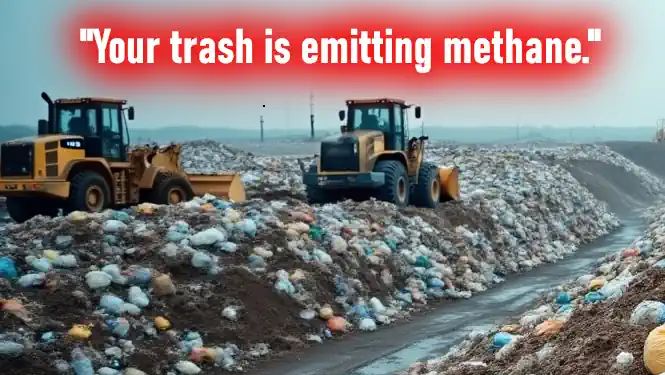
Visualising the Savings of 16 Million Metric Tons of CO2
Imagine taking 3.5 million gasoline-powered cars off the road for a full year. That’s the carbon savings equivalent of 16 million metric tons of CO2. This is the amount of emissions that could be reduced each year by installing gas collection systems at all high-emitting landfills in the U.S. This includes those landfills with lower gas flow rates that currently aren’t economically viable for voluntary action. If you also consider the savings from installing these systems earlier in the landfill’s life, the total impact could be over 35 million metric tons of CO2 equivalent each year.
The Main Source of Methane in Landfills is Food Waste
Waste doesn’t all generate methane at the same speed. The rate and amount of gas produced is largely dependent on what’s being buried — and food waste is the primary driver of methane generation in landfills. This is a crucial point for anyone considering where to invest in gas capture for the best return on investment.
Food waste decomposes faster and produces more gas in anaerobic landfill conditions than almost any other material in the waste stream. Cardboard, textiles, and wood all decompose slowly over decades. Food waste starts generating significant methane within months. This means the gas production curve for landfills with a lot of food is steeper, starts earlier, and is harder to manage without a proactive collection infrastructure in place from the very beginning of waste placement.
How Food Waste, Despite Making Up 20% of Tonnage, Produces 58% of Fugitive Methane
In the United States, food waste makes up around 20% of the total municipal solid waste tonnage, but it is the source of roughly 58% of fugitive methane emissions from landfills, as reported by Energy Vision citing federal data. This outsized impact is due to biochemistry – food waste is loaded with rapidly fermentable organic compounds that microbes can quickly and effectively convert to methane in anaerobic conditions.
For landfill operators, the fact that such a small fraction of the waste stream produces the majority of the methane has a practical implication: the parts of a landfill that receive the most food waste should be the first to get gas collection installations. By focusing on these areas first, before the conventional installation timeline would typically call for it, landfill operators can make one of the most impactful moves in modern landfill gas management.
“Quantifying Methane Emissions from …” from www.epa.gov and used with no modifications.
Why Food Waste Diversion and Enhanced Gas Collection Are Not Mutually Exclusive
There is a common misunderstanding in the waste management policy world that food waste diversion initiatives — such as composting, anaerobic digestion facilities, and food rescue networks — negate the necessity for landfill gas collection enhancements. Energy Vision’s research contradicts this perspective. Even if all food waste was successfully diverted from landfills, there would still be a significant amount of methane production from the existing waste, as well as from other organic materials that continue to enter the waste stream. Diversion and gas capture are complementary approaches, not alternatives — and the transition from today’s landfill composition to a significantly diverted future will take decades.
How Satellite Technology Is Revolutionising the Way We Monitor Landfill Methane
GHGSat, a company based in Montreal, has launched a series of satellites specifically built to detect and measure methane emissions from individual facilities, including landfills. What was once undetectable from the ground can now be measured from space, providing operators and regulators with a completely new level of insight into where gas is leaking, how much is being lost, and how emission patterns change as landfills grow and change. In one reported instance at a landfill near Casablanca, GHGSat satellite data showed how methane emission sources moved as new parts of the landfill were built — information that would have been incredibly difficult and costly to obtain through ground-based monitoring alone. This level of spatial and temporal accuracy is revolutionising the way gas capture systems are built, where they are prioritised, and how quickly operators can react to underperforming collection areas.
“NASA Selects GHGSat Data for Evaluation …” from www.earthdata.nasa.gov and used with no modifications.
How Deregulation Could Impact the Future of Landfill Gas-to-Energy Conversion
Historically, one of the main reasons landfill operators in the United States have adopted gas collection systems is due to federal regulatory pressure. The current rules from the EPA under the Clean Air Act require landfills of a certain size and emission level to install gas collection and control systems. However, these rules do not cover all actively emitting sites. With recent reductions in new rulemaking at the federal level, there is uncertainty about whether these regulations will become more stringent in the near future.
The Effects of Federal Rollbacks on State Governments
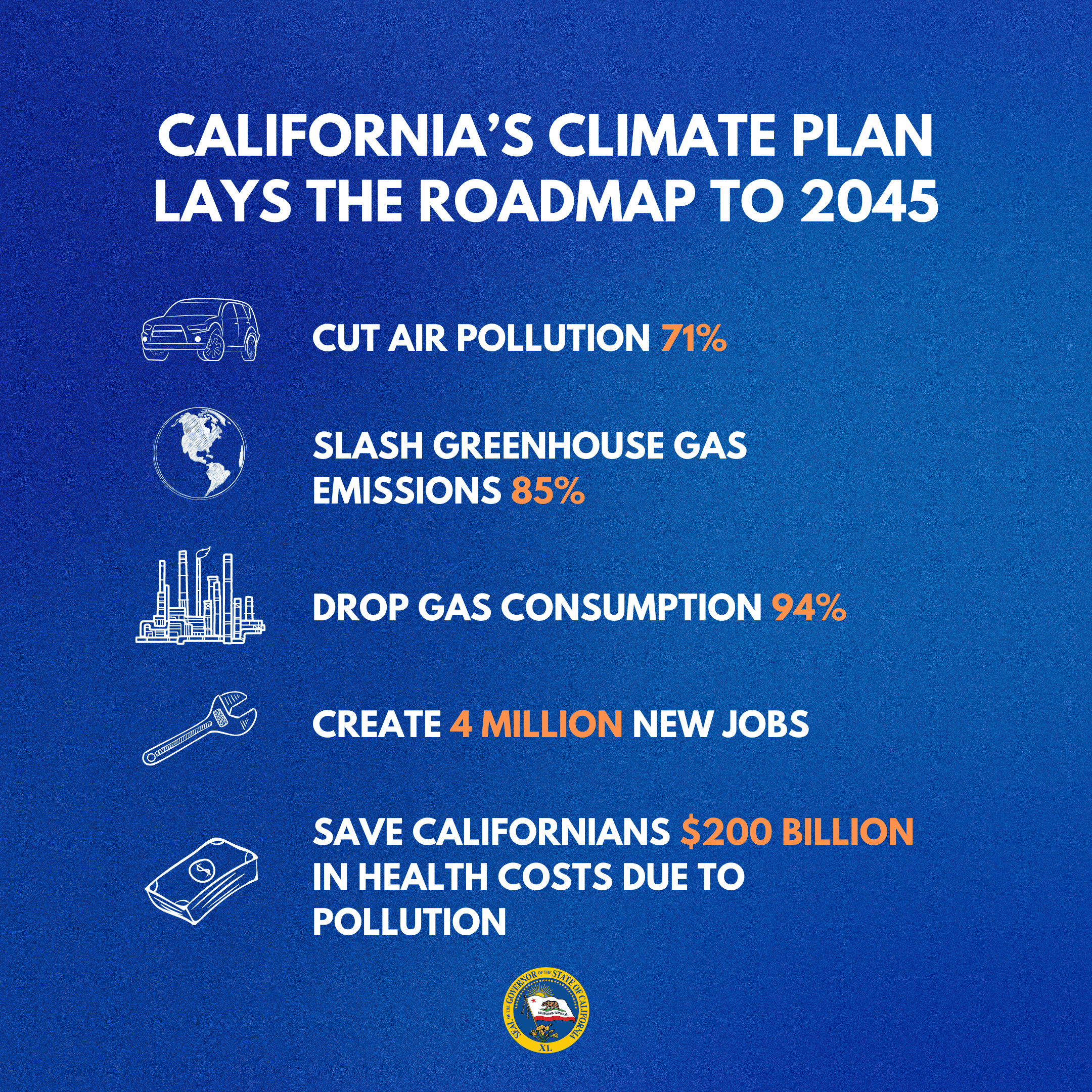
With the slowing of federal action on landfill gas regulation, state governments, especially those in California, New York, and Washington, are filling the void with their own emissions standards and RNG mandates. For instance, California’s Short-Lived Climate Pollutant reduction strategy imposes stringent methane reduction targets on the waste sector that far exceed federal minimums. This patchwork of state-level regulations is creating a two-tiered compliance environment where operators in progressive states have to meet much higher standards than those in states with minimal oversight. This is also driving private investment in gas capture in markets where the regulatory signal is strong.
“Net Zero Carbon Pollution …” from www.gov.ca.gov and used with no modifications.
Why Current Regulations Do Not Even Require Systems Based on Methane Emissions
Here is a structural defect in the current regulatory framework that is seldom discussed: federal rules governing landfill gas collection are not actually triggered by methane emissions. They’re triggered by design capacity thresholds — specifically, a permitted design capacity of at least 2.5 million cubic meters of waste. A landfill can be emitting significant quantities of methane and still face zero federal obligation to collect it, simply because it hasn’t crossed the capacity threshold. That disconnect between what’s actually entering the atmosphere and what triggers regulatory action is one of the primary reasons a quarter of high-emitting U.S. landfills currently operate with no gas collection system at all.
While the EPA has been considering changes to this framework — it has released a number of white papers looking at possible changes to air regulations for landfill gas collection — any significant rule changes have been slow in coming. Instead of waiting for federal changes, the most practical operators are taking matters into their own hands. They are conducting their own emissions studies, identifying areas of their facilities that produce high emissions, and investing in collection based on potential revenue rather than compliance deadlines. This market-driven approach is quietly surpassing the regulatory timeline — and it’s creating a new benchmark for responsible landfill management.
Landfill Gas Is a Thriving Business—Here’s Why
Landfill gas-to-energy conversion is not a concept of the future. It’s a real business model with proven revenue streams, working infrastructure, and a growing market for its main product. The Energy Vision report makes a solid financial argument: an industry-wide investment of about $1.3 billion in gas collection improvements could generate yearly revenues of nearly $1.9 billion—a return profile that stacks up well against most infrastructure asset classes.
The Financial Breakdown of Landfill Gas-to-Energy
Measurement Value Origin Required investment for the entire sector Approximately $1.3 billion (one-time) Energy Vision, 2023 Estimated yearly revenue potential Around $1.9 billion Energy Vision, 2023 Reduction in methane compared to 2023 baseline Almost 50% Energy Vision, 2023 CO2e savings from all high-emitting locations About 16 million metric tons/year Energy Vision, 2023 Additional CO2e savings from earlier setup About 21 million metric tons/year Energy Vision, 2023 Landfills currently not gathering gas About 25% of EPA-reporting MSW sites Energy Vision, 2023
There are several well-known methods to make money from landfill gas. Renewable natural gas, which is processed and injected into existing pipeline infrastructure, can fetch high prices in voluntary and compliance carbon markets. On-site electricity generation using internal combustion engines or gas turbines provides a dependable source of power that can be sold to the grid or used to offset the cost of running a facility. Some operators have also begun to produce compressed and liquefied RNG for fueling their fleets, supplying municipal waste collection vehicles with the very gas produced by the waste they transport. This creates a circular energy loop that is not only economically viable but also makes for a good story.
Generating energy from landfill gas has been a significant factor in the adoption of gas collection and control systems in the United States. This trend is growing as the prices of Renewable Natural Gas (RNG) rise and carbon credit frameworks become more developed. Those who made a business case for it five years ago are now seeing their projected revenues become a reality. The opportunity for a first-mover advantage in this area is closing, and operators who are still not controlling methane are becoming the exception rather than the rule.
Landfill Gas-to-Energy: The Future Is Now
When it comes to landfill gas conversion, the future is already here. We’re not waiting for a policy breakthrough or a technological miracle. The tools we need are already in place: satellite monitoring that can locate fugitive emissions from space, real-time automated tuning systems that keep collection networks running at maximum efficiency, modular infrastructure that allows for earlier installation at active working faces, and a strong RNG market that provides a clear revenue path for captured methane. Now, it’s all about execution at scale. We need more operators to make the investment, more capital to flow into collection infrastructure, and more coordination between state regulators and private landfill operators to speed up the transition from passive emitter to active energy producer.
The future is clear. Landfills that adopt gas conversion are not just reducing their environmental footprint — they’re transforming themselves into energy resources in a market that increasingly values low-carbon production. The contrast between managed landfills and informal dumping grounds, where methane emissions per square kilometre are significantly higher, highlights what can be achieved with the right infrastructure. Every metric ton of methane captured is at once a victory for the climate, a revenue opportunity, and a step towards the kind of circular resource economy that will define the future of waste management. The question for operators, investors, and policymakers isn’t whether landfill gas conversion is feasible — it’s how quickly the industry can scale up what is already proven to work.
Common Questions
The concept of landfill gas-to-energy conversion is simple enough, but the details can get complex quickly. Regulations, gas makeup, market factors, and more all come into play. The questions below cover the basics most people want to know before they delve further into this topic.
No matter if you’re looking at this as a potential investment, a solution to climate change, or just trying to comprehend how the waste industry fits into the broader shift to renewable energy, these answers provide you with the basic knowledge to delve into the topic more deeply.
Things are changing fast in this industry. Satellite monitoring, automated gas management, and growing RNG markets are all changing the game. Even if you’ve read about landfill gas in the past, you might be surprised by how much the technology and the economics have improved.
Can you explain what landfill gas-to-energy conversion is and how it operates?
Landfill gas-to-energy conversion entails capturing the methane generated by decomposing organic waste in a landfill and using it as a fuel source. When organic material decomposes in the anaerobic conditions inside a landfill, it generates a gas mixture that is approximately 50% methane and 50% carbon dioxide. To extract this gas under negative pressure, a network of perforated pipes and collection wells is installed throughout the waste mass. The captured gas is then used on-site to generate electricity using internal combustion engines or gas turbines, or it is further processed into renewable natural gas (RNG) for injection into natural gas pipelines or use as vehicle fuel.
What is the potential energy output of a landfill from methane capture?
The potential energy output from a landfill depends on a variety of factors including the size of the landfill, the type of waste, the age of the waste, and the efficiency of the gas collection system. Landfills that are larger and contain a high percentage of food and organic waste will produce gas more quickly. According to an analysis by Energy Vision, improvements to gas collection across U.S. MSW landfills could result in annual revenues of almost $1.9 billion. This figure includes electricity sales, RNG pipeline injection, and vehicle fuel markets. The output from individual sites can vary greatly, but large, well-managed landfills can produce enough electricity to power thousands of homes on a continuous basis.
What are the main barriers stopping landfill operators from installing gas collection systems?
The primary barriers are upfront capital costs, regulatory thresholds that don’t require action at many sites, and the operational complexity of installing infrastructure on active working faces. Under current federal rules, landfills must exceed a permitted design capacity of at least 2.5 million cubic meters before gas collection becomes mandatory — leaving a large number of high-emitting sites entirely outside the compliance framework. For smaller or mid-size operators, the economics of gas collection can be harder to justify without access to favorable RNG offtake agreements or tax equity financing structures. However, as carbon markets mature and RNG prices strengthen, the financial case for voluntary installation is improving rapidly, even at sites below the regulatory threshold.
How does landfill gas stack up against other renewables like solar or wind?
Landfill gas has a unique benefit over solar and wind in one key respect: it produces energy non-stop, no matter the weather or time of day. Solar and wind are inherently intermittent — they only generate power when the sun is out or the wind is up. Landfill gas, on the other hand, is generated 24/7 because decomposition doesn’t take a break, making it a kind of baseload renewable energy. It also takes advantage of existing waste infrastructure rather than needing dedicated land or new grid connections in many situations. The downside is that landfill gas is limited — production hits a peak and then decreases as organic material runs out — whereas solar and wind installations can run indefinitely with minimal fuel inputs.
Do landfill gas-to-energy projects qualify for renewable energy incentives or tax credits?
Indeed — landfill gas projects can qualify for a variety of federal and state-level incentives, depending on the usage of the gas and the structure of the project. Renewable natural gas produced from landfill methane can qualify under the EPA’s Renewable Fuel Standard (RFS) program, generating Renewable Identification Numbers (RINs) that have significant market value. Projects generating electricity may be eligible for the Production Tax Credit (PTC) or Investment Tax Credit (ITC) under federal tax law, depending on project specifics and applicable legislation at the time of development. State-level incentives vary considerably, with California, in particular, offering strong support through its Low Carbon Fuel Standard (LCFS) program, which assigns carbon intensity scores to fuels and rewards lower-carbon alternatives with tradeable credits that can substantially improve project economics.
With the interplay of RFS credits, LCFS credits, voluntary carbon offsets, and utility RNG procurement contracts, the revenue stack for a well-structured landfill gas project can be far more intricate — and more profitable — than a simple energy sale. Seasoned project developers usually layer several revenue streams to maximize returns, and the complexity of that financial engineering has significantly increased as the RNG market has developed over the past ten years.