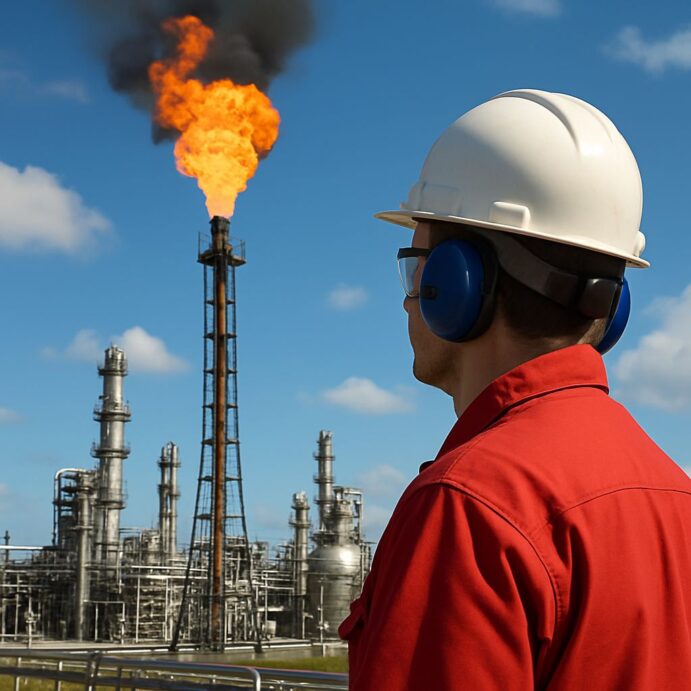
Gas flare systems are critical safety and environmental protection devices in oil and gas production, refining, and chemical processing. They collect, transport, and safely combust excess, toxic, or flammable waste gases from gas field relief valves and landfills, minimising direct atmospheric release by burning hydrocarbons into carbon dioxide and water. Read on for much more about this.
Gas Flare Systems – Highlights
- Landfill gas flare systems designed properly can achieve up to 99.5% methane destruction efficiency, significantly reducing greenhouse gas impacts and associated health hazards.
- Enclosed flare systems provide superior emission control compared to open flares, with better combustion efficiency and reduced visual, noise, and odour impacts.
- Flame arrestors, automated shutdown systems, and continuous monitoring equipment are essential safety components that are critical for preventing potentially catastrophic incidents.
- As landfill gas production declines over time, flare systems must be retrofitted or replaced to accommodate lower flow rates while maintaining combustion efficiency.
- Well-designed flare systems can be integrated with energy recovery options to transform waste gas into valuable renewable energy resources, beyond environmental compliance.
Landfill gas management presents unique challenges that require specialised knowledge and equipment to address safely and effectively. When organic waste decomposes in landfills, it produces a potentially hazardous mixture of gases—predominantly methane and carbon dioxide, along with smaller amounts of volatile organic compounds (VOCs).
Without proper control systems, these gases pose significant environmental, health, and safety risks to landfill operators and surrounding communities.
Flare systems are a crucial technology in the handling of these gases, acting as both a safety feature and an environmental safeguard. These systems burn landfill gas, transforming methane—a greenhouse gas 25-28 times more powerful than carbon dioxide—into less damaging compounds while also decreasing smells and reducing explosion hazards.
The Importance of Landfill Gas Flaring: Safety and Environmental Advantages
Landfill gas flaring provides significant benefits that go far beyond mere compliance with regulations. The main benefit is the destruction of methane, which greatly reduces the greenhouse gas emissions from landfills.
Modern gas flare systems that are well-designed and properly operated can achieve destruction efficiencies of over 99%, effectively eliminating one of the largest contributors to climate change from the waste industry.
This high-efficiency combustion process turns potentially dangerous compounds mostly into water vapour and carbon dioxide.
Controlled flaring is a safety measure that mitigates the risk of methane build-up, which can result in explosions or fires.
Methane is explosive at concentrations of 5-15% in air, making it a considerable danger in enclosed spaces or during atmospheric inversions.
Gas flare systems collect and burn this gas, making the working environment safer for landfill workers and reducing hazards to nearby properties.
- Proper design can decrease fugitive methane emissions by up to 99.5%
- Helps reduce odor complaints from nearby communities
- Prevents the accumulation of potentially explosive gas in and around the landfill
- Eliminates volatile organic compounds and other hazardous air pollutants
- Offers visual confirmation that gas is being destroyed
Flaring not only provides environmental and safety benefits, but it also offers operational advantages by providing continuous landfill gas management, even during periods of fluctuating production.
This continuous extraction helps maintain the correct pressure within the landfill, reducing the possibility of gas migrating into the surrounding soils and groundwater.
The existence of a well-functioning flare system also lays the groundwork for responsible waste management that can later be expanded to include beneficial use projects like energy recovery.
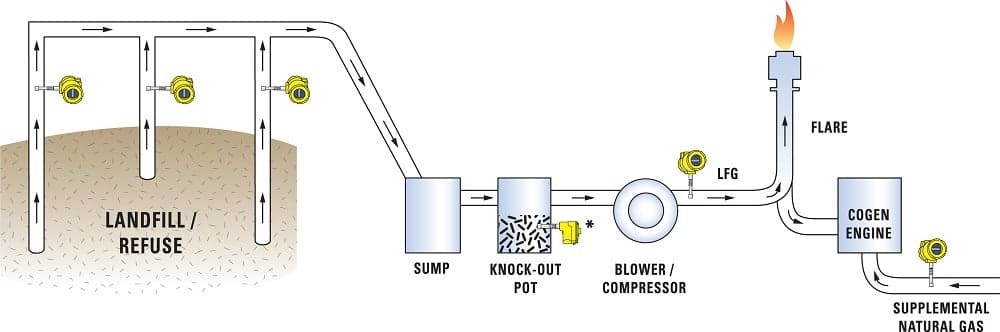
“Precision Gas Flow Measurement for gas flare systems…” from wasteadvantagemag.com and used with no modifications.
Choosing the Right Landfill Gas Flare System for Safety
Choosing the right flare system is key to making sure that landfill gas operations are both efficient and safe. This decision involves taking into account a variety of factors, such as the volume and composition of the gas, local regulations, and any constraints specific to the site.
Although there are a variety of configurations gas flare systems available, landfill operators usually choose between open (candlestick) flares and enclosed flare systems. Each of these systems has its own strengths and weaknesses, depending on the specific operational situation.
Open Flare Systems: Basic and Affordable, but Effectiveness is Not Guaranteed
Open flares, also known as candlestick or elevated flares, are the most basic form of flaring technology available for managing landfill gas. These systems consist of a vertical pipe with a burner tip and flame arrester, which allows the gas to combust in open air conditions without any controls over temperature or residence time.
While they are simple and thus have lower capital costs and minimal maintenance requirements, open flares struggle to maintain consistent destruction efficiency in varying weather conditions.
Wind, rain, and changes in temperature can significantly impact the quality of combustion, which can potentially reduce the destruction of methane to below acceptable levels. Despite these limitations, open flares are still commonly used at smaller landfills or as backup systems where budget constraints prevent the use of more sophisticated options.
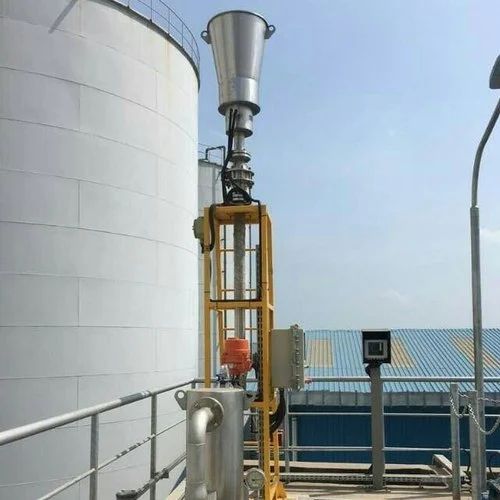
“Biogas Open Flaring System at ₹ 950000 …” from www.indiamart.com and used with no modifications.
Enclosed Flare Systems: Unmatched Emission Control
Enclosed gas flare systems are the leading option for landfill gas destruction, especially when emission control is a key concern. These systems burn gas in a refractory-lined chamber that keeps high temperatures (usually 1,400-1,800°F) for long residence times (>0.3 seconds), assuring the more thorough destruction of methane and other compounds.
The controlled environment protects the flame from weather disruptions while allowing for precise monitoring of temperature and oxygen levels to optimise combustion. Modern enclosed flares include multiple burner configurations that offer turndown capabilities, enabling the system to efficiently manage varying gas flows as landfill production fluctuates over time.
This adaptability is especially beneficial as landfills move from active operation to closure and post-closure phases, where gas volumes typically decrease but flaring requirements continue.
Choosing Between Ground Flares and Elevated Flares: Which is the Right Option?
When making a choice between ground-level and elevated flare configurations, safety considerations should be the first priority, followed by efficiency factors. Ground flares position the combustion zone closer to the ground, making it easier for maintenance personnel to access and reducing the risk of falls associated with elevated structures.
These systems usually include substantial radiation shielding and multiple burner arrangements that provide excellent turndown capabilities. On the other hand, elevated flares place the combustion zone 20-50 feet above ground level, creating natural dispersion of emissions and thermal radiation that can be beneficial in certain situations.
Ground flares are a great option for landfill operations that are worried about how they look and how they affect the community. They hide the flame inside a cover, which reduces light pollution and the mental effect that visible flares can have on nearby properties.
On the other hand, elevated options might be better in places where there isn’t a lot of room or where there’s a risk of gas gathering at ground level. The final choice should take into account the safety needs of the site, operational needs, how much room there is, and what local stakeholders think.
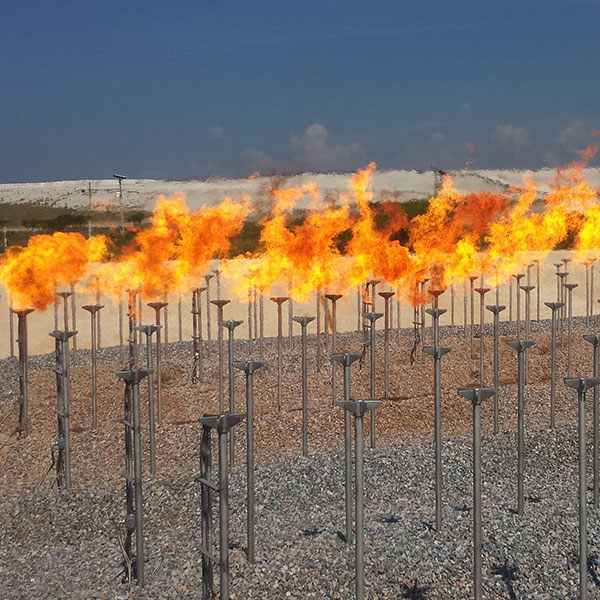
“OGF Open Ground Flares – GBA” from www.gba.com and used with no modifications.
What Makes a Landfill Gas Flare System Work?
There’s more to a landfill gas flare system than what you can see. For it to work effectively, it needs a series of interconnected parts that gather, prepare, keep an eye on, and burn the gas safely. Each part is vital in keeping the system running smoothly and preventing dangerous situations that could harm workers or the environment.
Gas Collection Infrastructure
The backbone of any flare system is a properly designed gas collection infrastructure. This network usually includes vertical extraction wells, horizontal collectors, and header piping that create negative pressure zones to pull gas from the waste mass.
Well spacing and depth need to be carefully calculated based on waste characteristics, with typical setups featuring wells every 150-200 feet in a grid pattern. Modern collection systems use flexible connections and water-resistant materials that accommodate landfill settlement while preventing air infiltration that could create explosive conditions.
Regular wellfield balancing ensures the best gas quality reaches the flare, preventing operational disruptions that could lead to uncontrolled releases or system shutdowns.

“Landfill gas utilization – Wikipedia” from en.wikipedia.org and used with no modifications.
Dealing with Moisture through Knockout Drums
One of the most significant challenges in managing landfill gas is dealing with moisture. It can also be a safety hazard if not properly managed. The main tool used to combat condensate buildup is the knockout drum. This is a vessel where changes in temperature cause the moisture to separate from the gas stream.
These vessels need to have the right level controls, drainage systems that are easy to access, and freeze protection in colder climates. This is because water accumulation could damage equipment or create hazardous ice formation. If the gas at a site is particularly wet, additional moisture removal technologies may be necessary.
These could include refrigeration units or desiccant systems. This is especially true when maintaining safe operations requires consistent flame stability, as highlighted in the Loscoe landfill gas explosion incident.
Blower and Compressor Equipment
At the core of any flare system is the blower package. It’s responsible for generating the necessary pressure differential to pull gas from the landfill and deliver it to the combustion area. These systems usually use explosion-proof motors and need to be sized to handle both current and future gas flows.
Having redundancy in blower configurations is crucial for maintaining operation during maintenance or component failure, which helps prevent dangerous gas buildup in the landfill. Modern systems use variable frequency drives that adjust extraction rates based on real-time monitoring.
This optimises performance and prevents too much vacuum that could pull atmospheric oxygen into the waste mass, creating a fire hazard.
Safety Controls and Flame Arrestors
Flame arrestors and safety controls are some of the most critical safety components in any flare system. They are designed to prevent flame propagation back through the gas collection network. Flame arrestors use specialised metal elements to absorb and dissipate heat, preventing flashback that could otherwise travel through piping and potentially reach the landfill itself.
These devices require regular inspection as they can become fouled with particulates or damaged by thermal stress. Complementary safety controls include temperature sensors, pressure monitors, and automated shutdown systems that can rapidly isolate the flare if abnormal conditions are detected.
The integration of these safeguards creates multiple layers of protection against catastrophic failure scenarios that could endanger personnel or equipment.
Tracking and Measuring Systems
Continuous tracking is the last crucial part of a complete flare safety system. Flow meters keep an eye on gas volume while analysers check methane content, oxygen levels, and sometimes specific contaminants of concern.
Temperature sensors within the combustion zone confirm that proper destruction is taking place, while pressure transducers throughout the system help identify potential blockages or leaks. Modern installations increasingly incorporate remote tracking capabilities that allow operators to receive real-time alerts when parameters fall outside acceptable ranges.
This technology enables faster response to developing issues while reducing the frequency of physical inspections in potentially hazardous areas.
Understanding the Rules for Landfill Gas Flaring
Understanding the complex web of rules and regulations that govern landfill gas management requires a detailed knowledge of both national and local laws. These laws establish the minimum standards of performance that directly affect system design, operational procedures, and monitoring protocols.
Compliance isn’t just about avoiding fines—it’s fundamentally about making sure systems operate safely and effectively to protect both workers and the public. For more insights, explore the importance of landfill gas extraction well design.
High Standards for Destruction Efficiency (99%+)
The destruction and removal efficiency (DRE) requirement is the core of flare performance regulations. It usually requires systems to destroy at least 98-99% of non-methane organic compounds. To meet this high standard, it’s necessary to carefully monitor combustion temperature, residence time, and mixing characteristics in the flare.
Most regulatory frameworks require proof of this efficiency through periodic stack testing. This testing measures both the inlet and outlet concentrations of target compounds. For enclosed flares, maintaining a minimum operating temperature—typically 1,400-1,800°F—is often used as a surrogate compliance indicator between official testing events. Learn more about enclosed landfill gas flares and their role in maintaining efficiency.
For a system to consistently meet these destruction requirements, it must have enough instrumentation and control mechanisms, regardless of the gas conditions.
This includes having enough turndown capability to keep combustion going during times of low gas production and monitoring the temperature at various points in the combustion chamber.
If the system fails to maintain the minimum destruction efficiencies, it can result in hefty regulatory fines and potentially expose operators to liability for environmental damages.
Regulations and Testing Requirements from the US EPA
The US Environmental Protection Agency sets the standard for managing landfill gas through several regulatory frameworks. The most notable are the New Source Performance Standards (NSPS) and the National Emission Standards for Hazardous Air Pollutants (NESHAP).
If a landfill exceeds a certain size or emission rate, these regulations require it to install gas collection and control systems. These systems must include properly designed flares. Testing requirements usually include initial performance demonstrations and ongoing periodic verification of destruction efficiency. This is typically done using EPA Method 25 or equivalent approaches.
Regulatory guidelines require that the combustion temperature is constantly monitored, usually at least every 15 minutes.
Enclosed flares must keep a minimum temperature of 1,500°F (816°C ) with a minimum residence time of 0.3 seconds, although specific permits may require stricter standards depending on local conditions or community concerns.
Operators must set up site-specific operating parameter ranges and create corrective action plans to deal with exceedances that could endanger safety or environmental protection.
UK EA Environmental Compliance Value
The UK Environment Agency demands high standards through its landfill permitting system, necessitating gas management systems that achieve high destruction efficiencies while minimising secondary pollutants like nitrogen oxides and carbon monoxide.
These requirements usually refer to the EU Industrial Emissions Directive and associated Best Available Techniques (BAT) standards, which set specific emission limits and operating practices. UK regulations place particular emphasis on demonstrating that systems achieve a minimum methane destruction efficiency of 98% while maintaining combustion temperatures above 1,000°C for at least 0.3 seconds.
In the UK, the methods outlined in Technical Guidance Note M2 were originally used as the standard for testing protocols. Currently, the guidance is available here.
Sites are typically required to monitor emissions either quarterly or semi-annually, depending on their classification and gas production rates. The UK places a greater emphasis on continuous monitoring than the US, requiring data capture of 95% or more for critical operating parameters and automatically alerting operators when conditions approach compliance limits.
Record-Keeping and Monitoring Requirements in the US and UK
In both the United States and the United Kingdom, regulatory bodies require thorough documentation to demonstrate compliance and ensure safety.
The records that are typically required include continuous data for temperature and flow rates, regular instrument calibration, maintenance activities, and any operational adjustments made in response to changes in conditions.
These records usually need to be kept for a minimum of five years and reported to regulatory agencies regularly and in the event of an incident.
Regulations differ depending on the location, but most regulatory programs require the creation of comprehensive standard operating procedures. These procedures should include routine operations, startup/shutdown procedures, and emergency response plans.
These documents are crucial for training staff and setting clear safety standards. It’s important to regularly review and update these procedures as regulations change and system components are updated. This ensures that safety protocols are always in line with the latest best practices.
5 Crucial Design Factors for the Best Flare Performance
Designing a flare system that ensures both safety and efficiency needs meticulous consideration of several crucial design factors.
These factors must consider the present operational requirements and expected future conditions while integrating enough flexibility to accommodate unforeseen changes in gas quantity or quality.
The most successful designs are the result of cooperative planning that includes the opinions of operators, engineers, regulators, and safety specialists.
1. Correct Sizing Based on Predicted Gas Production
Correct sizing is perhaps the most important design decision, requiring careful analysis of both current and future predicted gas production rates. Systems that are too small create safety hazards by forcing operators to bypass excess gas or operate equipment outside design parameters.
On the other hand, systems that are too big struggle to maintain stable combustion at low flow rates, potentially creating incomplete combustion that reduces destruction efficiency. Most landfills experience peak gas production 5-7 years after closure, followed by a gradual decline over decades.
It is recommended to model gas generation using EPA LandGEM or similar tools and then size the flare to handle the peak projected flow plus a 10-15% safety factor.
The systems should include designs with multiple burners or variable-frequency drives that offer turndown capabilities of at least 4:1 (10:1 is preferred) to maintain stable operation as gas production varies.
This method ensures that the system can operate safely and efficiently during the landfill’s active gas generation period, while also reducing capital expenditure on excessively large equipment.
2. Regulating Heat for Full Burn
Keeping the heat of the burn at the perfect level is a key safety factor that directly affects how well the system destroys waste and how reliable it is.
Modern flaring systems have several points where they monitor temperature inside the combustion chamber, usually using thermocouples with backup sensors to make sure they can always monitor the temperature.
The control systems have to keep the ratio of air to fuel balanced to keep the temperature in the perfect range of 1,500-1,800°F—hot enough to make sure all waste is destroyed but not so hot that it could damage refractory materials or create too much NOx emissions.
Efficient heat control systems include programmable logic controllers that can make real-time adjustments to combustion air based on temperature feedback. This prevents both overheating and flame instability.
For enclosed flares, it is essential to properly insulate the combustion chambers to maintain stable temperatures during adverse weather conditions and to reduce external surface temperatures to prevent accidental burns to personnel.
The most advanced systems incorporate weather monitoring that can proactively adjust combustion parameters based on changing atmospheric conditions.
3. Adapting to Changing Gas Volumes with Turndown Capability
Landfill gas production is rarely a steady process, with changes happening due to shifts in atmospheric pressure, weather events like rain, and the natural progression of waste decomposition rates.
A good flare system needs to be able to handle these changes while still operating safely and efficiently.
Modern systems do this through a modular burner setup that lets individual burners be turned on or off based on the current gas flow, keeping the active combustion zone at its best, no matter the total system throughput. For more information on maintaining safety, you can refer to this essential checklist for biogas compression equipment safety.
Designers should choose systems with turndown ratios of at least 10:1 to ensure the flare can work effectively under various flow conditions and provide the most operational flexibility.
This feature is especially useful during the landfill operation’s declining production phase, as it could extend the flare system’s lifespan by years or even decades. Additional features like low-NOx burners and staged combustion can also boost this flexibility and lower emissions during times of reduced flow. For more information on assessing landfill sites, visit assessing when to install gas flares.
4. Weather and Wind Protection Features
The performance of a flare can be greatly affected by environmental conditions, including wind, rain, and extreme temperatures. These conditions can compromise both safety and efficiency. As such, it is important to include protective measures in the design to ensure consistent operation in all weather conditions.
For open flares, this often includes flame stability rings and wind deflectors that prevent the flame from being disrupted during high winds. Enclosed systems, on the other hand, require proper shrouding and ventilation to maintain consistent airflow patterns, regardless of the external conditions.
For locations that experience freezing temperatures, it is vital to have additional heating for condensate lines, instruments, and control systems to avoid any weather-related failures. Likewise, sites that experience high levels of rainfall need strong drainage systems and protective covers for delicate components.
Lightning protection through correct grounding and surge suppression is a crucial safety feature for all installations. This is particularly important due to the flammable nature of landfill gas and the high profile of many flare structures.
5. Decreasing Noise and Visual Disruptions
Although noise and visual impacts are primarily operational concerns, they have significant safety implications that need to be carefully considered during system design. High levels of noise can interfere with communication between operators, which can interfere with emergency response or create hazardous conditions during maintenance activities.
Visual impacts, especially visible flames at night, can distract nearby roadway traffic and potentially strain relationships with surrounding communities.
Today’s flare models include a variety of elements to tackle these problems, such as soundproofing, air intake systems that are fine-tuned for optimal performance, and combustion chambers with covers to minimize noise and visible flame.
These preventative measures not only increase safety, but they also improve the public’s perception of landfill operations, resulting in a more sustainable operating climate. Despite their generally higher installation costs, enclosed flares mounted on the ground with improved sound reduction may be the best solution for sites in particularly sensitive areas.
Typical Operational Problems and Their Solutions
Even the best flare systems can run into operational issues that need to be resolved quickly and efficiently to ensure safety and compliance.
Knowing what the usual problems are and having a good set of troubleshooting guidelines can help operators deal with issues before they become serious safety risks or regulatory infractions.
Keeping a close eye on things and performing regular maintenance can greatly cut down on the number and seriousness of operational interruptions.
Handling Low Methane Content
When landfills get older or collection systems reach into less profitable areas, the methane concentration often drops. This can cause operational issues that can affect flare performance. Gas with a methane content of less than 25-30% may have trouble maintaining stable combustion. This is unless there is additional fuel or specialized burner designs.
Operators who face this problem should first check the integrity of the collection system. This is to make sure there isn’t too much air infiltration that is diluting the gas stream. Adjusting the wellfield balancing to focus extraction on higher-quality areas can often improve the overall quality of the gas. This is without having to modify the system.
If these adjustments are not enough, technical solutions may involve installing additional fuel systems (usually propane or natural gas) that can automatically turn on when methane levels fall below sustainable thresholds. More advanced options may include specialised low-BTU burners that are specifically designed for gas with methane content as low as 12-15%.
These systems usually include improved flame retention features and modified air-to-fuel ratios that maintain combustion stability despite challenging gas conditions. For extremely marginal gas, transitioning to alternative treatment technologies like thermal or biological oxidation may provide more reliable performance than conventional flaring.
Dealing with Moisture and Condensate Problems
Moisture is a constant problem in landfill gas management, as condensate forms throughout the collection and flaring systems when the gas temperature changes.
If condensate isn’t managed correctly, it can lead to a variety of safety risks, including blockages in the flow, instrument failures, and damage from freezing that can threaten the integrity of the system.
The first step in managing condensate effectively is to have knockout systems that are designed properly, with enough vessel capacity, reliable level controls, and heat tracing to protect against cold weather.
Even with these preventative measures in place, condensate problems can still arise. Instead of just managing symptoms, troubleshooting should be aimed at identifying and addressing the root cause.
Common solutions include adjusting the wellfield balance to reduce moisture intake, installing additional knockout capacity at strategic locations, or implementing active refrigeration systems that remove moisture before it reaches sensitive components.
Operators must also establish clear protocols for condensate handling and disposal, as this liquid typically contains dissolved contaminants that require proper management to prevent environmental releases or worker exposure.
Avoiding Flame Outages
Flame outages are probably the most dangerous operational failure in flare systems, as they can potentially release unburned landfill gas into the atmosphere and create explosion risks if gas continues to flow into a non-working flare.
Modern systems include several protections against this situation, such as UV flame detectors, temperature monitors, and automated shutdown systems that cut off gas flow when combustion parameters suggest possible flame loss. Regular testing of these safety systems is critical to ensure they work correctly in real emergency situations.
Even with all these precautions, if a flame failure occurs, troubleshooting should be systematic and address both immediate causes and underlying factors. Common problems include incorrect air-to-fuel ratios, moisture intrusion that affects ignition systems, or sudden changes in gas composition that push the system beyond its design parameters.
Preventive measures should include regular maintenance of ignition systems, verifying the functionality of flame detectors, and developing clear restart protocols to ensure safe system restoration after shutdown events.
Operators should also consider installing backup flare capacity at critical sites to maintain gas destruction capability during primary system outages.
Cost-Benefit Analysis: Is Advanced Flaring Worth the Investment?
Deciding whether to invest in flare systems is a balancing act between the initial capital costs and the long-term operational benefits and risk reduction.
While basic open flares may have lower upfront costs, they often have limitations in destruction efficiency, operational flexibility, and compliance capability, which can make them a false economy over the life of the system.
A comprehensive assessment should consider both the tangible financial factors and the less quantifiable benefits related to safety enhancement, regulatory certainty, and community relations.
Upfront Installation Costs vs. Long-Term Savings
The initial investment for landfill flare systems can differ greatly depending on the size, layout, and features included, with costs typically ranging from $100,000-$250,000 for basic open flares to $500,000-$1,500,000 for advanced enclosed systems with complete controls and monitoring.
This large cost difference often pushes operators towards simpler systems, especially at smaller locations with limited budgets. However, this analysis often fails to consider the significant long-term financial benefits that come with more advanced systems, such as decreased maintenance needs, lower compliance verification costs, and a longer lifespan.
Modern enclosed flares are usually more durable than their open counterparts, lasting 50-100% longer. This is due to their higher-quality materials, better resistance to weathering, and their ability to adapt to changes in gas conditions.
They also have a better ability to keep working even when gas production is decreasing, a time when open flares might need to be replaced or significantly modified.
When these factors are taken into account in a lifecycle cost analysis, the seemingly higher cost of modern systems often turns into net savings over their lifespan. This is especially true when you factor in the cost of complying with regulations.
Upkeep Needs and Related Costs
Upkeep costs take up a large chunk of the total cost of ownership for any flare system, and these needs can vary greatly depending on the system’s design and how it’s used. Open flares usually need to be checked and have parts replaced more often because they’re exposed to the elements and don’t have as many control features.
Parts that are exposed to the elements wear out faster because of UV radiation, rain, and changes in temperature, and often have to be replaced every 3-5 years, compared to 7-10 years for similar parts in enclosed systems.
Aside from the costs of routine maintenance, system downtime also results in extra expenses through non-compliance with regulations, potential smell problems, and interruptions to normal operations.
Advanced systems that include redundant components and thorough monitoring usually have 50-70% less downtime than simpler options, which means significant savings in operations and a lower risk of non-compliance.
When these factors are quantified and included in the decision-making process, investments in better-quality systems often show attractive returns despite their higher upfront cost.
Value of Complying with US EPA Environmental Regulations
There are substantial financial benefits to investing in advanced flare systems, thanks to the regulatory framework established by the US EPA. These benefits come in the form of meeting explicit compliance requirements and avoiding potential penalties.
Failing to comply with NSPS or NESHAP requirements can lead to penalties of over $10,000 per day of violation. On top of this, there is the possibility of additional liability under the citizen suit provisions of environmental statutes.
By using advanced systems that have comprehensive monitoring and superior destruction efficiency, these compliance risks are significantly reduced. Additionally, these systems simplify documentation requirements, saving staff resources that would otherwise be used substantially.
On top of avoiding fines, advanced systems often qualify for regulatory incentives, including extended compliance demonstration intervals, simplified reporting requirements, and greater operational flexibility. These benefits translate into quantifiable cost savings that should factor into investment decisions.
Additionally, sites anticipating future energy recovery projects benefit from advanced flare systems that can serve as reliable backup destruction devices, potentially qualifying for favourable regulatory treatment under renewable energy incentive programs.
Value of Compliance with UK Environmental Regulations
UK environmental regulations offer a strong motivation to invest in state-of-the-art flare technology. This is due to their focus on using the best available techniques and the possibility of hefty fines under Environmental Permitting Regulations.
The Environment Agency can prosecute those who knowingly violate these regulations, with penalties that can include substantial fines and even jail time for those responsible. This means that systems that ensure continuous compliance can save a lot of money.
In the UK, regulatory compliance doesn’t just involve direct environmental requirements. It also includes health and safety regulations that require risk to be minimised for both workers and the public. Advanced flare systems with comprehensive safety controls, reduced external temperatures, and superior emissions performance can significantly reduce these risks. This provides substantial value beyond the direct operational benefits of these systems.
Sites that want to minimise their total compliance burden across multiple regulatory regimes often find that investing in advanced technology provides favourable returns. This is due to reduced management complexity and lower long-term regulatory risk.
Getting More from Flaring: Combining with Energy Recovery Systems
Flaring is an essential safety and environmental control measure, but it can also be a waste of energy if it is the only gas management strategy.
More and more operators are starting to see flaring as just one part of a larger gas management strategy that focuses on beneficial use while keeping flaring as a backup and additional control.
This combined strategy allows for the greatest environmental benefits and potential revenue streams while still keeping the safety benefits of strong flare systems.
Understanding When to Use Combined Heat and Power
Combined heat and power (CHP) systems are the most common and beneficial use for landfill gas. They convert methane into electricity and thermal energy through internal combustion engines, turbines, or microturbines.
These systems become cost-effective when landfill gas production exceeds about 300-500 SCFM with methane content above 45%. They also become cost-effective when local energy prices can justify the investment.
The most successful applications include both electricity generation and direct use of thermal energy. They often supply on-site buildings or nearby industrial facilities with process heat or space conditioning.
Alternative Natural Gas Production Methods
High-BTU gas processing is becoming more and more appealing as natural gas pipeline infrastructure grows and renewable fuel incentives improve project economics. These systems use advanced treatment processes such as compression, dehydration, carbon dioxide removal, and contaminant elimination to create pipeline-quality gas that meets stringent injection standards. While the initial costs usually surpass $10 million for commercial-scale systems, the end product fetches a high price in markets with established renewable fuel standards or carbon reduction incentives.
Renewable natural gas methods present unique benefits for locations with decreasing gas production or difficult conversion economics for direct electricity generation. The capacity to inject treated gas into existing natural gas infrastructure removes transmission restrictions that frequently limit electricity generation options. At the same time, it potentially accesses higher pricing through transportation fuel markets under programs such as the US Renewable Fuel Standard or California’s Low Carbon Fuel Standard. These economic benefits often justify the significant treatment requirements needed to meet pipeline quality specifications.
Hybrid Systems for Optimal Adaptability
The most effective method for managing landfill gas includes a variety of destruction and usage paths that can adjust to fluctuating conditions while keeping gas control constant. These hybrid systems usually have both energy recovery parts and flares of the correct size, with automatic controls that manage gas flow based on the current conditions.
This setup guarantees constant destruction capacity even when utilisation equipment is being maintained or is not working, and it maximises beneficial use when all systems are working.
What’s Coming Up in Landfill Gas Flare Tech
Landfill gas management is a rapidly changing field. It’s driven by a combination of stricter regulations, new technology, and a growing focus on sustainability within the waste industry. The latest flare systems are being designed with a range of features that improve safety and protect the environment, while also simplifying operations.
By understanding these up-and-coming trends, operators can make smarter investment decisions that prepare them for the future, instead of just keeping up with the present.
Regulations are increasingly focusing on measuring and confirming destruction efficiency, especially when it comes to methane as a climate change agent. This shift has sped up the development of continuous monitoring technologies that can provide real-time confirmation of system performance, instead of relying on periodic testing or parametric indicators.
At the same time, the growing interest in beneficial use applications has led to the development of more flexible systems that can work effectively across wider operating ranges, making it easier to integrate with energy recovery projects.
Advanced Flare Technologies: Key Innovations
Ultra-Low NOx Burners: These burners provide a 90%+ reduction in nitrogen oxide emissions through staged combustion and precise air control.
Regenerative Thermal Oxidisers: These systems use ceramic materials to recapture and recycle heat, which cuts down or even removes the need for additional fuel. For more information on optimising landfill operations, check out this guide on assessing when to install gas flares.
Self-Adjusting Control Systems: Use machine learning algorithms to fine-tune combustion parameters in response to changing gas conditions
Streamlined Flow Conditioning: Utilize cutting-edge flow distribution methods to enhance destruction effectiveness over broader operational ranges
Mixed Destruction Systems: Combine conventional flaring with alternative technologies such as catalytic oxidation to enhance performance at different flow rates
These advancements all tackle unique operational issues but together, they’re pushing the industry towards more sustainable gas management practices. By including these advanced features in system designs, operators can improve safety performance and also ensure their facilities are ready for the ever-tightening regulatory requirements. The investment in next-gen tech often pays off through simpler operations, improved compliance certainty, and longer system lifespan.
Advancements in Remote Monitoring and Automation
The most crucial technological trend is the integration of advanced monitoring and control systems. These systems turn flares from standalone destruction devices into smart components within comprehensive landfill gas management networks.
Modern systems include cellular or satellite connectivity. This allows for real-time monitoring from centralised control centres. It reduces the need for physical inspection and provides immediate notification of developing issues. This is especially useful for remote sites or during adverse weather conditions when physical access may be limited.
Developments in automation go beyond basic monitoring to include predictive maintenance systems that can pinpoint component failures before they happen.
By studying operational patterns and comparing current performance against past baselines, these systems can pick up on minor changes that could signal an emerging problem, allowing for intervention before safety is at risk.
Advanced control algorithms, at the same time, optimise combustion parameters based on real-time gas composition data, maintaining the best destruction efficiency across changing conditions without the need for manual adjustment.
Advancements in Emission Reduction
As technology continues to evolve, the focus has shifted towards minimising the secondary emissions that flare systems produce, specifically nitrogen oxides and carbon monoxide, which can negatively impact local air quality. Ultra-low NOx burner designs are being utilised to address this issue.
They use staged combustion zones and accurate air distribution to reduce thermal NOx formation while still efficiently destroying methane. These systems have proven to reduce NOx emissions to below 15 ppm. This is a 70-90% reduction when compared to traditional burner designs, and it doesn’t compromise the system’s operational reliability.
Other emission categories are addressed by innovations that include optimized mixing chambers, enhanced residence time control, and advanced refractory materials. These maintain optimal combustion temperatures with reduced energy input. Catalyst-assisted systems are especially promising for sites with challenging gas quality.
They use specialized materials to reduce activation energy requirements and achieve complete oxidation at lower temperatures. These technologies are still emerging in commercial applications. However, they show potential for significant performance improvements. This is especially true for sites with declining gas quality or stringent local emission requirements.
Common Questions
Those who operate landfills and work in environmental professions often have similar questions about choosing, operating, and maintaining flare systems. Answering these questions in a systematic way can help set realistic expectations and guide the decision-making process throughout the system’s lifecycle. The answers below reflect current industry best practices, which are based on operational experience in a variety of landfill environments.
Although the exact solutions may differ depending on local circumstances, regulatory obligations, and site-specific considerations, these broad recommendations offer a starting point for further research and planning.
Operators should collaborate with competent engineers and equipment providers to create site-specific solutions that meet their unique needs and comply with relevant laws.
What is the typical lifespan of a landfill gas flare system?
The lifespan of a flare system can vary greatly depending on its design, operational conditions, and how well it is maintained. On average, open flares tend to last between 7-10 years, while enclosed systems that are well-maintained can last between 15-20 years.
The longevity of individual components can also vary greatly. For example, refractory materials usually need to be replaced or refurbished every 5-7 years under normal operating conditions. Electronic controls and instrumentation typically need to be replaced or upgraded every 7-10 years due to advancements in technology and the decreasing availability of parts for older systems.
Proactive maintenance, including regular inspection of critical components, prompt replacement of wearing parts before failure occurs, and scheduled refurbishment of high-stress elements like burner tips and flame arrestors, can extend the lifespan of the system.
Proper operational practices also have a significant impact on longevity, particularly in preventing thermal cycling that stresses refractory materials and in maintaining the appropriate gas quality that minimizes the corrosive impact on metal components.
With optimal maintenance and periodic component replacement, well-designed flare systems can remain operational for 20+ years, although changing regulatory requirements or operational needs may justify replacement before the physical end of life occurs.
Are gas flare systems equipped to handle any landfill gas composition?
Traditional flare systems are engineered for landfill gas with a methane content between 35-60%, though they perform best at 45-55% methane. When the methane content falls outside of these parameters, specialized designs or additional systems are required to ensure stable, efficient combustion.
For landfill gas with a low methane content (below 30%), there are several options, including low-BTU burners with modified air-fuel ratios, supplementary fuel systems that inject propane or natural gas as needed, or other technologies like thermal oxidizers that can handle much lower methane concentrations through heat recovery mechanisms. For more detailed information, you can explore landfill gas composition analysis.
Flare systems are not only tasked with handling methane content, but also with managing contaminants such as siloxanes, hydrogen sulfide, and halogenated compounds. These substances can affect the quality of combustion or harm the components of the system.
Pre-treatment options vary from basic particulate filtration to complex multi-stage systems that include carbon media, chemical scrubbers, or refrigeration processes designed to remove specific compounds. The economic viability of these treatment options is determined by both regulatory requirements and the intended final use of the gas.
Higher levels of treatment are typically justified for projects recovering energy rather than for simple flaring applications. For a deeper understanding of these compounds, explore landfill gas composition analysis.
How does a flare system react when landfill gas production decreases?
When gas production decreases, flare systems that were designed during peak production times can face significant operational challenges. As flow rates decrease, these systems may have difficulty maintaining stable combustion without modifications to accommodate the changing conditions.
The first responses usually involve adjusting blower speeds and modifying wellfield vacuum levels to optimise available gas collection while maintaining adequate quality.
These operational adjustments can prolong the effective operation of the system during the early stages of production decline without the need for physical modifications.
When the decline continues, it often becomes necessary to modify the physical system to maintain effective operation. Common approaches include retrofitting with smaller burner tips designed for lower flow rates, installing variable-frequency drives on blowers to provide wider turndown capability, or implementing automated air control systems that maintain optimal air-fuel ratios across changing conditions.
For significant decline phases, replacement with smaller dedicated systems often proves more effective than attempting to operate oversized equipment at the extreme low end of its range.
The best way to plan for a gas flare system’s eventual decline is to incorporate modular components that can be deactivated or reconfigured as conditions change.
This allows the gas flare systems to effectively “shrink” as gas production decreases, maintaining optimal combustion conditions in the active zones while isolating unused capacity. This design philosophy maximizes system flexibility and potentially extends the system’s useful life by years or even decades compared to single-capacity alternatives.
What other options are there for flaring landfill gas?
There are many alternatives to conventional flaring, each with its own set of benefits and drawbacks for particular applications. The most straightforward beneficial use method is direct use, which involves piping minimally treated gas directly to nearby facilities for use in boilers, kilns, or other thermal applications.
This method necessitates relatively simple gas treatment (mainly dehydration and particulate removal) and eliminates the transmission losses associated with electricity generation, potentially achieving 80-90% energy utilization efficiency compared to 30-40% for typical electricity generation.
For locations where direct use options are not available, electricity generation via internal combustion engines, turbines, or microturbines is a proven alternative with hundreds of successful installations around the globe. These systems usually require more extensive gas treatment than just flaring, especially to remove siloxanes and hydrogen sulfide that can harm engine components.
Economic feasibility of gas flare systems is largely dependent on local electricity prices, interconnection costs, and available incentives for renewable energy, with most projects needing gas flow rates above 300-500 SCFM to be financially viable. For more information on optimising flare systems, check out these proven ways to optimise your flare systems.
How efficient can a well-designed flare system be at destroying methane?
When operated within design parameters, well-designed enclosed flare systems consistently achieve methane destruction efficiency exceeding 99%, with the best-performing systems reaching 99.5-99.8% destruction under optimal conditions.
This high performance requires maintaining combustion temperatures above 1,500°F with sufficient residence time (typically >1 second) and proper mixing to ensure complete oxidation. Continuous monitoring of temperature, flow rate, and oxygen levels enables real-time adjustment to maintain these conditions despite variations in incoming gas composition.
Open flare systems are known to have slightly lower destruction rates, usually ranging from 95-98% under ideal conditions.
However, these rates can drop significantly during adverse weather events that disrupt the stability of the flame.
This performance gap is one of the main reasons why enclosed systems are preferred, despite their higher capital cost. This is especially the case in environmentally sensitive locations or regions with strict air quality requirements.
It’s not just the design of gas flare systems that matters, but also how it’s operated. This can have a big impact on how well the system actually destroys waste in real-world conditions.
Things like maintaining temperature monitoring equipment, calibrating control systems regularly, and adjusting air-fuel ratios proactively can all help to make the system work as well as possible. The best operations will also have third-party verification testing every so often.
This helps to make sure the system is efficient enough to meet regulatory requirements and design expectations. It also provides documentation that can be used for compliance efforts and carbon credit applications, if applicable.
If you’re looking for complete landfill gas management solutions that focus on safety and efficiency, talk to environmental engineering experts who can create custom systems designed for your unique operational needs. For more insights, explore biogas compression equipment safety to ensure your operations are up to standard.