Flare stack suppliers offer solutions for safely combusting excess landfill methane gases, with key providers available to supply a range of models suitable for the demands of landfills of varying sizes, output rates, and calorific values. The suppliers offer landfill emissions management with systems for various gas types, flow rates, and emissions compliance. In this market, landfill operators simply need to take due diligence to select the best services for their needs.
Quick Summary About Landfill Gas Flare Stack Suppliers
- Enclosed landfill gas flare systems can destroy up to 99.9% of methane and volatile organic compounds, significantly reducing greenhouse gas emissions.
- Top US manufacturers such as John Zink Hamworthy, Zeeco, and HiTemp Tech offer systems with advanced features such as refractory insulation, weatherproof enclosures, and PLC controls.
- Modern enclosed flares include low NOx burners and multi-stage configurations to minimise nitrogen oxide emissions while maintaining high destruction efficiency.
- Proper selection criteria include flow rate capacity (100-10,000 SCFM), destruction efficiency requirements, and site-specific installation factors.
- Compliance with environmental regulations is significantly easier with enclosed flares versus open flares due to better emissions control and monitoring capabilities.
Landfill gas management is no longer just a regulatory checkbox—it’s becoming a critical component of sustainable waste management strategies. When methane needs to be destroyed efficiently and with minimal environmental impact, enclosed landfill gas flares stand out as the premier solution.
There is an increasing need for municipalities and waste management companies to have advanced gas destruction systems due to environmental compliance requirements.
The challenge is on for the entire global landfill industry to install flares that not only comply with regulations but also aid in decreasing overall greenhouse gas emissions via effective methane destruction and possible energy recovery.
Quick Overview: Choosing the Right Enclosed Landfill Gas Flare
Enclosed landfill gas flares are the top choice for methane destruction at waste facilities. They offer a controlled combustion environment that provides maximum destruction efficiency and minimum visible emissions, unlike open systems.
They usually come with weatherproof enclosures, high-temperature refractory insulation, programmable logic controllers, and advanced monitoring systems to guarantee the best performance under different conditions.
When choosing an enclosed flare system, professionals need to keep in mind the flow capacity (usually 100-10,000 SCFM), required destruction efficiency (up to 99.9%), and site-specific factors like available footprint and local emissions regulations.
The initial investment is higher than open flares, but the benefits of regulatory compliance and operational advantages often provide superior long-term value. For more information on key companies in flare gas recovery, you can explore this detailed report.
The Importance of Enclosed Landfill Gas Flares in Meeting Environmental Standards
Landfill gas, which is mainly methane and carbon dioxide, can have a significant environmental impact if it is released directly into the air. Methane is about 25 times more effective as a greenhouse gas than carbon dioxide over a century. Because of this, it is critical to destroy it effectively to achieve climate change mitigation goals and meet regulatory standards. The best Landfill Gas Flare Stack Suppliers pride themselves on saving the emission of huge quantities of climate cahnging gas.
Enclosed flares give you the controlled combustion environment you need to meet ever-tightening emissions standards. Unlike open flares, which can be affected by wind and offer limited monitoring capabilities, enclosed systems maintain steady combustion conditions and allow for accurate measurement of destruction efficiency. This ability is crucial for proving compliance with EPA regulations in the US and similar environmental protection agencies around the world.
Enclosed flare systems today can boast destruction efficiencies of over 99.9% for methane and volatile organic compounds (VOCs). These high-performance metrics are unattainable with the older open flares, making enclosed systems the only feasible choice for facilities that are under strict regulatory scrutiny or those that are dedicated to reducing their environmental footprint.
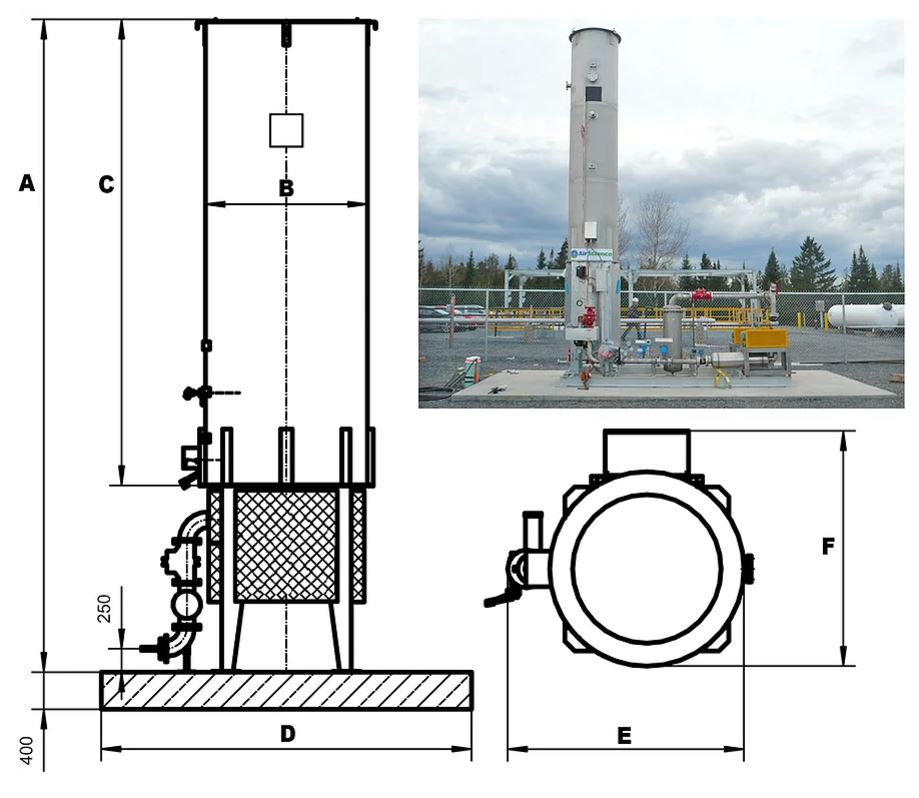
“Pyro Green-Gas Enclosed Gas Flare …” from biogasworld.com and used with no modifications.
Why Enclosed Flare Systems Are So Effective at Destroying Landfill Methane
Enclosed landfill gas flares are so effective because of their basic design principles. They have a controlled combustion chamber that allows for precise management of temperature, residence time, and turbulence. These are the three most important factors for complete combustion. Landfill gas and combustion air are mixed in carefully measured ratios and burned at temperatures that usually exceed 1,500°F (816°C).
The burning process transforms methane (CH₄) mainly into carbon dioxide (CO₂) and water vapour, greatly decreasing the emissions’ global warming potential. Although carbon dioxide remains a greenhouse gas, the change denotes a significant climate impact reduction compared to releasing unprocessed methane.
Benefits of Enclosed Flares Over Open Flares
Enclosed flares have a distinct edge over open flare systems due to their unique design. The combustion process is kept inside a refractory-lined chamber in enclosed flares, allowing them to maintain high temperatures consistently, regardless of external conditions. This constant thermal environment ensures destruction efficiencies consistently above 98%, and top-of-the-line systems can achieve 99.9% destruction of methane and VOCs.
Open flares are greatly affected by wind, which can significantly lower their combustion efficiency. The exposed flame is cooled by the surrounding air, which could potentially create zones where the temperature is not high enough to completely destroy the target compounds. This variability makes them unsuitable for applications that require consistently high destruction efficiency. For more information on evaluating the need for gas flares, you can read about assessing when to install gas flares.
The enclosed structure also almost completely removes visible flames, smoke, and glare—addressing common community concerns about industrial operations near populated areas. The avoidance of a visual flame at night can be valuable for maintaining good relations with neighbouring communities while still meeting operational needs.
Managing Heat Levels and Monitoring Emissions
Modern enclosed flare systems are designed with multiple temperature monitoring points in the combustion chamber and stack. This provides operators with a complete picture of the temperature conditions, ensuring that combustion is always properly maintained. To keep combustion parameters optimal regardless of changes in gas composition or flow rate, many systems have automated controls that adjust air-to-fuel ratios in real-time.
Enclosed designs also offer the benefit of emission monitoring capabilities. The controlled exit point for combustion gases makes it easy to install continuous emissions monitoring systems (CEMS) that can monitor important parameters such as NOx, CO, and VOCs.
Landfill gas flare stack suppliers report that this monitoring capability is becoming more and more important as regulatory agencies are requiring more detailed emissions reporting and verification of compliance with permitted limits. For more insights, you can explore gas monitoring at landfills.
Advantages of Weather-Resistant Operation
Enclosed landfill gas flares are known for their reliability in almost all weather conditions, making them a crucial asset for continuous environmental compliance. The weatherproof enclosure protects the combustion process from being disrupted by rain, snow, or high winds that would otherwise affect the flame’s stability and destruction efficiency.
This all-weather capability guarantees that facilities can maintain consistent control over emissions, regardless of seasonal or daily weather changes. For more information on the industry, you can explore the flare gas recovery system market.
Most suppliers build their systems to run in temperatures from -40°F to 120°F (-40°C to 49°C), making them ideal for use across different geographical regions. The sturdy build usually includes materials that resist corrosion and protective coatings that prolong operational life even in harsh conditions with high humidity, salt air, or corrosive gases.
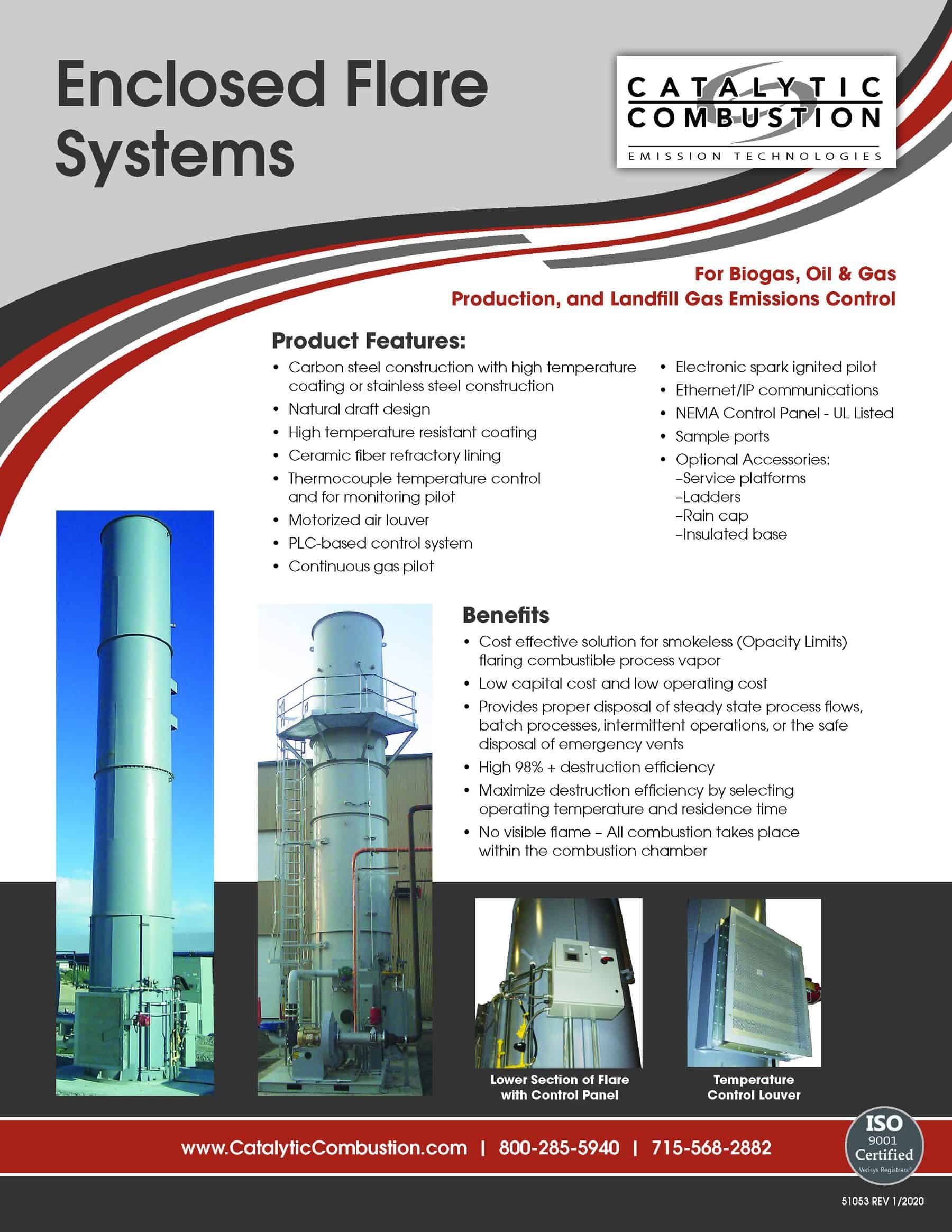
“Enclosed Flare Combustor System …” from www.catalyticcombustion.com and used with no modifications.
5 Leading (US Based) Enclosed Landfill Gas Flare Suppliers
Several manufacturers have established themselves as leaders in the enclosed landfill gas flare market. These companies have a history of reliability, performance, and adherence to regulations. They have developed specialised knowledge to address the unique challenges of landfill gas destruction. They offer systems that are tailored to various capacities, site conditions, and regulatory environments.
1. John Zink Hamworthy Combustion
With over a century of experience in the combustion technology field, John Zink Hamworthy Combustion has established itself as a leader in the industry. Their ZTOF (Zink Totally Enclosed Flare) series is designed specifically for landfill gas applications and boasts destruction efficiencies of over 99.9%. These systems come equipped with state-of-the-art combustion control systems, durable refractory linings, and a wide range of emissions monitoring options. Thanks to their global reach, you can count on John Zink for reliable service and readily available parts throughout the lifespan of your equipment.
Unlike many competitors, this company’s custom engineering approach allows them to create solutions that are tailored to specific site constraints, variations in gas composition, and regulatory requirements. Their experience with hundreds of landfill installations worldwide provides a depth of application knowledge that is unmatched.
2. Zeeco Inc.
Zeeco has a strong focus on environmental applications, including landfill gas destruction. Their enclosed ground flares are designed to be modular, making both installation and future capacity expansion easier. Zeeco systems use proprietary low-NOx burner technology that achieves high destruction efficiency while minimising the formation of nitrogen oxides, a regulated pollutant.
Zeeco is a global company with manufacturing facilities located around the world. They offer quick service and have a large inventory of parts. Their engineering team provides full support, from the initial specification to installation, commissioning, and ongoing operation. For more information on key companies in the industry, check out this article on flare gas recovery.
3. HiTemp Tech Corporation
HiTemp Tech is a company that specialises in thermal oxidation technologies, making them experts in the enclosed flare industry. Their systems include advanced thermal reactor designs that optimise residence time and turbulence for superior destruction efficiency. The company’s equipment is known for its resilience in difficult applications with high sulfur content or varying gas compositions.
HiTemp’s niche focus allows it to offer competitive pricing and shorter lead times than some larger diversified manufacturers. Their engineering team provides hands-on support throughout the equipment lifecycle, with particular strength in troubleshooting complex operational issues.
4. Anguil Environmental Systems
With over 40 years of thermal oxidation experience, Anguil Environmental Systems is a top player in the landfill gas industry. Their enclosed flare systems include heat recovery options that can greatly enhance the cost-effectiveness of gas destruction by harnessing thermal energy for beneficial use. Anguil systems are equipped with sophisticated control packages and remote monitoring capabilities that lessen operator workload and guarantee consistent performance.
They are a company that offers custom fabrication capabilities, so they can create solutions that are tailored to the specific site constraints and unusual gas compositions. Their engineering team includes specialists in emissions testing and regulatory compliance, so they can assist with permitting and reporting requirements.
5. <<Coming Soon>>
Essential Elements for a High-Quality Enclosed Flare Stack
The success of an enclosed landfill gas flare system hinges on a few essential elements that collaborate to guarantee total combustion, operational security, and regulatory adherence.
Knowing these elements assists facilities in choosing systems that will offer dependable performance throughout their operational life while adhering to increasingly strict emissions standards. Top-tier manufacturers stand out through the quality and integration of these vital components.
Why High-Temperature Refractory Insulation is Necessary
The combustion chamber in an enclosed flare stack needs a special kind of refractory material that can handle temperatures over 2,000°F (1,093°C). This material is also a good thermal insulator. This insulation is important for two reasons: it keeps the inside of the chamber hot enough to destroy all the methane and VOCs, and it keeps the outside of the chamber cool enough to prevent damage to the steel structure.
The best systems usually have several layers of refractory materials. The layer that is exposed to the flame is made of dense castable refractories, and the layer behind that is made of lightweight insulating materials.
Refractory systems’ quality and correct installation have a direct effect on both the efficiency of destruction and the longevity of the equipment.
To avoid premature failure during thermal cycling, top manufacturers use specialized installation methods that reduce joints and firmly anchor the refractory. Some cutting-edge systems include ceramic fiber modules, which provide better thermal performance and easier maintenance than traditional castable refractories.
Automated Operation with Programmable Logic Controllers
Programmable Logic Controllers (PLCs) are at the heart of the sophisticated control systems that modern enclosed flare systems rely on for virtually automated operation. These controllers continuously monitor critical parameters such as gas flow, combustion temperature, oxygen levels, and flame presence.
The PLC makes real-time adjustments based on these inputs to maintain optimal combustion conditions, even when there are variations in gas composition or flow rate.
High-tech control systems have multiple safety interlocks to prevent unsafe operating conditions and automatically shut down if parameters go beyond safe limits. The PLC also handles the startup and shutdown sequences to ensure smooth transitions without emission spikes or safety risks.
The latest systems now include remote monitoring features that let operators and manufacturers view performance data and solve problems without having to be on-site at the flare. This feature cuts down on the time it takes to respond to potential issues and allows for preventative maintenance based on operational trends instead of set schedules.
Low NOx Burner Technology
Landfill gas flares unavoidably produce nitrogen oxide (NOx) emissions during the combustion process. These emissions are heavily regulated due to their contribution to smog formation and their impact on respiratory health.
Top manufacturers have created specialized Low NOx burner technologies. These technologies not only minimize these emissions, but they also maintain a high destruction efficiency for methane and VOCs.
These state-of-the-art burners employ techniques like staged combustion, flue gas recirculation, and exact air-fuel ratio control to decrease peak flame temperatures where NOx formation happens most quickly. The top systems can accomplish NOx emissions below 0.06 lbs/MMBtu, which is considerably lower than traditional burners. This level of performance is becoming increasingly important as regulatory bodies continue to tighten allowable emission limits in many areas.
Multi-stage burner designs offer the added benefit of enabling systems to cope with broad turndown ratios. They can function efficiently from the minimum flow to the maximum capacity, without sacrificing destruction efficiency or emissions performance. This versatility is especially useful for landfill applications, where gas production rates can fluctuate substantially due to seasonal conditions or the ageing of the landfill.
Safety Systems and Flame Arresters
With landfill gas systems, safety is of utmost importance due to the explosive nature of methane-air mixtures. Flame arresters are crucial safety elements that stop flame propagation from going back into the gas collection system.
These devices use heat-absorbing metal matrices or specific mesh elements that cool a flame below its ignition temperature, preventing potential flashbacks that could harm upstream equipment or create dangerous conditions.
These safety systems are extremely comprehensive, with multiple pressure monitors, temperature sensors, and automated shutdown controls.
More advanced systems even include redundant flame detection, which uses both ultraviolet and infrared sensors to ensure proper combustion is maintained. The control system continuously monitors these inputs and can execute emergency shutdowns in mere milliseconds if it detects any unsafe conditions.
Logging and Remote Monitoring
Today’s modern enclosed flare stack systems come with advanced data collection and monitoring capabilities that help with both operational and regulatory compliance needs. They continuously log data that records important parameters like the combustion temperature, oxygen levels, gas flow rates, and emissions.
This data helps create a record of the system’s performance that can be audited, which helps prove regulatory compliance and helps operators identify potential issues before they become big problems.
The ability to monitor remotely has improved significantly, with web-based interfaces allowing operators to access real-time performance data from any device connected to the internet. Some manufacturers offer analytics based in the cloud that identify performance trends and provide alerts for predictive maintenance. These capabilities are especially useful for remote sites or facilities with limited technical staff on-site.
How to Choose the Best Flare Stack System
Choosing the best enclosed flare system involves considering many factors such as the site conditions, gas characteristics, regulatory requirements, and long-term operational plans. These systems require a significant capital investment and have a long service life, so it’s important to choose the right one to ensure compliance and financial performance.
Thinking about Flow Rate Range (100-10,000 SCFM)
When choosing an enclosed flare system, it’s important to consider both the current and future gas generation. Landfill gas production usually goes up for a few years after closure and then slowly goes down over a period of many years. Most manufacturers have standard systems that go from 100 SCFM for smaller applications to 10,000 SCFM for larger landfills. If you have unique needs, there are also custom solutions available.
Correct sizing should take into account not only average flow rates but also peak conditions that may occur seasonally or during specific operational scenarios. Systems with good turndown capability can efficiently handle variable flows, operating effectively from minimum flow (typically 20-25% of maximum capacity) to full rated capacity. This flexibility eliminates the need for multiple units in many applications where gas flow varies significantly over time.
Requirements for Destruction Efficiency
Most modern permits and regulatory frameworks typically dictate the required destruction efficiency, with at least 98% destruction of methane and non-methane organic compounds required. When properly operated, premium enclosed flare systems routinely achieve 99-99.9% destruction efficiency, providing a compliance margin that accommodates normal operational variations.
Facilities that are located in non-attainment areas or have specific consent decrees may have more stringent requirements, especially for VOCs or hazardous air pollutants. In these situations, when choosing a system, the focus should be on manufacturers who have a proven track record in similar regulatory environments and have documented test results that show compliance with similar requirements.
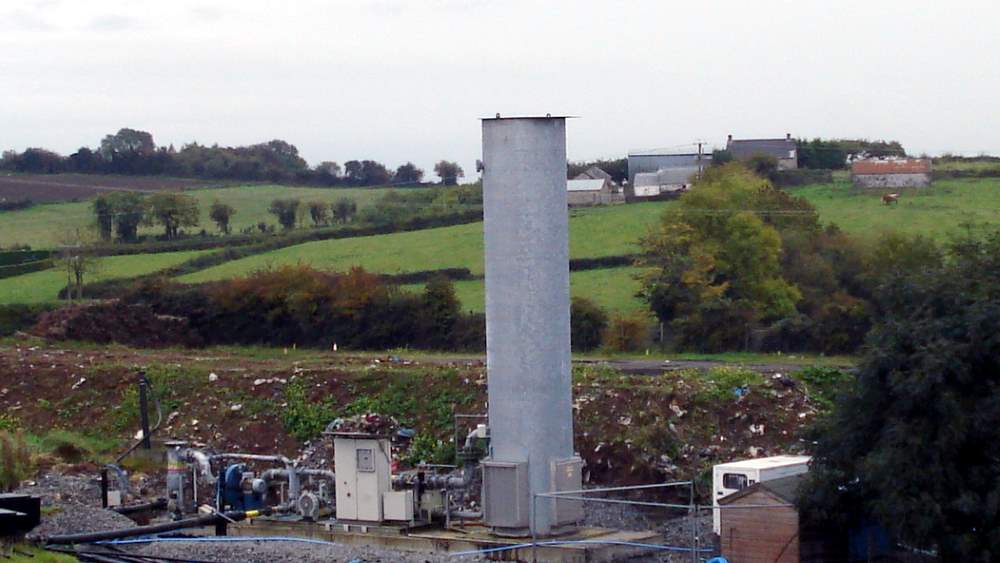
Installation Factors Specific to the Site
Enclosed flare selection and installation are heavily influenced by physical site limitations. The available footprint, how close the site is to property boundaries, existing infrastructure, and local height restrictions all play a part in the system design. Most enclosed flares need a concrete foundation that has the necessary structural capacity, and utilities like electricity and possibly water service.
It’s also important to keep in mind the weather conditions, including the direction of the wind, the patterns of rainfall, and the extremes of temperature. Sites that are prone to hurricanes, seismic activity, or heavy snowfall will need specialized structural designs. If the site is close to neighbors or sensitive receptors, additional measures may be needed to control noise, or aesthetic considerations may be needed, such as barriers made of landscaping. For more information on specialized structural designs, you can explore key companies in flare gas recovery.
How much does an Enclosed Flare System Cost?
When it comes to pricing enclosed flare systems, you have to consider the initial cost of the system and the cost of running and maintaining the system over its lifespan. While enclosed flares tend to be more expensive upfront than open flares, they usually perform better, meet regulatory standards more easily, and can even generate energy, making them a better investment in the long run. For more insights on assessing when to install gas flares, check out this guide on landfill EFW systems.
Starting costs for these systems generally start at $250,000 for smaller units (100-500 SCFM) and can go up to more than $1.5 million for larger installations (5,000+ SCFM) with advanced features. This price includes the flare unit, control systems, the design of the foundation, and basic installation. Extra costs can include preparing the site, connecting utilities, and help with permits.
Upkeep Necessities and Warranty Coverage
Operational costs for enclosed flares mostly include scheduled upkeep, periodic component replacement, and compliance testing. Systems that are well-designed typically require little daily operator attention, with routine upkeep intervals of 3-6 months for inspection and adjustment. Major component inspections, including refractory examination and burner cleaning, are typically performed annually.
Manufacturers offer different warranty coverage, but most standard warranties cover major components for 12-24 months after installation. Most suppliers offer extended warranties and service agreements that give you predictable maintenance costs and priority response for operational problems. These agreements often include periodic system optimization that can improve efficiency and extend the life of your equipment.
Enclosed flares can usually run efficiently for 15-20 years with the right upkeep, according to lifecycle analysis. However, refractory systems might need to be partially replaced every 7-10 years, depending on how they’re used. This longer service life means a much better return on investment compared to systems that don’t last as long. For more detailed information on the market, you can explore the key companies in flare gas recovery.
The Benefits of Modern Enclosed Flares in Regulatory Compliance
As the regulatory environment for managing landfill gas continues to change, the focus on reducing greenhouse gases, air toxins, and the effects on the community is increasing. Modern enclosed flare systems offer a significant advantage in meeting these complex and sometimes intersecting regulatory requirements over older destruction technologies.
Enclosed flares have certain advantages in terms of compliance. They can accurately control and record combustion conditions. The controlled environment allows for precise measurement of destruction efficiency and emissions, providing credible data for regulatory reporting and verification. This ability to document is becoming increasingly important as agencies are moving towards continuous compliance demonstration rather than periodic testing.
Compliance with EPA and State Emissions Regulations
Landfill gas flares in the United States must adhere to both the federal Clean Air Act and state-specific regulations, which can sometimes be more strict. The EPA’s New Source Performance Standards (NSPS) for Municipal Solid Waste Landfills (40 CFR Part 60, Subparts WWW and XXX) set the baseline control requirements, which include a 98% reduction of non-methane organic compounds or a minimum combustion temperature of 1,500°F with a residence time of 0.3 seconds.
Additional requirements are often imposed by many states, especially for NOx emissions in non-attainment areas. For instance, California’s South Coast Air Quality Management District (SCAQMD) sets NOx emissions limits at 0.06 lbs/MMBtu, which necessitates the use of advanced low-NOx technology. Today’s enclosed flares, equipped with appropriately designed combustion systems and controls, can meet these stringent standards while still achieving high destruction efficiency for methane and VOCs.
Landfills that meet certain criteria are required to report methane emissions under the EPA’s Greenhouse Gas Reporting Program. This makes it increasingly important to have accurate documentation of destruction efficiency. Enclosed flares offer the controlled combustion environment and monitoring capabilities needed to produce reliable destruction efficiency data for these reporting requirements.
- Monitoring the temperature at different points to ensure the combustion temperatures are at a minimum
- Continuous or occasional stack testing capabilities for the purpose of demonstrating destruction efficiency
- Automated systems for recording data that help maintain compliance records
- Optional continuous systems for monitoring emissions for NOx, CO, and VOCs
- Options for certification and calibration that meet the requirements of the EPA reference method
Complying with the Requirements of the UK Environment Agency and SEPA
Facilities in the United Kingdom are subject to similar regulatory frameworks through the Environment Agency in England and the Scottish Environment Protection Agency (SEPA) in Scotland. These agencies implement the requirements of the EU Industrial Emissions Directive, including specific provisions for controlling landfill gas under technical guidance notes. Enclosed flares that meet the highest technical standards can satisfy these requirements while providing the documentation needed for operating permits and environmental reporting.
Paperwork and Reporting Necessities
One of the major benefits of contemporary enclosed flare systems is their ability to produce extensive compliance documentation. Advanced control systems automatically log important operational parameters such as combustion temperature, residence time, and oxygen levels, which are the main factors that determine destruction efficiency.
Regulations often mandate regular source testing to confirm the effectiveness of the destruction process and compliance with emission standards. Enclosed flares make this testing possible through the right stack design and sampling ports placed as per the requirements of the reference method. Many systems come with permanent sampling connections to make routine testing easier and allow for more frequent voluntary verification if needed. For more information on ensuring your landfill site is prepared, consider assessing when to install gas flares.
The world of digital record-keeping has advanced to the point where automated systems can generate compliance reports in formats that regulatory agencies accept. Some manufacturers provide cloud-based compliance platforms. These platforms keep historical data and generate alerts if parameters approach compliance boundaries. This allows for proactive intervention before violations occur.
What You Need to Do Next to Get Your Enclosed Flare System
Choosing the right enclosed landfill gas flare needs a systematic approach that starts with a comprehensive evaluation of your specific needs and site conditions. Begin by talking to several competent manufacturers to understand the options and technologies that are available. Ask for detailed references from facilities that have similar applications and arrange site visits where possible to see systems in operation. Baker Hughes can provide expert guidance throughout this process, helping you find the solution that best meets your environmental compliance goals while optimizing operational efficiency.

FAQs for Landfill Gas Flare Stack Suppliers
Choosing and running enclosed landfill gas flares can be a technical process, especially if you’re new to the technology. These FAQs answer common questions and offer useful advice based on what the industry has learned over the years.
Having a good understanding of the basic principles of enclosed flare technology is important in helping facilities make the right choices when it comes to system selection, installation, and operation. If you have any further questions, you should get in touch with a qualified manufacturer who can provide you with advice tailored to your specific application and needs.
How efficient is an enclosed landfill gas flare at destroying waste?
When correctly chosen, installed, and used, current enclosed landfill gas flares can consistently destroy 98-99.9% of methane and non-methane organic compounds. This performance level is much higher than the usual 95-98% efficiency of open flares, and it provides the ability to document the results in order to confirm that they meet regulatory standards.
The performance of a system is influenced by a variety of factors, including the design of the combustion chamber, the amount of time the gas is in the system, the temperature at which the system operates, and the composition of the gas. Systems that are designed to handle difficult gas streams, such as those with a high moisture content, a variable composition, or a low methane content, may have special features. These features, such as pre-heating, improved mixing, or extended residence time, help to maintain a high level of destruction efficiency under all conditions.
What is the usual lifespan of an enclosed flare stack system?
A well-built and regularly serviced enclosed flare system can typically offer 15-20 years of dependable operation before significant refurbishment is needed. The refractory lining is usually the component that requires the most regular maintenance, with partial replacements often required every 7-10 years depending on operating temperatures and thermal cycling. Burners, controls, and monitoring systems may need to be upgraded throughout the lifespan of the equipment to ensure peak performance and compliance with changing regulatory standards.
What kind of upkeep do enclosed landfill gas flares need?
Enclosed flares need regular care, which includes checking the burners, ignition systems, flame arresters, and controls on a regular basis. The usual care schedules include visual inspections every month, operational checks every quarter, and thorough checks every year, including assessing the condition of the refractory. Most manufacturers suggest cleaning and adjusting the burner every 6-12 months, depending on the quality of the gas and the conditions under which it operates. For more detailed guidelines, you can refer to this essential checklist on biogas compression equipment safety.
Maintaining control systems involves calibrating temperature sensors, pressure transmitters, and gas analyzers as per the manufacturer’s guidelines, usually once or twice a year. Many modern systems have built-in self-diagnostic features that can detect potential problems before they impact performance. This allows for preventative maintenance instead of fixing problems as they arise. For more insights into the industry, you can explore key companies in the flare gas recovery sector.
Can enclosed flares work in all types of weather?
Yes, if designed correctly, enclosed flares can work effectively in nearly all types of weather, including extreme temperatures, high winds, heavy rain or snow, and high humidity. The weatherproof enclosure protects the combustion process from environmental factors that would interfere with open flares, ensuring consistent destruction efficiency no matter the weather. For more information on how weather can impact landfill operations, you can read about the Loscoe landfill gas explosion.
Systems designed for harsh environments incorporate additional features such as heat tracing for instrumentation, special materials for corrosion resistance, or reinforced structures for high wind or seismic zones. Cold-weather installations may include provisions for managing condensate that could freeze in gas lines or instrumentation connections. These adaptations ensure reliable operation across the full range of conditions encountered at the installation site.
What determines whether my landfill needs an enclosed flare or an open flare?
The choice between enclosed and open flare systems is usually based on regulatory requirements, site conditions, and operational priorities. Enclosed flares are typically necessary when you need to document a specific destruction efficiency, when NOx or other emissions are strictly limited, or when the facility is near sensitive receptors where a visible flame could cause problems. For more detailed information on emissions control, you can explore this guide on UK landfill gas emissions control.
While open flares may be appropriate for smaller landfills with limited gas production, temporary setups, or remote locations where visual impacts are less of a concern, the superior performance and documentation capabilities of enclosed systems often justify the extra investment. This is especially true as regulatory scrutiny of landfill emissions continues to increase.
It’s important to get a thorough site assessment by seasoned landfill gas experts to figure out the best technology for your particular case. They should take into account present and future gas volumes, composition analysis, relevant regulations, and long-term site management plans. This way, the system you choose will be able to handle both your immediate needs and any future demands.
You didn’t provide any content to rewrite. Please provide the content you want to be rewritten.