When to Install Gas Flares and EfW Systems: Act Now to Meet COP29 Methane Pledges
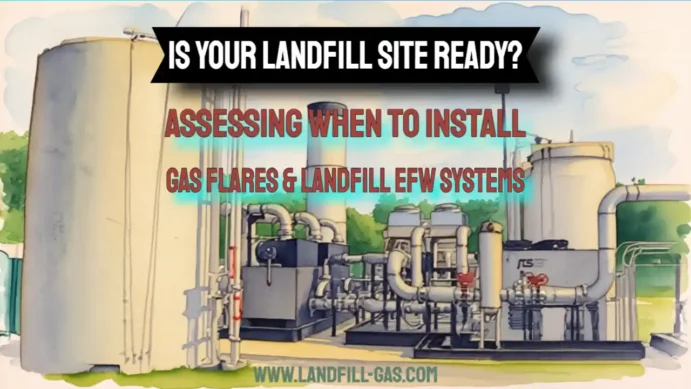
The urgency for compliance with the COP29 landfill methane pledge means waste managers must act immediately to control emissions. Gas flares are mandatory for safety and environmental compliance when landfill gas (LFG) volumes are low or inconsistent, or they serve as a critical backup to prevent uncontrolled methane releases.
However, to maximize value and sustainability, you should install Energy-from-Waste (EfW) systems the moment LFG volume becomes significant and steady. Installing EfW systems transforms a hazard into a reliable, renewable energy source, turning a waste problem into a profitable solution and securing compliance well ahead of international deadlines.
When to Install Gas Flares and EfW Systems: Key Takeaways
- Landfill gas flare installation should be timed with methane concentrations reaching 30-65% and flow rates exceeding 50 m³/hour for optimal efficiency and regulatory compliance.
- Regulatory requirements often mandate gas management systems based on waste volume thresholds, landfill age, and emissions levels measured through surface monitoring.
- The four phases of landfill gas production (initial adjustment, acid production, stable methane, and declining production) significantly impact the timing and type of gas management system needed.
- Proper site assessment, including waste composition analysis and gas generation modeling is essential before committing to flare or Energy from Waste (EfW) installations.
- Landfill Gas Monitoring provides flow measurement solutions that help landfill operators accurately monitor gas production to determine the optimal timing for flare installation.
Installing landfill gas flares isn’t just about regulatory compliance—it’s about capturing a valuable resource while protecting the environment and surrounding communities.
Knowing precisely when your site is ready for gas management infrastructure can save you millions in premature installation or missed energy recovery opportunities. At its core, the decision comes down to understanding your landfill’s biological and chemical processes.
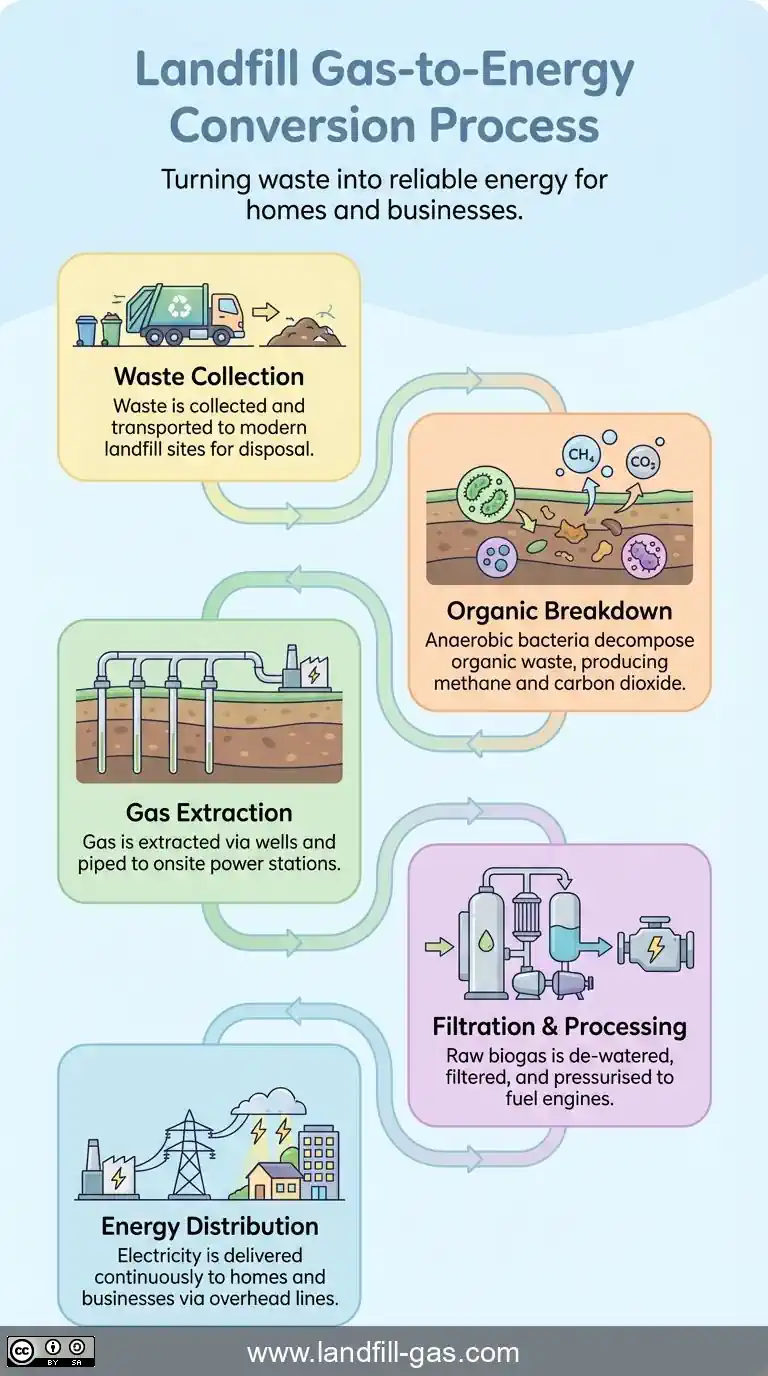
The decomposition of organic waste in landfills naturally produces methane and carbon dioxide—greenhouse gases that contribute significantly to climate change when released untreated.
Modern landfill management requires not only containing these gases but utilizing them effectively. Sage Metering has observed that proper timing for gas management system installation can improve collection efficiency by up to 30% while extending the productive life of gas recovery operations.
Let’s explore how to determine if your landfill site is truly ready for gas flare installation or if you should consider more advanced energy recovery options.
Critical Signs Your Landfill Needs Gas Management Systems Now
Several unmistakable indicators suggest your landfill requires immediate gas management intervention. If surface emission monitoring shows methane concentrations exceeding 500 ppm at multiple points, you’re likely experiencing significant fugitive emissions that require control.
Similarly, if neighboring communities report persistent odour complaints, especially the telltale “rotten egg” smell associated with hydrogen sulfide, this often signals inadequate gas management.
Visible vegetation stress around gas vents or along the landfill cover provides another clear warning sign. Plants experiencing chlorosis (yellowing) or death in patterns that follow subsurface gas migration paths indicate significant gas pressure buildup that requires relief through a properly designed collection and flaring system.
Perhaps most compelling is economic opportunity: preliminary gas testing showing methane concentrations above 40% coupled with steady production rates suggests not only a need for flaring but potential for energy recovery that turns an environmental obligation into a revenue stream.
The 4 Phases of Landfill Gas Production: Timing Your Installation Right
Understanding the biological progression of waste decomposition is crucial for optimal gas management system timing. Landfills produce gas through a predictable sequence of microbial activities, each creating distinct conditions that affect both gas quantity and composition.
Phase I: Initial Adjustment Period (3-6 Months)
During the initial aerobic phase, oxygen-using bacteria consume available O₂ while breaking down complex organic compounds. Gas production during this period consists primarily of carbon dioxide with minimal methane content—typically below 5% by volume.
This phase may last anywhere from a few weeks to six months depending on waste composition, compaction rates, and moisture content.
Installing gas flares during Phase I is generally premature and inefficient. The low methane content makes sustained combustion difficult without supplemental fuel, leading to excessive operational costs and poor emissions control.
During this phase, focus instead on preparing site infrastructure and conducting baseline gas composition monitoring to track progression.
The transition from Phase I to Phase II becomes evident when oxygen levels in extracted gas samples fall below 1% and carbon dioxide concentrations stabilize around 40-60%.
This signals the depletion of available oxygen and the beginning of anaerobic processes that will ultimately generate combustible methane. To understand the importance of controlling emissions during this transition, you can explore UK landfill gas emissions control strategies.
- Gas composition: Low methane (0-5%), high CO₂ (80-90%), declining O₂
- Flow characteristics: Irregular, often influenced by barometric pressure
- Optimal action: Monitor only, avoid premature system installation
- Key indicators for phase transition: O₂ < 1%, CO₂ stabilization
Phase II: Acid Production and Peak Methane Generation (6 Months to 5 Years)
As anaerobic conditions dominate, acid-forming bacteria produce volatile organic acids, hydrogen, and additional carbon dioxide.
Methane-generating microbes establish themselves during this phase, gradually increasing methane concentrations to 30-40% as they convert acids to methane and carbon dioxide.
This biologically diverse phase creates the most dynamic gas production period, with rapidly changing composition and increasing flow rates that can rise by 30-50% in just months.
Phase III: Stable Methane Production (The Sweet Spot)
Phase III represents the optimal window for both flare installation and energy recovery systems. Methane concentrations stabilize between 45-60%, with balanced methanogenic activity creating predictable, sustained gas production.
During this phase, gas extraction systems become reliable enough for continuous flare operation without frequent adjustments or supplemental fuel requirements.
This stability typically occurs after waste has been in place for 2-5 years and may continue for decades in larger landfills with significant organic content.
The predictable nature of gas production during this phase makes it ideal for energy recovery projects, with gas quality and quantity sufficient to support engine generators, turbines, or direct-use applications.
Phase IV: Declining Production Period
Eventually, biodegradable materials become depleted, resulting in gradually decreasing gas production rates. Methane percentages may remain relatively high (40-50%), but overall volumes decrease, sometimes falling below the minimum threshold needed for conventional flare operation.
During this phase, systems may require modification to accommodate lower flows while maintaining destruction efficiency.
For sites entering Phase IV, modular or low-flow flare systems designed specifically for declining gas fields often provide the most cost-effective management solution.
These specialized systems can maintain stable combustion with flows as low as 10-15 m³/hr, extending the viable gas management period by 5-10 years compared to conventional flares.
How to Test If Your Landfill Is Ready for Gas Flare Installation
Before committing resources to gas management infrastructure, comprehensive testing must confirm that your landfill can sustain effective flaring operations.
Several key parameters require evaluation through structured field testing protocols that typically span 3-6 months to account for seasonal variations and establish reliable baseline data.
1. Minimum Gas Production Threshold: 50 m³/hr
Most standard flare systems require a minimum gas flow of approximately 50 cubic meters per hour to maintain stable combustion without supplemental fuel.
Testing should include pump trials at multiple extraction points to establish sustainable extraction rates. These trials typically involve temporary wellhead installations connected to mobile blower units with flow measurement instrumentation.
Field tests should run for at least 72 consecutive hours to observe potential flow fluctuations and recovery rates.
Remember that initial extraction often yields higher-than-sustainable rates due to accumulated gas reserves in the waste mass, so extended testing provides more accurate long-term production estimates. For more information on effective extraction methods, explore landfill gas extraction systems.
2. Methane Concentration Requirements: 30-65%
Effective flaring requires methane concentrations typically above 30% by volume, with optimal operation occurring between 40-60%. Gas composition analysis should be performed using calibrated portable gas analyzers or laboratory analysis of collected samples.
Testing should occur under various barometric conditions as pressure changes can significantly affect both flow rates and methane concentrations.
Monitor methane, carbon dioxide, oxygen, nitrogen, and hydrogen sulfide levels throughout the test period. The presence of significant oxygen (>1%) may indicate air infiltration through cover systems or improper well installation, requiring remediation before full system implementation. Similarly, hydrogen sulfide concentrations above 200 ppm will require specialized materials in system components to prevent corrosion.
3. Surface Emission Monitoring Results
Surface emission monitoring provides critical data on existing fugitive emissions and helps establish the baseline against which future gas collection efficiency will be measured.
Using EPA Method 21 protocols with flame ionization detectors (FIDs), conduct comprehensive grid-based surveys across the landfill surface during stable barometric conditions.
Readings consistently above regulatory thresholds (typically 500 ppm above background) at multiple points indicate sufficient gas production to warrant collection and flaring systems.
Field Testing Checklist: Ensure accurate assessment with these essential measurements
- Static pressure readings at proposed extraction points
- Gas composition analysis (CH₄, CO₂, O₂, N₂, H₂S)
- Sustainable extraction flow rates (72+ hour tests)
- Surface emission concentrations (grid pattern)
- Atmospheric pressure correlation analysis
4. Regulatory Triggers That Mandate Gas System Installation
Beyond operational readiness, specific regulatory thresholds often legally require gas management system installation regardless of economic considerations. Understanding these triggers helps landfill operators anticipate compliance requirements and plan installations proactively rather than reactively.
5. Waste Volume Thresholds
Federal regulations under the New Source Performance Standards (NSPS) and Emission Guidelines require gas collection and control systems for landfills exceeding 2.5 million metric tons design capacity with non-methane organic compound (NMOC) emissions of 34 metric tons per year or more.
Many states and local jurisdictions implement even more stringent thresholds, sometimes as low as 1 million tons design capacity regardless of emission rates.
Smaller landfills should maintain accurate waste volume tracking and conduct regular Tier 1 and Tier 2 testing to determine when they approach these regulatory thresholds.
Forward-thinking operators often begin planning gas management infrastructure when reaching 70-80% of applicable thresholds to ensure compliance timelines can be met without penalties.
6. Age-Based Requirements
Regulatory frameworks frequently incorporate time-based triggers that require gas system installation within a specified period after waste placement. For active cells, these requirements typically mandate collection system installation within 5 years of initial waste placement or within 2 years after closure.
The exact timeline varies by jurisdiction and may be shorter for landfills in non-attainment areas for air quality standards.
Strategic operators often implement phased installation approaches, beginning with high-production areas while they remain accessible prior to reaching final grades. This approach minimizes retrofit costs and optimizes system efficiency by targeting the most productive gas generation zones first.
7. Emissions Levels That Trigger Compliance
Surface emission monitoring results exceeding regulatory thresholds (typically 500 ppm methane above background) trigger mandatory corrective action including gas system installation or expansion.
These exceedances often require quarterly monitoring until three consecutive compliant readings are achieved, creating significant operational impacts and potential penalties.
Implementing proper cover materials and maintenance practices can temporarily mitigate surface emissions, but persistent exceedances almost invariably indicate the need for active gas collection.
Proactive monitoring programs that identify increasing trends before they reach regulatory thresholds provide valuable lead time for system design and procurement.
8. Local Permit Conditions
Individual facility permits often contain site-specific triggers for gas system installation based on local environmental concerns, proximity to sensitive receptors, or community agreements. These permit conditions may include odor complaint thresholds, groundwater protection requirements, or predetermined installation schedules regardless of gas production metrics.
Review permit conditions annually and maintain open communication with regulatory agencies about changing requirements or emerging concerns. Many jurisdictions are implementing increasingly stringent methane reduction targets that will affect landfill gas management requirements, particularly in states with aggressive climate change initiatives.
Gas Flares vs. EfW Systems: Making the Right Choice
The decision between simple flaring and energy recovery represents one of the most consequential choices in landfill gas management. This decision affects not only capital investment and operational complexity but also the potential for revenue generation and greenhouse gas reduction credits.
Understanding the specific conditions that favor each approach ensures optimal resource allocation and maximum environmental benefit.
When Simple Flaring Makes More Sense
Simple flare systems typically provide the most cost-effective solution for smaller landfills with gas production below 300 m³/hour or sites where gas quality shows significant variability.
The capital investment for basic enclosed flare systems typically ranges from $250,000 to $1 million depending on capacity and monitoring requirements, substantially less than even the most basic energy recovery systems.
Flaring offers simplified regulatory compliance with straightforward emissions monitoring requirements compared to energy production facilities.
For landfills approaching closure or with limited remaining capacity, the shorter payback period for flaring systems often makes them financially preferable even when energy recovery might theoretically be possible.
Economic Thresholds for EfW Viability
Energy from Waste systems typically require minimum sustained gas production of 300-500 m³/hour with at least 45% methane content to achieve reasonable economic returns.
The capital investment for basic electricity generation using reciprocating engines starts around $1.5-2 million per megawatt of generating capacity, with economies of scale favoring larger installations.
Comprehensive economic analysis should incorporate current and projected energy prices, available incentives (renewable energy credits, carbon offsets, etc.), interconnection costs, and operational expenses over the projected productive life of the gas field. Most successful EfW projects require a minimum production life of 10-15 years to achieve reasonable returns on investment, making accurate gas generation modeling essential.
Gas Collection Infrastructure Needs
Effective landfill gas collection begins with properly designed and installed extraction wells. These wells typically consist of perforated HDPE pipes surrounded by gravel packing, installed vertically through the waste mass at spacing of 50-100 meters depending on site conditions. The collection network requires connecting headers that transport captured gas to the central blower and flare station while maintaining an appropriate slope for condensate management.
Condensate management represents one of the most challenging aspects of gas collection system design. As gas travels through the collection network, cooling causes water vapour to condense, potentially blocking pipes and reducing system efficiency. Properly designed systems incorporate condensate knockout pots, traps, and pumping systems to remove this liquid while maintaining gas flow. Depending on site conditions, condensate may require treatment as leachate or separate handling as potentially hazardous waste.
Flare Types and Selection Criteria
Landfill operators typically choose between open (candlestick) flares and enclosed (ground) flares based on regulatory requirements, destruction efficiency needs, and visual impact considerations.
Open flares offer lower capital costs and simpler operation but provide limited emissions control and visible flames that may concern neighbouring communities.
Enclosed flares, while more expensive, deliver superior destruction efficiency (typically >98% for VOCs) and conceal the combustion process within a refractory-lined chamber.
Sizing considerations remain critical when selecting flare systems. Undersized systems create bottlenecks that limit gas extraction rates, while oversized flares struggle to maintain stable combustion at low flow rates, often requiring expensive turndown capabilities or supplemental fuel.
Most systems benefit from modular designs that accommodate changing gas production rates throughout the landfill’s lifetime, with initial installations sized to handle projected peak flows plus a 15-25% safety margin.
Monitoring Equipment Essentials
Regulatory compliance and operational efficiency depend on accurate, continuous monitoring of multiple gas system parameters. At a minimum, most jurisdictions require monitoring of flare temperature (typically maintained above 1400°F/760°C), flow rate, and runtime to demonstrate destruction efficiency.
More comprehensive monitoring packages include gas composition analysis (CH₄, CO₂, O₂), pressure differential across the blower, and emissions sampling points for periodic testing.
Wellfield monitoring equipment allows operators to optimize extraction rates at individual wells, balancing maximum gas collection against air infiltration risks. Portable gas analyzers measure methane, oxygen, carbon dioxide, and balance gas concentrations, while pressure gauges confirm appropriate vacuum levels.
Modern systems increasingly incorporate remote monitoring capabilities, allowing real-time data access and automated alerts when parameters drift outside established ranges. For more information on these systems, explore our detailed guide on landfill gas extraction systems.
Data management systems have become essential components of well-managed gas collection operations, with integrated SCADA (Supervisory Control and Data Acquisition) platforms providing comprehensive performance tracking and regulatory reporting capabilities.
These systems not only streamline compliance documentation but also support predictive maintenance by identifying declining performance trends before equipment failures occur. The additional investment in sophisticated monitoring typically pays for itself through reduced operational disruptions and extended equipment life.
Site Preparation Requirements
Proper site preparation significantly impacts both installation costs and long-term system performance. The central flare station requires a stable, accessible foundation pad typically constructed of reinforced concrete designed to support equipment weight and withstand settling.
This pad should incorporate secondary containment for potential condensate spills and provide adequate clearance zones around equipment for maintenance access.
Access roads to wellheads and the central flare station must be designed to accommodate installation equipment initially and maintenance vehicles throughout the system’s operational life. These roads require regular maintenance to prevent erosion and ensure all-weather accessibility.
Electrical service represents another crucial site preparation element, with most systems requiring 3-phase power to operate blowers, controls, and monitoring equipment. Backup power systems should be considered for critical components to maintain environmental compliance during utility outages.
How to Maximize the Value of Your Landfill Gas
Beyond basic flaring for compliance, landfill operators have increasingly diverse options for extracting economic value from collected gas. The optimal approach depends on gas quantity, quality, local energy markets, and available incentives.
A comprehensive valuation analysis should consider multiple potential revenue streams, including energy sales, renewable energy credits, carbon offsets, and potential tax benefits to identify the most advantageous strategy.
RINs and Environmental Credits

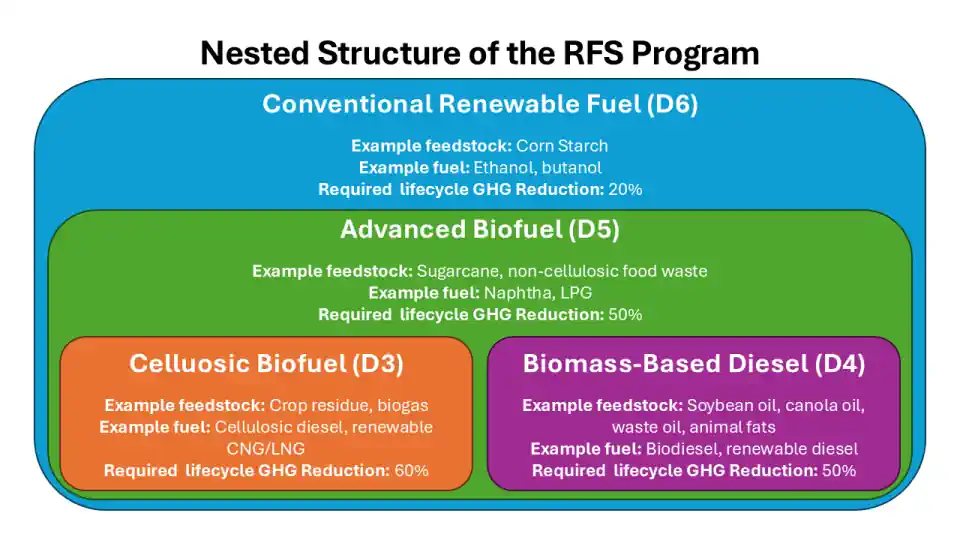
“Renewable Identification Numbers (RINs …” from www.epa.gov and used with no modifications.
The Renewable Fuel Standard (RFS) program allows landfill gas projects to generate Renewable Identification Numbers (RINs) when gas is processed into compressed natural gas (CNG) or liquefied natural gas (LNG) for transportation fuel.
These RINs can provide substantial additional revenue, sometimes exceeding the base value of the gas itself. Current D3 cellulosic biofuel RINs have traded between $1.50-$3.00 per gallon equivalent, potentially adding $10-20 per MMBtu to project economics.
Carbon offset markets offer another potential revenue stream, with landfill methane projects typically qualifying under multiple protocols. Voluntary carbon markets generally value offsets at $3-15 per metric ton of CO₂ equivalent, while compliance markets in California and other jurisdictions may offer significantly higher values.
Projects must meet rigorous verification standards including baseline establishment, ongoing monitoring, and third-party verification to qualify for these credits.
- Renewable Energy Credits (RECs): Generated by electricity production from landfill gas
- Renewable Identification Numbers (RINs): Available when gas is used for transportation fuel
- Carbon Offsets: Generated based on methane destruction beyond regulatory requirements
- Tax Incentives: Including investment tax credits and accelerated depreciation
Navigating these complex incentive programs often requires specialized expertise, with many operators partnering with environmental credit management firms that handle verification, registration, and trading activities for a percentage of realized value. These partnerships can maximize credit value while minimizing administrative burden on operational staff.
“Renewable Fuel Annual Standards | US EPA” from www.epa.gov and used with no modifications.
Direct-Use Gas Applications
Medium-sized landfills often find direct-use applications provide optimal economic returns, particularly when energy-intensive operations exist near the landfill.
Minimal processing (typically dehydration and filtration) allows landfill gas to substitute for natural gas in boilers, kilns, dryers, and similar thermal applications at neighboring industrial facilities.
This approach eliminates expensive electricity generation equipment and grid interconnection costs while still displacing fossil fuel use. Successful implementations include supplying gas to brick manufacturers, greenhouses, district heating systems, and wastewater treatment plant digesters.
Electricity Generation Options
Electricity generation remains the most common energy recovery approach for larger landfills, with several technology options available based on gas quality and quantity.
Reciprocating internal combustion engines dominate the market for facilities producing 300-3,000 m³/hour of landfill gas, offering electrical efficiencies of 30-40% and well-understood maintenance requirements.
These systems typically cost $1,500-2,500 per installed kilowatt of capacity and require regular maintenance including oil changes, spark plug replacement, and periodic overhauls. For more information on the use of landfill gas, visit landfill gas uses.
Microturbines provide an alternative for smaller gas flows or applications where lower maintenance requirements justify reduced efficiency. While typically achieving only 25-30% electrical efficiency, microturbines offer longer maintenance intervals, lower emissions, and greater tolerance for siloxanes and other contaminants.
The modular nature of microturbine installations also allows better matching to gas production curves, with additional units added as gas production increases.
Combined heat and power (CHP) systems significantly improve overall energy efficiency by capturing waste heat from electricity generation for heating, cooling via absorption chillers, or industrial processes.
These systems can achieve total efficiencies exceeding 80% when properly integrated with consistent thermal loads, dramatically improving economic returns. Ideal applications include facilities with year-round heating or cooling needs, such as manufacturing operations, aquatic centers, or district energy systems.
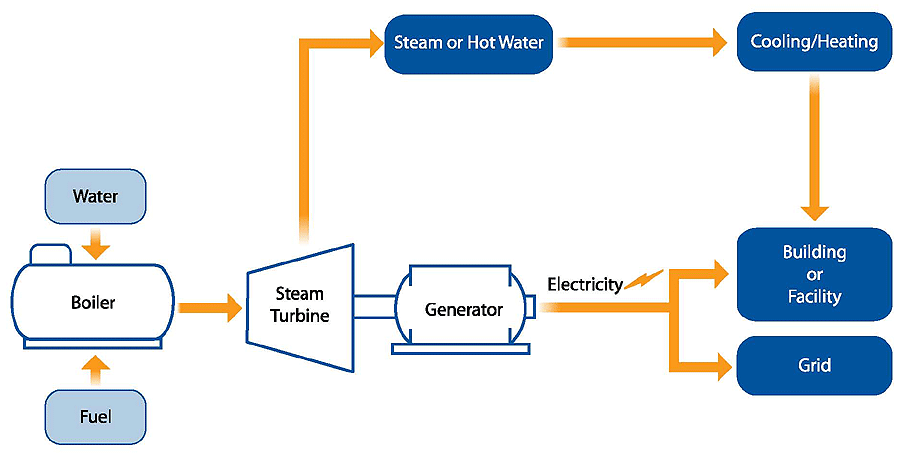
“What Is CHP? | US EPA” from www.epa.gov and used with no modifications.
Future-Proof Your Gas Management System
Designing gas management systems with adaptability in mind ensures continued performance as regulations evolve and gas production changes over time.
Key future-proofing strategies include installing oversized headers to accommodate potential system expansion, selecting control systems with upgrade capabilities, and designing wellfields with infill capacity to increase collection efficiency as needed.
The most resilient systems incorporate modular components that can be reconfigured or redeployed as gas production shifts across the site, maximizing infrastructure lifespan while maintaining compliance with increasingly stringent emissions requirements.
As regulatory focus intensifies on shorter-lived climate pollutants like methane, proactive landfill operators are implementing comprehensive surface monitoring programs and rapid response protocols to identify and address fugitive emissions before they trigger enforcement actions.
Frequently Asked Questions About “When to Install Gas Flares?”
The following questions address common concerns and technical considerations that arise during landfill gas management system planning, implementation, and operation. These insights reflect industry best practices based on decades of field experience across diverse landfill sizes, waste compositions, and regulatory environments.
How long after closing a landfill cell should I install gas collection?
Best practice typically involves installing gas collection infrastructure before final closure while the surface remains accessible for construction equipment.
This approach minimizes costs by avoiding the need to penetrate final cover systems and reduces fugitive emissions by capturing gas as generation rates accelerate post-closure. For cells that have already received final cover without pre-installed gas collection, monitoring should begin immediately after closure with collection system installation typically warranted within 6-12 months as anaerobic decomposition accelerates.
Regulatory requirements generally mandate collection system installation within 2 years of closing a cell, but waiting this long often results in significant fugitive emissions and potential compliance issues.
Many operators now incorporate horizontal collection trenches during active filling, which can be connected to permanent systems upon closure, providing immediate gas control without disturbing final cover systems.
What are the typical maintenance costs for landfill gas flares?
Annual maintenance costs for enclosed flare systems typically range from 3-5% of initial capital costs, with exact figures depending on system complexity, operating hours, and gas quality. Routine maintenance includes quarterly inspection of thermocouples, flame arrestors, and control systems, with annual servicing of blowers, motors, and ignition systems.
The most significant maintenance expense typically involves refractory replacement, required every 5-7 years depending on operating temperature and runtime. For more information on best practices, you can explore landfill gas extraction systems.
Open flares generally have lower maintenance costs, averaging 2-3% of capital costs annually, due to simpler design and fewer components.
However, these savings must be weighed against potentially higher compliance costs and more frequent regulatory scrutiny due to lower destruction efficiency. Both system types benefit from preventative maintenance programs that identify developing issues before catastrophic failures occur.
Proper condensate management dramatically impacts maintenance costs, as untreated condensate can cause corrosion and system failure. Investment in effective knockout systems, regular drainage, and appropriate material selection (e.g., stainless steel components in high-H₂S environments) typically delivers substantial returns through extended equipment life and reduced downtime.
For more on safety measures, check out this biogas compression equipment safety checklist.
Can I upgrade from a flare system to an EfW system later?
Yes, well-designed flare systems can serve as the foundation for future energy recovery projects as gas production increases or economics improve.
The key components for successful transitions include designing initial header systems with sufficient capacity for energy recovery flow rates, installing blowers capable of providing appropriate pressure for future energy systems, and securing adequate space in the initial layout to accommodate generation equipment.
When planning potential upgrades, ensure that initial flare permits don’t restrict future beneficial use applications, as changing permitted activities can sometimes trigger complex regulatory reviews that delay implementation.
How do seasonal weather changes affect gas production and system performance?
Seasonal temperature variations significantly impact both gas production rates and system performance. Warmer temperatures accelerate biological activity in the waste mass, potentially increasing gas generation by 15-30% during summer months compared to winter in temperate climates.
However, this same biological activity also produces more water vapor, increasing condensate management challenges during warm periods. For more detailed information on landfill gas monitoring, visit Sage Metering.
Precipitation and moisture content create the most dramatic seasonal effects, with many landfills showing 30-50% higher gas production during wet seasons or following significant rainfall events. This relationship between moisture and gas production has led some operators to implement controlled liquids addition (often recirculating leachate) to optimize gas generation, particularly in arid climates where natural moisture is limited.
- Spring: Often shows increased production due to rising temperatures and spring precipitation
- Summer: Peak production rates but increased condensate challenges
- Fall: Relatively stable production with moderate condensate generation
- Winter: Reduced production in cold climates, potential freezing issues in condensate systems
System design should accommodate these seasonal variations with appropriate turndown capabilities in flares, condensate management systems sized for peak production periods, and extraction controls that can be adjusted to maintain optimal vacuum levels as conditions change.
Automated control systems increasingly incorporate weather data to anticipate and adapt to changing conditions before performance issues develop.
What permits are typically required for landfill gas system installation?
Permitting requirements vary by jurisdiction but typically include air quality permits for the flare or energy recovery facility as the primary regulatory hurdle. These permits establish allowable emission limits, required destruction efficiency (typically 98%+), monitoring protocols, and reporting requirements.
The permitting process generally requires detailed emissions calculations, dispersion modeling to predict ground-level impacts, and sometimes public hearings if located near sensitive receptors.
Construction permits may be required from local building departments, particularly for enclosed structures housing blowers and control equipment.
These permits focus on structural integrity, electrical safety, and compliance with fire codes. For landfills with established final cover systems, additional solid waste permits or approvals are typically needed to authorize penetration of the cover for well installation.
- Air Quality Permit (state/local environmental agency)
- Construction/Building Permit (local building department)
- Solid Waste Facility Modification (state waste management agency)
- Stormwater Management Permit (for construction disturbance)
- Utility Interconnection Agreement (for energy recovery projects)
Early engagement with regulatory agencies during the planning phase helps identify all applicable permit requirements and potential challenges.
Many jurisdictions now offer expedited permitting for renewable energy projects including landfill gas-to-energy, potentially reducing approval timelines compared to traditional flaring-only systems.
The permitting timeline typically represents the critical path for project implementation, with many jurisdictions requiring 6-12 months for review and approval of air permits. Starting this process early while completing detailed design work allows for faster implementation once approvals are secured.
Some regions allow phased permitting approaches where site preparation and non-emission components can proceed while air permits undergo final review, potentially reducing overall project timelines.
Landfill gas is a natural byproduct of the decomposition of organic material in landfills. It consists primarily of methane and carbon dioxide, both potent greenhouse gases.
To mitigate environmental impact, it is crucial to implement effective landfill gas management strategies. Understanding the landfill gas monitoring procedures is essential for ensuring safety and compliance with environmental regulations. Proper monitoring can help prevent potential hazards and optimize the capture and use of landfill gas as a renewable energy source.