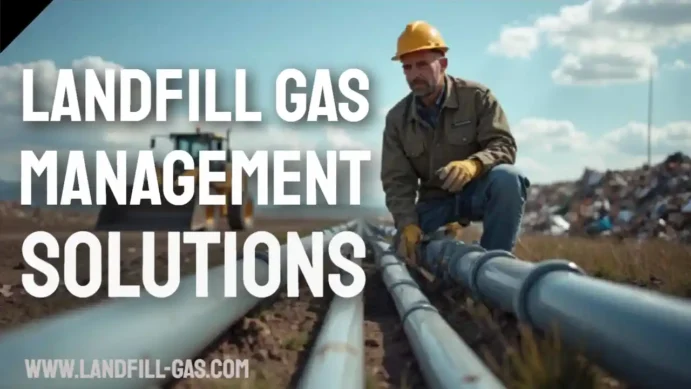
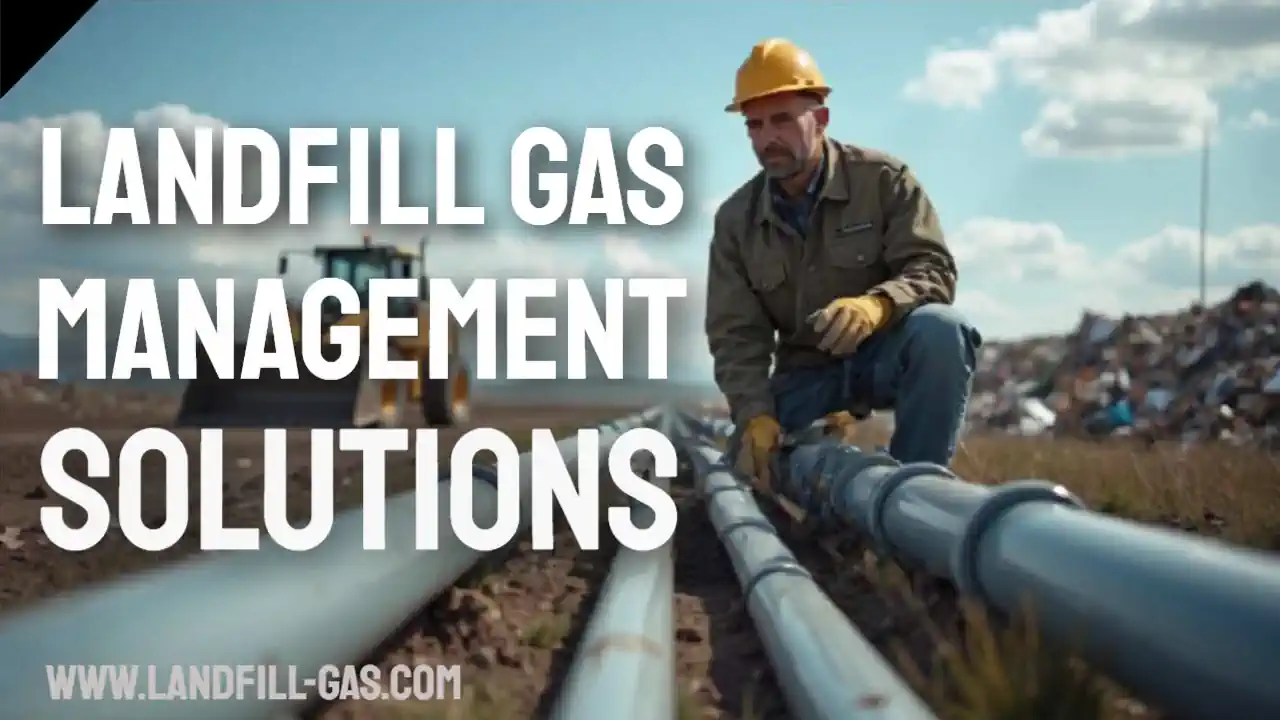
You know the tough part about landfill gas is that the problems rarely show up one at a time. Odors, off-site migration concerns, wellfield instability, and methane emissions can all trace back to the same root issue: gas is finding an easier path than the one you built for it. All this leads to the importance of applying effective Landfill Gas Management Solutions as an essential tool in best practice landfill operation.
That’s why the fastest wins usually come from tightening fundamentals, then layering in monitoring that tells your crew exactly where to tune, fix, or redesign.
This page walks through landfill gas collection and control systems (GCCs) design, combustible gas migration control, methane capture, flares, leachate level control, and monitoring tools like landfill gas (LFG) monitoring and surface emissions monitoring.
It also covers methane abatement options such as biocovers and energy recovery (Energy from Waste), plus how programs like the Landfill Methane Outreach Program (LMOP), the Global Methane Pledge, and the Global Methane Initiative can support project planning.
You’ll leave with practical steps to cut methane emissions, raise safety margins, and recover usable energy with fewer surprises during operations.
Landfill Gas Management Solutions – Key Takeaways
- Capture performance varies widely. Our guess is that landfill gas capture efficiency over the whole life of a gassing landfill probably ranges from about 10% to about 50%, from closed partly-flared landfills to modern landfills with the latest extraction systems from the start. Our guess is that extraction system field tuning and maintaining cover integrity after landfill closure matter as much as the original restoration capping design.
- U.S. recovery rates can be lower than planning assumptions. In a 2025 Project Drawdown update citing Industrious Labs, the actual U.S. recovery rate is closer to 43% than older default assumptions, so your monitoring program needs to prove performance instead of guessing it.
- Flares are not all equal in the field. Project Drawdown summarizes findings that high-efficiency enclosed flares can reach about 99% methane destruction, while open flares can perform below commonly assumed values in practice.
- Work faces can dominate measured emissions. In a 2023 airborne study summarized by Carbon Mapper (with EPA and Arizona State University partners), a subset of landfills with work face emissions accounted for over 75% of quantified emissions, making daily cover discipline a high-leverage control point.
- Energy projects are a mature pathway in the U.S. EPA’s LMOP database reported 542 operating LFG energy projects across 488 U.S. landfills as of September 2024, which helps when you need to attract investment.
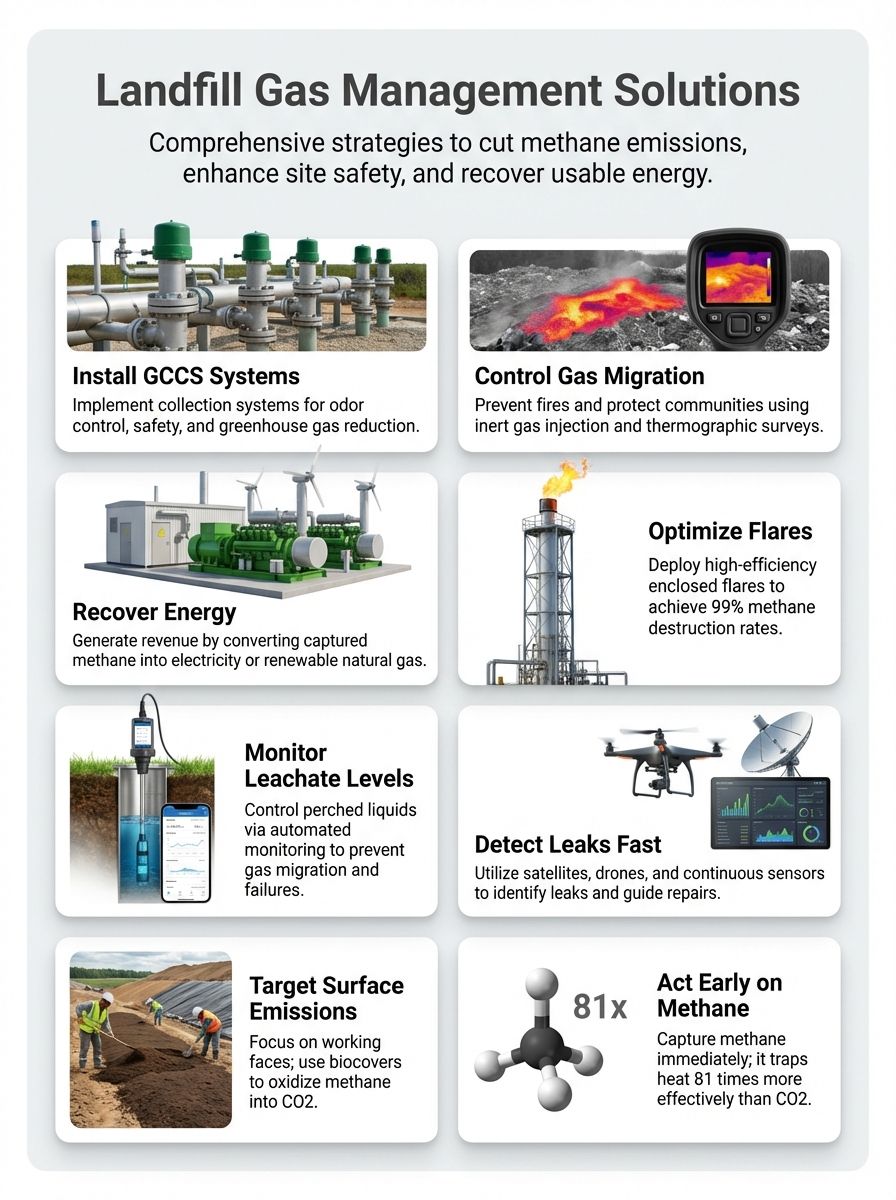
Key Components of Landfill Gas Management Solutions
Effective landfill gas management is a system, not a single piece of equipment. You get the best control when extraction infrastructure, condensate and leachate management, and gas treatment work together so the landfill stays under the right vacuum and the gas has a safe destination every hour of the day.
For U.S. sanitary landfills, the compliance trigger is not simply “five years after closure.” Federal rules tie GCCS requirements to landfill size, modeled emissions (often using LandGEM), and specific regulatory thresholds, including options like Tier 4 surface monitoring with a 500 ppm methane surface threshold in certain scenarios.
- Collection: vertical and horizontal wells, laterals, headers, and wellheads that can be tuned without over-pulling.
- Conveyance and liquids: sloped piping, knockout pots, sumps, and condensate controls that prevent vapor lock and header restrictions.
- Control device: enclosed flare, open flare, or energy recovery (electricity, medium-Btu direct use, or renewable natural gas).
- Monitoring: wellfield gas analyzers, SCADA/telemetry, surface emissions monitoring (SEM), and targeted leak detection and repair (LDAR).
| Control pathway | Where it fits best | Operational reality check |
|---|---|---|
| Enclosed flare | Baseline control device, backup during downtime, end-of-life control | Project Drawdown summarizes field evidence near 99% methane destruction when properly operated, which is why enclosed flares are often the preferred compliance and community-facing option. |
| Electricity generation | Steadier gas flow and quality, easier interconnection, long operating horizon | Engines and turbines need consistent fuel quality. Your wellfield tuning plan has to protect heat value and limit air intrusion. |
| Renewable natural gas (RNG) | Sites with strong gas quality control and a clear offtake pathway | Expect more treatment steps (moisture, sulfur, siloxanes, compression). Your monitoring program becomes part of product quality control. |
Landfill Gas Collection and Control
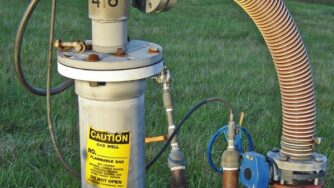
Gas collection and control systems (GCCS) sit at the core of sanitary landfills for odor control, safety, and greenhouse gas reduction. Several specialist engineering companies design, build, operate, monitor, and maintain landfill GCCS.
A practical detail that changes design decisions is in the Emission Guidelines: an active collection system must collect gas from waste placed for 5 years or more if active, or 2 years or more if closed or at final grade. That requirement pushes many sites to phase collectors as cells mature, instead of waiting for a single “late-life” buildout.
Wellfield tuning is where experienced teams separate “installed” performance from “proven” performance. The LMOP Project Development Handbook notes that operators often try to balance high collection efficiency with avoiding excessive vacuum that causes air infiltration and can even contribute to subsurface oxidation events.
- Use vacuum stability as a diagnostic: LMOP notes that large vacuum swings at the same point can signal condensate buildup or header blockage.
- Set realistic tuning targets: LMOP describes a typical compliance-focused tuning range of about 48% to 52% methane, with 0% to 2% oxygen and balance gas that can run 10% to 15% in many field conditions.
- Know your vacuum envelope: LMOP notes a minimum vacuum at the far end of a system is often 5 to 15 inches of water column, while systems may be designed for 30 to 60 inches of water column or more, depending on site scale.
- Watch residual nitrogen: LMOP cautions that wells operating above about 20% balance gas should be corrected quickly because persistent air intrusion can create aerobic conditions and increase heat generation.
(Note: The above is our interpretation of the requirements. It may not be correct, and may change. Always check first with the relevant local regulations before applying any information we give.)
In a September 25, 2024 EPA enforcement alert, the agency highlighted repeated compliance issues tied to routine monitoring and maintenance of GCCS, so your O&M documentation should be treated like a core control measure, not just paperwork.
GCCS performance is earned in O&M: stable vacuum, controlled oxygen, and disciplined repairs keep gas moving through the system you built.

Combustible Gas Migration Control
Combustible gas migration control is a safety program with engineering behind it. It combines boundary monitoring, subsurface control, and rapid response procedures so methane stays out of structures and off neighboring properties.
For U.S. municipal solid waste landfill facilities, federal criteria require methane to stay below 25% of the lower explosive limit (LEL) in facility structures and below the LEL at the property boundary, with routine methane monitoring at least quarterly. That’s the lowest percent by volume of an explosive gas in the air that will allow an explosion. Since methane’s LEL is 5% by volume, that “25% of LEL” structure limit works out to 1.25% methane in air, which is a number your team can train to.
- Build a clear monitoring map: place probes where soil, hydrogeology, and structures make migration most likely, then review probe placement after expansion phases.
- Pair monitoring with controls: use vacuum balancing, perimeter collectors, and targeted sealing of cracks and penetrations to reduce migration pathways.
- Use heat and gas signals together: EPA’s elevated temperature landfill research flags patterns like gas temperatures above 131°F (and higher concern above 145°F) plus methane below 40%, carbon dioxide above 50%, and rising carbon monoxide as indicators that require fast operational attention.
(Note: The above is our interpretation of the requirements. It may not be correct, and may change. Always check first with the relevant local regulations before applying any information we give.)
The top specialist contractors provide a service that supports migration control with on-site fire investigation, thermographic surveys, and response tactics that can include inert gas injection, targeted excavation, and controlled flooding when conditions warrant.
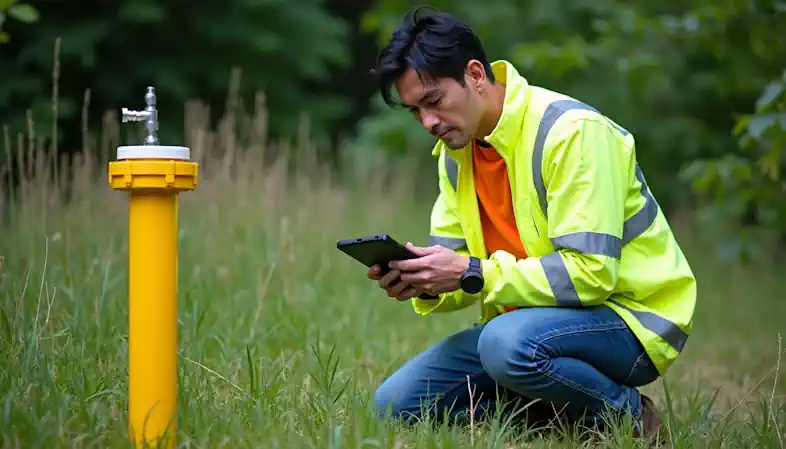
Energy Recovery Systems
Energy recovery systems turn landfill gas from an operational burden into an Energy from Waste asset. In practice, that means you still design for compliance first, then treat energy recovery as a “beneficial use” layer that needs stable gas quality, dependable uptime, and clear contracts.
EPA’s LMOP database lists 542 operating LFG energy projects across the U.S. as of September 2024, which matters because you can benchmark technology choices and performance expectations against a large installed base.
- Electricity: common where interconnection is feasible and gas quality is steady enough for engines or turbines.
- Medium-Btu direct use: fits industrial users that can take gas with less upgrading than RNG.
- RNG: higher treatment complexity, but often stronger value when paired with the right offtake and environmental attributes.
For staffing and community benefit conversations, Project Drawdown notes that U.S. LFG energy projects can create about 10 to 70 jobs per project (based on an EPA-cited estimate).
Flare Design, Installation and Control
Even at sites with strong beneficial use, you need a flare strategy because gas quantity and quality move with seasons, cell development, liquids, and maintenance windows. Your flare becomes the system’s “always available” safety valve.
Flaring performance depends on gas quality. The ATSDR landfill gas primer notes combustion is most efficient when the landfill gas contains at least 20% methane by volume, and sites below that can need supplemental fuel, which changes operating cost and hardware decisions.
- Pick the right flare type for your risk profile: Project Drawdown summarizes that enclosed flares can achieve about 99% methane destruction, while open flares can perform lower in practice, so choose based on community sensitivity and compliance risk. Low calorie flares designed for low methane content landfill gas may be useful here.
- Design for turndown and low-Btu periods: plan for startup and end-of-life conditions where gas can be unstable.
- Monitor to stay in the tested envelope: EPA’s Greenhouse Gas Reporting Program notes methane destruction efficiency is reported based on the manufacturer-specified efficiency or 99%, whichever is less, which is a reminder to keep operating parameters aligned with the equipment basis.
The top specialist contractors provide a service that uses 3D modeling and system performance analysis to support regulatory compliance, and technicians perform thermographic surveys to help detect abnormal operating conditions and document emissions control.
Background reading on methane potency and why destruction efficiency matters
Leachate Level Monitoring and Control
Leachate control is not separate from gas control. When liquids rise into waste or well screens, your wellfield behaves like it is “under-designed,” even if you installed the right number of wells, because you lose effective gas pathways and create pressure pockets that drive fugitive methane.
On the compliance side, EPA’s MSWLF closure standards require a final cover system that minimizes infiltration, including a permeability requirement of no greater than 1.0 x 10⁻⁵ cm/sec to reduce the “bathtub effect.” In operational terms, infiltration control is also gas control because it limits unnecessary liquids in the waste mass.
- Treat liquids as a wellfield KPI: track perched liquids and well liquid levels alongside methane, oxygen, and vacuum so tuning decisions reflect what the waste mass can support.
- Use instrumentation that speeds response: automated leachate level monitoring tied to GIS and work orders helps crews address developing liquid restrictions before they show up as odors or SEM exceedances.
- Use vacuum stability as an early warning: LMOP notes that fluctuating vacuum at the same collection point often points back to condensate buildup or a restriction, so liquids management protects both capture efficiency and equipment uptime.
Active leachate control protects gas systems, reduces air pollution risk, and keeps sites compliant.
Advanced Monitoring and Data Solutions
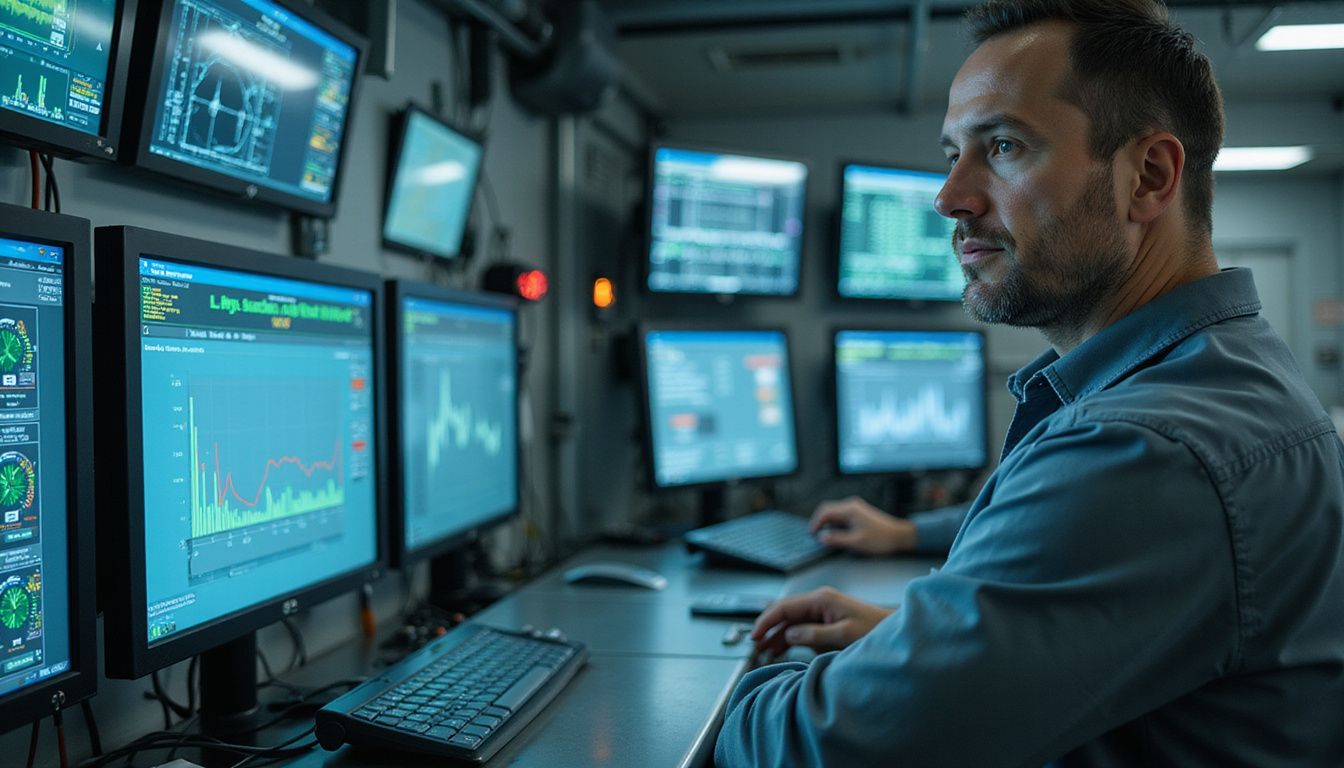
Advanced monitoring helps you stop guessing. Real-time telemetry, targeted sensors, and disciplined SEM routes let you find leaks earlier, tune wells faster, and document reductions in methane emissions and carbon dioxide equivalent (CO2e) in a way that stands up in audits.
In federal SEM procedures, the details matter. Rules specify structured walking patterns (no more than 30-meter intervals), probe placement close to the surface (about 5 cm), and wind constraints that can force you to reschedule monitoring if conditions are outside limits.
| Monitoring layer | What it tells you | What you do with it |
|---|---|---|
| Wellhead monitoring | Gas quality, oxygen intrusion, liquids impacts | Adjust valves in small increments, then re-check methane, oxygen, balance gas, temperature, and vacuum. |
| Surface emissions monitoring (SEM) | Where gas is escaping through cover or penetrations | Prioritize cover repairs, penetrations sealing, and well additions in the zones that keep showing up. |
| Continuous telemetry (SCADA) | Vacuum and flow stability, downtime patterns | Catch restrictions early, protect flare and energy plant uptime, reduce emergency callouts. |
| Targeted LDAR tools | Point-source leaks in piping, condensate pots, valves | Fix the leaks that deliver the biggest methane reduction per hour of labor. |
Video: using monitoring data to tune and maintain a wellfield

Landfill Gas Monitoring
Landfill gas monitoring is your daily feedback loop. It detects methane, carbon dioxide, oxygen, hydrogen sulfide, and other components so you can tune for capture, protect equipment, and reduce safety risks.
For portable field work, QED’s GEM PRO analyzer is built around a modular sensor approach that supports monitoring up to seven gases at once, with field-swappable modules that the manufacturer says can be replaced in about 10 minutes and battery life commonly cited around 8 to 10 hours. The practical benefit is simple: fewer “instrument downtime” days when your wellfield needs attention.
- Use oxygen and balance gas to find air intrusion: LMOP describes typical balanced well conditions with low oxygen, with balance gas and methane targets that depend on whether you are tuning for compliance, migration control, or energy recovery.
- Use temperature and carbon monoxide trends as early flags: EPA’s elevated temperature landfill research calls out a pattern of elevated gas temperatures with shifting methane and carbon dioxide ratios, plus rising carbon monoxide, as a sign you should investigate quickly.
- Turn readings into work orders: link each flagged well, header segment, or condensate point to a corrective action and a retest date, so “monitoring” becomes measurable emissions reduction.
Surface Emissions Monitoring
Surface emissions monitoring identifies methane that escapes from cover soils, slopes, and penetrations. It also gives you a map of where your landfill’s GCCS influence is weak, which helps prioritize cap repairs, new collectors, and leachate extraction work.
For sites using Tier 4 surface monitoring approaches, federal procedures specify a walking pattern across the landfill surface at no more than 30-meter intervals, with the probe held close to the surface. They also include wind rules, including the use of a wind barrier when average wind speeds exceed 4 miles per hour, and a prohibition on SEM when average wind speeds exceed 25 miles per hour.
For prioritization, remote sensing is reshaping how teams think about the work face. Carbon Mapper summarized a 2023 airborne dataset across 217 landfills in 17 U.S. states and found that, among landfills with detectable work face emissions, those emissions represented over 75% of quantified landfill emissions in that dataset. That points many operators to the same high-return action: tighten work face cover timing and placement, then verify with repeat monitoring.
- Audit the work face daily cover process: treat it like a control device, with clear standards, training, and spot checks.
- Recheck after operational changes: cell transitions, temporary haul road changes, and storm damage can create new emission pathways.
- Close the loop: SEM findings should feed a prioritized punch list, then get re-tested so the site can prove the fix worked.
Work face controls can be your fastest methane reduction lever because that is where fresh waste and active operations create short, high-emission windows.
Controlling work face emissions is the lowest of all “low hanging fruit” for short-term global climate change reduction and as such is the purpose of all Landfill Gas Management Solutions.
Sustainable Practices for Landfill Gas Utilization
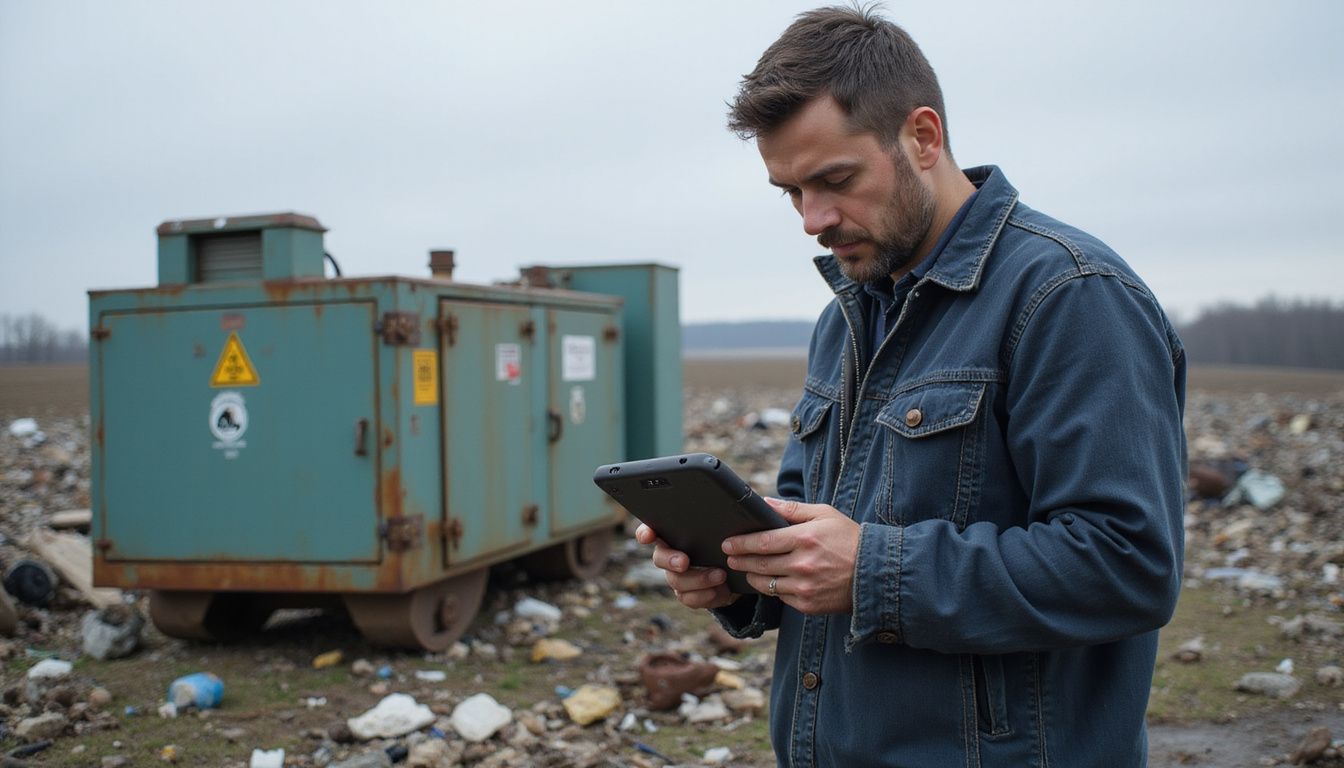
Sustainable landfill gas utilization means you capture methane reliably, then either destroy it efficiently or put it to work as an energy source that displaces fossil fuels. In the U.S., that approach also lines up with climate action commitments reinforced since COP26 in November 2021 and the launch of the Global Methane Pledge.
A practical way to think about sustainability at the site level is: control first, then optimize. A wellfield that is stable and well-monitored gives you more options, including RNG, electricity, or direct use, plus low-tech methane oxidation approaches like biocovers in the right locations.
- Start with “no-regrets” reductions: fix point-source leaks and cover defects you can verify with SEM and retesting.
- Use energy recovery where it fits: match the project type to gas stability, interconnection, and your O&M capacity.
- Use biocovers strategically: they can help with areas where collectors are impractical and can reduce residual surface emissions, especially during early and late gas production periods.
Video: turning landfill gas into useful energy
Conversion of Landfill Gas to Usable Energy
Landfill gas is typically about 50% methane and 50% carbon dioxide, plus smaller amounts of non-methane organic compounds. That mix explains why most energy projects start with the same basics: collect reliably, remove moisture, manage sulfur and siloxanes, then match the cleaned gas to the right end use.
EPA’s LMOP describes a common treatment progression where primary treatment removes moisture (often through knockout pots, filtration, and blowers), followed by secondary steps like additional cooling and siloxane and sulfur removal, with compression as needed for the end use.
For a real-world scale example, WM’s project profile for the Fairless Landfill describes an RNG facility designed to recover about 3 million MMBtu per year of RNG, with equivalency statements like serving about 65,000 households in Pennsylvania. You do not need those exact numbers to size your project, but they help teams communicate “what good looks like” once the wellfield and treatment train are dialed in.
| End use | What it demands from landfill GCCS | Common mistake to avoid |
|---|---|---|
| Electricity | Stable heat value, predictable flow, limited oxygen intrusion | Chasing flow by over-pulling wells and diluting methane, which can lower engine performance and increase maintenance. |
| RNG | Tight control of oxygen and nitrogen, consistent pretreatment uptime | Underestimating treatment O&M and data discipline needed to keep product quality consistent. |
| Direct use (medium-Btu) | Reliable delivery pressure and moisture control | Skipping redundancy in blowers and condensate handling, leading to avoidable downtime. |
Reducing Greenhouse Gas Emissions – It’s the Aim of all Landfill Gas Management Solutions
Reducing methane emissions is one of the fastest ways to cut a landfill’s carbon footprint. A recent Congressional Research Service summary describes methane as having about 80 times the warming impact of carbon dioxide over its first 20 years, and about 30 times over 100 years. EPA’s GWP guidance also places methane at about 27 to 30 over a 100-year timeframe, which is why methane control shows up so strongly in CO2-eq accounting.
In the U.S., EPA reports municipal solid waste landfills accounted for about 14.4% of human-related methane emissions in 2022. That is a big share for an emissions source you can actively manage with GCCS, SEM, and disciplined work practices.
Our list of the most important Landfill Gas Management Solutions follows:
- Act early in a cell’s life: build your landfill’s GCCS expansion plan so you are not waiting for late-life infrastructure while early methane escapes at the surface.
- Control the work face: based on airborne attribution work summarized by Carbon Mapper, work face emissions can dominate measured emissions at a small subset of sites, so daily cover execution is a core methane control measure.
- Use biocovers where they are a good fit: Project Drawdown summarizes literature showing biocovers can oxidize methane across a wide range (reported 26% to 96%), which makes them useful for residual emissions or areas where collectors are impractical.
- Choose control devices that keep performance high in practice: enclosed flares and strong O&M reduce the risk that “assumed” destruction efficiency diverges from real field outcomes.
Landfill Gas Management Solutions – Conclusion
Landfill gas programs cut methane emissions, protect the atmosphere, and reduce a site’s carbon footprint when you treat GCCS as an operations system, not a one-time install.
SCS Engineers supports GCCS design, well drilling, LDAR, SEM, and flare systems that keep control reliable across changing field conditions.
With tuned vacuum, disciplined liquids management, and monitoring that points crews to the right fixes, you can improve methane capture, reduce co2-eq, and make Energy from Waste pathways like RNG or electricity far easier to operate.
Surface emissions monitoring and leachate level control also raise safety margins at waste disposal sites, and they can support broader climate action plans, including regenerative agriculture initiatives around closed portions of the site.
Landfill Gas Management Solutions – FAQs
1. What is landfill gas and why manage it?
Landfill gas forms at waste disposal sites when microbes break down trash and release methane, carbon dioxide, and water vapor into the atmosphere. Managing it cuts co₂ emissions and lowers climate impacts like ground-level ozone that harm the earth.
2. How do landfill gas systems work?
Pipes and wells collect gas and send it to a flare or an Energy from Waste (EfW) system that usually burns the gas and generates electricity, which is most efficient when combined with a Combined Heat and Power (CHP) energy unit. CHP units use the otherwise wasted heat to provide hot water for heating homes, greenhouses, etc.
3. Can Landfill Gas Management Solutions help combat climate change?
Yes. Using captured gas for power cuts demand for non-renewable fuels and lowers life-cycle methane emissions. Linking projects to regenerative agriculture can also store more carbon and further combat climate change.
4. What risks does landfill gas pose to the environment?
Leaked gas adds methane and CO₂ to the atmosphere and raises climate impacts. It can increase ground-level ozone and damage the environment and the earth, and it can worsen remote effects like contrail warming by contributing to added greenhouse gases.